
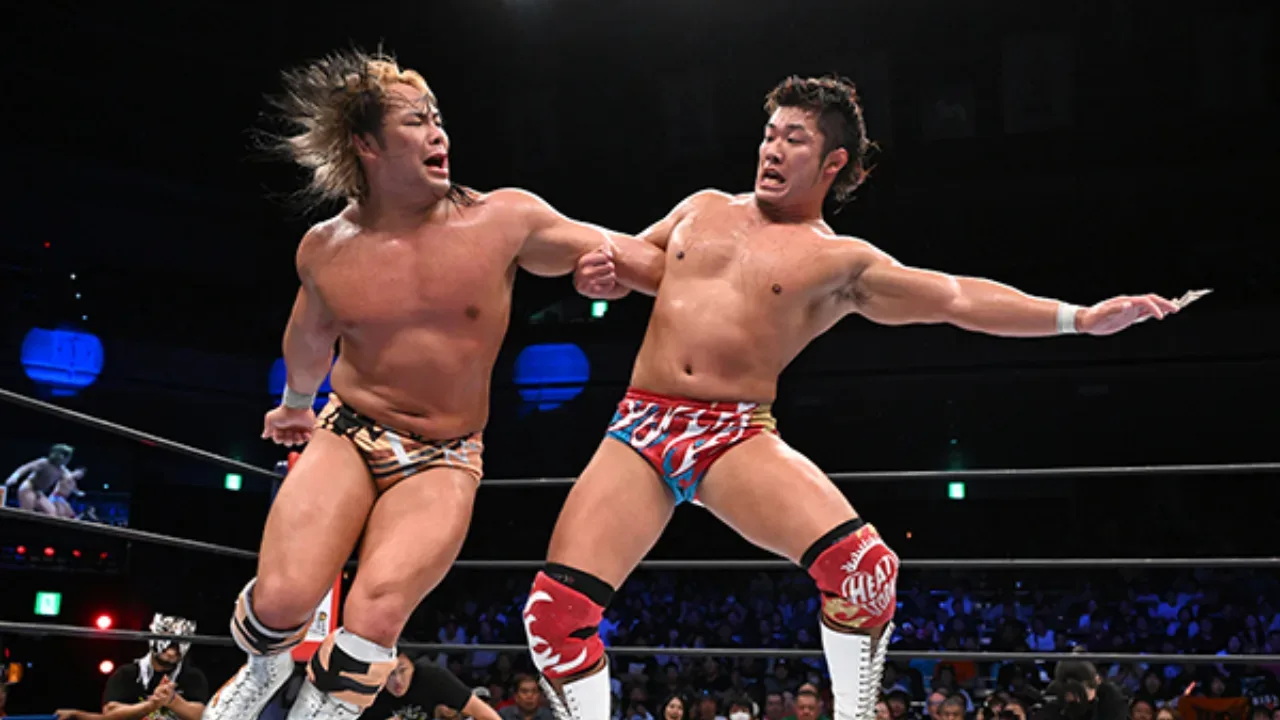
Yuya Uemura did not leave the G1 Climax 36 final with the tournament trophy, but he believes his match with Ryohei Oiwa accomplished something personally significant.
Oiwa defeated Uemura in the final of New Japan Pro-Wrestling’s 2026 G1 Climax 36 tournament, denying Uemura a defining victory in one of the promotion’s most prestigious annual events. While Uemura acknowledged the disappointment of that result, he viewed the match as an important statement about the kind of wrestling he wants to represent moving forward.
In reflecting on the final, Uemura said he felt he was finally able to put his ideal version of professional wrestling in front of the audience. It was a meaningful moment for a wrestler who has spoken since the previous year’s G1 about establishing what he sees as a new standard.
“Obviously the result was disappointing, but I feel I was able to present my ideal of pro-wrestling. I’ve been talking about representing a new standard since last year’s G1 and this year I was finally able to give that form. As for Oiwa, he just seemed to be full of confidence right from the midway point of the G1. He’s going to be a critical rival for me going forward.”
For more background on this topic, read David Finlay Explains How NJPW’s Rejection of a BULLET CLUB Ending Led to War Dogs.
A Final That Meant More Than the Result
The G1 Climax is built around results. Wrestlers compete through a demanding tournament structure, and the eventual winner earns not only major momentum but also a place in the conversation around New Japan Pro-Wrestling’s top championship picture. A final loss therefore carries obvious frustration, particularly when it comes at the conclusion of a tournament that has historically helped define the direction of the company.
Uemura was direct in admitting that the loss to Oiwa hurt. There was no attempt to minimize what was at stake or to suggest that simply reaching the final was enough. Yet his comments also made clear that he measures progress through more than tournament wins. For Uemura, the G1 Climax 36 final appears to have been a chance to make his wrestling identity clearer than it had been before.
That distinction is important. Winning can immediately elevate a wrestler, but a major match can also establish what that wrestler stands for in the ring. Uemura believes he achieved that latter goal against Oiwa. His assessment was not merely that the final was successful or well received; he said it allowed him to present his own ideal of pro-wrestling.
Uemura has discussed representing a “new standard” since the prior G1. In his view, this year’s tournament gave that idea a concrete form. The final did not change the official result, with Oiwa advancing as the winner, but Uemura sees the bout as evidence that his stated ambition is no longer just a concept. He believes he was able to demonstrate it when the stakes and attention were at their highest.
Uemura’s Search for a New Standard
Professional wrestling is often defined by the way individual performers present their matches, their rivalries, and their ambitions. Uemura’s comments place emphasis on presentation and on the standard he wants to uphold inside the ring. Rather than framing his G1 run only around victories and defeats, he identified the final as a platform for showing the audience what he wants his wrestling to be.
That outlook gives added weight to his reference to last year’s G1. Uemura said he had been discussing the goal of representing a new standard since that tournament. At G1 Climax 36, he feels he finally delivered the form of wrestling he had been talking about.
It is a notable way to evaluate a match as consequential as a G1 final. Uemura did not claim that disappointment disappeared because of the performance. He specifically acknowledged the negative side of losing. At the same time, he found value in the opportunity to make his vision visible through the match itself.
For Uemura, that could be central to how he approaches the next stage of his New Japan career. The G1 final did not provide the tournament victory he wanted, but it gave him a high-profile reference point for the style and standard he wants attached to his name. His remarks suggest he intends to continue pursuing that identity rather than allowing a final-round defeat to define the whole tournament.
Ryohei Oiwa Emerges as a Key Rival
Uemura’s reflection was also notable for the respect he showed Oiwa. The two men entered the G1 Climax 36 final with the tournament on the line, and Oiwa ultimately prevailed. Uemura identified Oiwa’s confidence as a major factor in his tournament performance, saying that it stood out from the midway point of the G1 onward.
That observation comes from the wrestler who shared the ring with Oiwa in the final, and it underlines the impression Oiwa made on Uemura during the tournament. Uemura did not portray the loss as an isolated setback against a one-time opponent. Instead, he described Oiwa as someone who will be a critical rival going forward.
That is potentially the most consequential part of Uemura’s comments beyond his thoughts on the match itself. A G1 final can produce a lasting rivalry because it puts two competitors in direct conflict at a defining moment. In this case, Uemura believes the contest with Oiwa has established a relationship that will matter well beyond G1 Climax 36.
Their positions following the tournament also make the competitive dynamic especially clear. Oiwa holds the G1 victory over Uemura and is now moving into an IWGP Heavyweight Championship opportunity. Uemura, meanwhile, is looking back at the final as a moment in which he successfully articulated his own in-ring philosophy despite coming up short.
Both men therefore emerge from the match with substantial, if different, momentum. Oiwa has the tournament win and an immediate championship challenge ahead. Uemura has a loss that he believes still strengthened his standing by allowing him to present the kind of wrestler he aims to be. The contrast gives their future meetings added significance whenever their paths cross again.
Oiwa Turns His Attention to Yota Tsuji
Oiwa’s next major assignment is already set. He will challenge Yota Tsuji for the IWGP Heavyweight Championship at King of Pro-Wrestling on October 12.
The championship match is the direct next step after Oiwa’s G1 Climax 36 triumph. Having defeated Uemura in the final, Oiwa now has the opportunity to convert that tournament success into the biggest prize in New Japan Pro-Wrestling. Tsuji enters the bout as IWGP Heavyweight Champion, while Oiwa arrives as the G1 winner with the confidence that Uemura said became evident during the tournament.
For Uemura, Oiwa’s move toward the title picture does not erase what happened in the final. If anything, Oiwa challenging for the championship adds another layer to Uemura’s assessment of him as an essential rival. The wrestler who defeated Uemura on one of the year’s largest stages is now preparing for a bout that could change the top of the promotion.
Uemura’s own words, however, keep the focus on more than what Oiwa does next. He is intent on the standard he believes he established during the G1. The final result was disappointing, but he sees the match as proof that his ideal of professional wrestling can be presented at the highest level.
What the G1 Final Leaves Behind
The lasting story of the G1 Climax 36 final will begin with the result: Ryohei Oiwa defeated Yuya Uemura and earned the right to challenge Yota Tsuji for the IWGP Heavyweight Championship. That outcome remains decisive, and Oiwa now has a major opportunity awaiting him at King of Pro-Wrestling.
But Uemura’s response adds another perspective to the final. He sees a loss, but not an empty one. He sees disappointment, but also a breakthrough in his effort to establish a new standard. And he sees Oiwa not simply as the man who beat him in the G1 final, but as a rival who will be important to his future.
Uemura did not achieve the tournament-ending victory he wanted. Still, he believes G1 Climax 36 gave him the stage to show exactly what he wants his professional wrestling to look like. As Oiwa prepares to face Tsuji on October 12, Uemura will carry forward the conviction that his vision was made real in the final—even in defeat.

Darryl Polo
Darryl Polo is a passionate wrestling fan covering WWE, AEW, TNA and beyond. He loves great rivalries, breakout stars and the moments that keep fans talking long after the bell. How we work.