
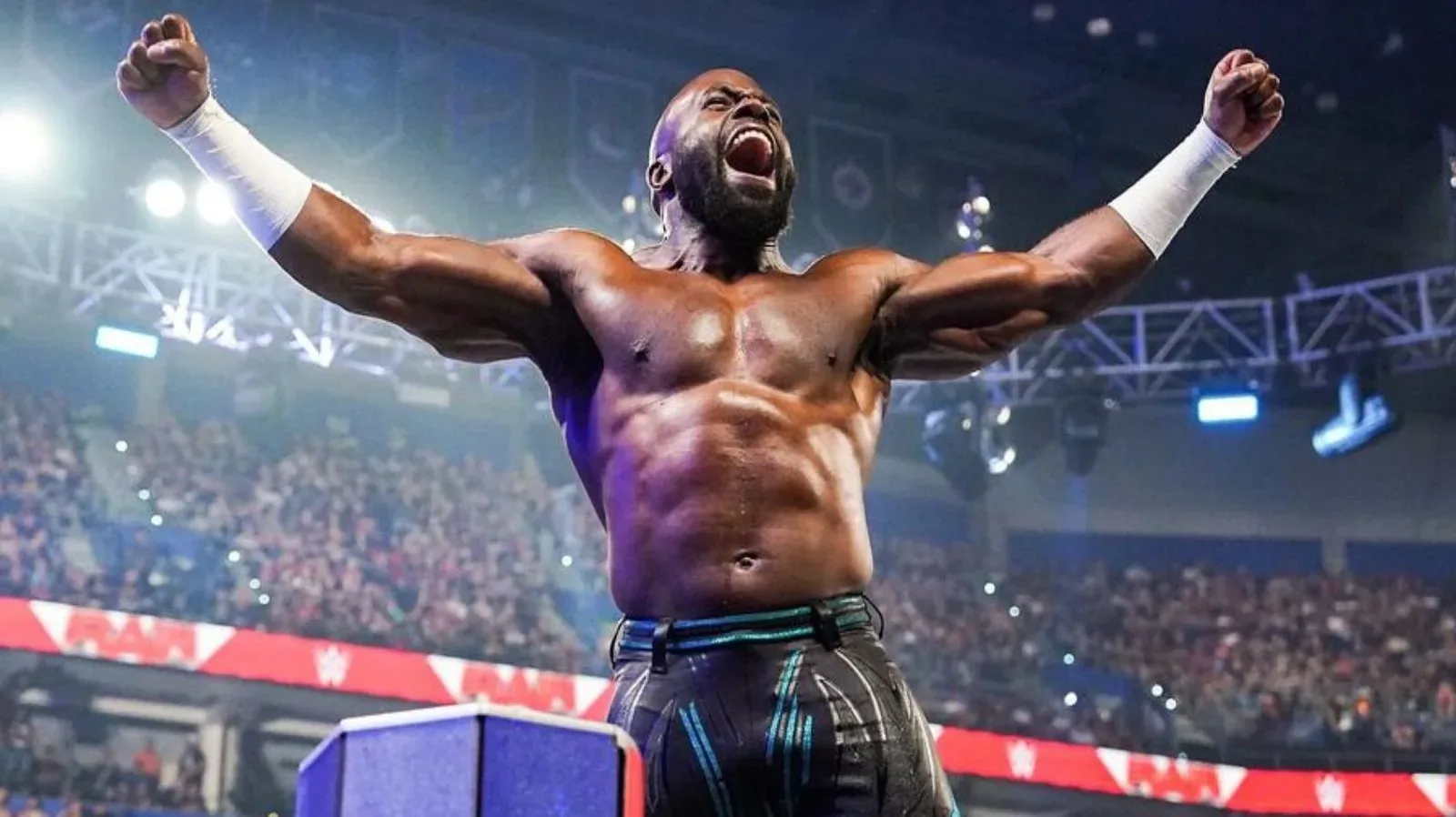
Uhaa Nation is keeping the door open to another major professional wrestling run, including a potential return to WWE, but the former Apollo Crews has made clear that he is not rushing into his next full-time commitment.
Following his WWE release after WrestleMania 42, Crews has accepted select appearances, most notably working a match at TNA Slammiversary 2026. Those bookings have put him back in front of wrestling audiences, yet they have not changed the larger approach he is taking toward this stage of his career. Speaking on Insight with Chris Van Vliet, Crews explained that his focus is currently divided between family, life beyond the ring, and a desire to reconnect with the passion that first drove him to pursue wrestling.
That does not mean he views his WWE chapter as closed for good. In fact, Crews directly rejected the idea that a wrestler must rule out a return after leaving the company.
“People say, ‘I would never go back,’ I would definitely go back,” Crews said on Insight with Chris Van Vliet. “WWE is the pinnacle, right? It’s what a lot of us strive to get to.”
For more background on this topic, read WWE Champions Launches Cowboy Bebop Crossover Event With Trick Williams, Sol Ruca and Bray Wyatt Gear.
It is a notable position from a performer whose post-release identity has returned to Uhaa Nation, the name he used before WWE. Rather than presenting his release as a final break with the industry’s largest company, he described WWE as a destination he would welcome if the circumstances aligned. At the same time, his comments were not limited to one promotion. Crews also expressed interest in the prospect of working for AEW or TNA, particularly in a role that would place him back on television and in front of substantial live crowds.
For Crews, that atmosphere remains one of wrestling’s strongest draws. The opportunity to perform on television and in larger venues is different from anything the business can replicate elsewhere. Still, his remarks suggest that the appeal of a platform alone is not enough for him to immediately commit to another demanding full-time schedule. He wants the right personal and professional foundation before making that choice.
Wrestling Remains Possible, Not Immediate
Crews emphasized that he has not retired and is not declaring wrestling finished. He is simply placing it in a different position in his life for now. That distinction matters. Taking limited dates allows him to remain active, test opportunities and stay connected to audiences without treating every appearance as evidence that he has chosen his next permanent destination.
“It’s not something I’m saying is done completely, but at this moment, I am focused on other things and making sure that when it’s all said and done, I have something to do when wrestling’s done,” Crews said on Insight with Chris Van Vliet.
That long-term outlook is at the center of his current decision-making. Professional wrestling can provide singular experiences, but it is also a career with an eventual endpoint for every performer. Crews said he is enjoying time with his family and pursuing other interests, treating this period as an opportunity to develop parts of his life that cannot be postponed indefinitely.
There is no timetable in his comments for a full-time return, no declaration that he is negotiating with a particular company, and no indication that one promotion has emerged as a favorite. WWE, AEW and TNA were all mentioned as potential places where he could see himself working. The important development is his willingness to consider each option while refusing to force a decision before he feels ready.
His Slammiversary appearance underlines that the Uhaa Nation name is not merely a nostalgic label. It is the identity under which he can explore this next phase on his own terms. A handful of bookings may offer competitive opportunities, but they also provide room to evaluate what he wants creatively and personally from the ring going forward.
Rediscovering the Edge That Led to WWE
The central issue for Crews is not a lack of ability or a lack of possible landing spots. It is his stated desire to recover the inner drive he feels changed during his time in WWE’s developmental environment.
Crews recalled that his athletic and wrestling style shifted after he began working in WWE NXT. He was critiqued by coaches, and that feedback altered how he approached his craft. Coaching and adjustment are fundamental parts of becoming a television wrestler, especially inside a major system with specific expectations for presentation, pacing and performance. But Crews believes that process also took him away from some of the confidence and aggression that defined him before he was signed.
He specifically wants to find again the “killer instinct” that helped him reach WWE in the first place. That phrase provides the clearest window into what he sees as unfinished business in his own career. The next step is not simply about securing a contract or getting another televised match. It is about making sure the version of himself who returns to a bigger stage has the conviction he feels has been missing.
That search can be as important as any promotion’s interest. A performer can have a name, a recognizable history and major-show experience, but a successful return also depends on clarity of purpose. Crews is approaching his future as something that should be earned internally before it is defined externally. His comments point toward a wrestler who still values the highest levels of the industry, while also recognizing that he needs to feel fully invested in the work.
What His Openness Means
WWE remains the most direct point of reference because Crews openly called it the pinnacle and said he would return. That statement should not be mistaken for an announcement, a confirmation of talks or a prediction that a reunion is imminent. It is instead an explicit acknowledgment that he would entertain the possibility, despite the release that followed WrestleMania 42.
AEW and TNA are also viable in principle because Crews named both as places where he would like to be part of a company and work on television. TNA has already factored into his post-WWE schedule through Slammiversary 2026, showing that he is willing to step into that environment. However, one appearance does not establish a longer arrangement, and Crews has not publicly committed himself to a promotion.
His stance also reflects an increasingly practical way of looking at wrestling careers. The conversation is not solely about the next match, the next storyline or the next contract. It includes family time, other passions and preparation for a future after active competition. Crews is not presenting those priorities as a retreat from wrestling; he is presenting them as necessary context for deciding how wrestling fits into the rest of his life.
For fans hoping to see him regularly again, the encouraging part is that he has not shut down any major avenue. He remains interested in the unique energy of televised wrestling and large crowds. He remains willing to consider WWE. He sees potential in AEW and TNA. And he has already taken at least one significant booking since his release.
For now, though, Uhaa Nation’s future is defined by patience. He is taking time to enjoy his family, explore interests beyond the business and rebuild the confidence that he believes once set him apart. If and when he makes a more substantial return, he wants it to be driven by renewed passion rather than pressure to move immediately into the next available opportunity.
That makes his current status straightforward even if the ultimate destination is not: Uhaa Nation is available to wrestling, not beholden to it. WWE, AEW and TNA may all remain possibilities, but the deciding factor will be whether he can rediscover the intensity and purpose he wants to bring with him.
In pictures

Darryl Polo
Darryl Polo is a passionate wrestling fan covering WWE, AEW, TNA and beyond. He loves great rivalries, breakout stars and the moments that keep fans talking long after the bell. How we work.