
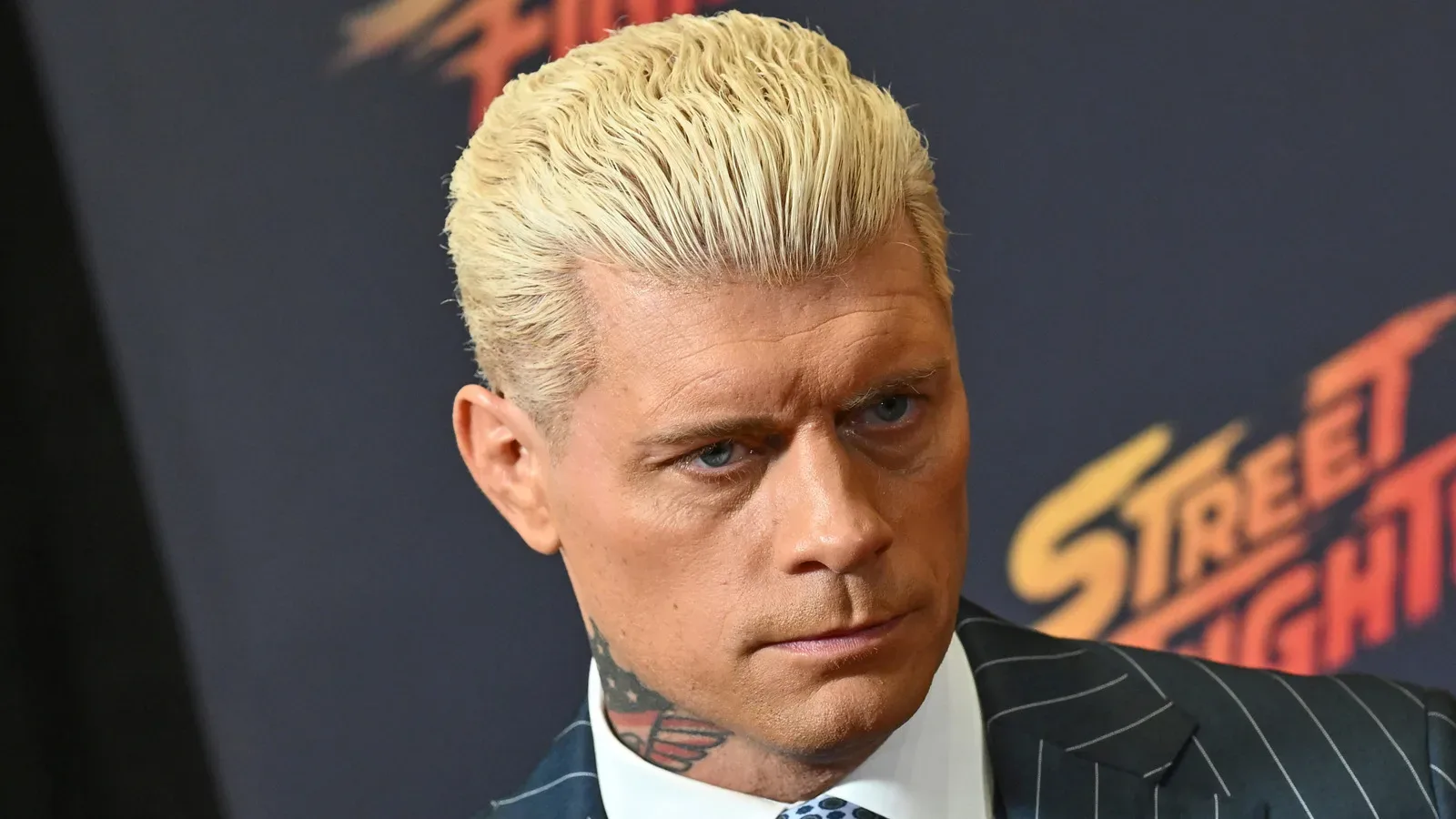
Cody Rhodes has made no formal announcement about when he intends to retire from professional wrestling, but the WWE star has made clear that he does not see his in-ring career continuing indefinitely.
Speaking with WrestleTalk, Rhodes addressed the subject in the context of John Cena’s retirement and explained that he increasingly recognizes how quickly the years move. At 41 years old, Rhodes said his own departure from the ring will likely come “sooner than later,” even if he is not prepared to provide a timetable.
“I’ll say it will probably happen sooner than later, and I’m not giving any type of spoiler. Time goes by, time goes by like this,” Rhodes said, snapping his fingers.
Rhodes tied that perspective directly to his family life and the kind of future he envisions for himself away from the weekly physical punishment of professional wrestling.
For more background on this topic, read The Miz Reflects on Backstage Friction After His First WWE Tag Team Title Win.
“When my daughter is 11 years old, I’m not going to be falling down for a living anymore,” Rhodes said.
That is not a retirement announcement, nor did Rhodes identify a specific event, year or opponent for his eventual final match. Still, the comments offer a significant look at how one of WWE’s defining modern stars is evaluating the remaining portion of his career. Rhodes has been back in WWE for four years, but his journey in the industry stretches far beyond that return, encompassing his early WWE run, his work outside the company, and his role in helping establish AEW before coming back to WWE as “The American Nightmare.”
His current place in WWE also makes the subject especially notable. Rhodes has spent the past several years as a central figure on the company’s biggest shows and stories, carrying the weight of long-term expectations while performing at the level demanded of a top attraction. A wrestler can be in the prime of his presentation and popularity while also becoming more conscious of the toll that schedule and style take over time. Rhodes’ remarks suggest he understands that distinction.
John Cena’s finality left an impression
The conversation began with Cena’s retirement, and Rhodes said he learned from the way Cena approached the end of his own wrestling career. Over the past year, fans have also seen Brock Lesnar and AJ Styles retire, while Adam Copeland has announced that he is preparing to conclude his career by the end of 2027. The recent run of prominent exits has placed retirement, legacy and final matches at the forefront of wrestling discussion.
For Rhodes, Cena’s approach stood out because of its certainty. Rather than framing retirement as a temporary pause or leaving open an obvious path for another match, Cena presented his decision as a complete conclusion to his time in the ring.
“I think one of the things that I really enjoyed about how John did it is the finality he brought to it,” Rhodes said. “‘I have given you everything, this is all I have, anything else wouldn’t be right.’ And when John says he will never wrestle again, he really means it.”
That kind of clarity is unusual in an industry where retirements have often been revisited. Wrestling history includes many farewell matches that were not truly final, sometimes because a performer felt physically capable of returning, sometimes because the business presented an opportunity too substantial to decline, and sometimes because a retirement storyline was never intended to be permanent. Cena’s decision, as Rhodes described it, carried a different kind of weight because it was rooted in a sense that the performer had reached the point where he had given the audience what he had to give.
Rhodes did not say that his own retirement will necessarily follow the same format. His comments were more reflective than declarative. But he clearly appreciates the idea that a final match should mean something, both for the wrestler leaving and for the audience that supported that wrestler throughout his career.
Rhodes wants his exit to help create WWE’s next major star
Perhaps the most revealing aspect of Rhodes’ comments was not the possibility of retirement itself, but what he hopes his eventual farewell could accomplish. Rhodes said he wants to be brave enough to take a chance on a rising star on his way out, putting that performer over in a manner that helps establish the next face of a company.
That goal speaks to a long-standing wrestling tradition. The final stage of a veteran’s career can be about more than nostalgia, celebration or one last personal achievement. It can also become a defining platform for someone who is still ascending. A major win over an established, trusted star can change how fans view a younger wrestler overnight, particularly when the veteran has been positioned at the very top of the promotion.
Rhodes sees that transition as one of the most important moments available in the industry. A newer name defeating a major star is not automatically enough to make someone the next centerpiece of a promotion. The timing, story, crowd response and follow-through all matter. But when those elements align, the result can become a generational handoff.
For a wrestler with Rhodes’ profile, the stakes of such a decision would be considerable. He has been presented as one of WWE’s most recognizable modern performers, and any final opponent would immediately receive intense scrutiny. Fans would debate whether that person was ready, whether the match told the right story, and whether WWE was committed to building around the winner after the moment passed. Rhodes’ comments show that he is already thinking beyond his own final curtain and toward the opportunity it could create for another performer.
It is also notable that Rhodes characterized this as a matter of courage. Choosing to lose at the end of a career can sound simple in theory, but a farewell match is deeply personal. It carries a performer’s history, pride, identity and relationship with the audience. Rhodes’ willingness to discuss using that moment to elevate someone else reflects the broader responsibility he attaches to being a top star.
A career shaped by reinvention and major expectations
Rhodes has been uniquely positioned to understand how quickly a wrestler’s place in the industry can change. His career has included periods of reinvention, high-pressure expectations and a return to WWE that placed him in a prominent role almost immediately. He is not discussing retirement from the perspective of someone whose relationship with the audience has faded. Instead, he is looking at it while continuing to operate as a pivotal figure.
That makes his comments less about an imminent departure and more about the awareness that comes with experience. Professional wrestling is built around momentum, and it often encourages performers and audiences alike to focus on the next premium live event, the next rivalry or the next championship opportunity. Retirement conversations force a different view. They ask wrestlers to consider what remains to be accomplished, what kind of ending feels honest, and how their final chapter can contribute to the future of the business.
Rhodes’ reference to his daughter gives those questions a personal dimension. The physical risks and demands of wrestling are not abstract when viewed through the lens of family. Travel, training, recovery and the cumulative impact of taking falls all become part of the equation. Rhodes did not describe any injury concerns or indicate that he is unable to continue at his current level. His point was simply that there is a point in life when continuing to take those risks no longer fits the priorities he expects to have.
No date, no opponent, but a clear philosophy
There are still more questions than answers surrounding Rhodes’ eventual retirement. He did not announce a final year. He did not name a preferred opponent. He did not reveal whether he sees his last match taking place at WrestleMania, another major WWE event, or under any particular circumstances. He also did not suggest that retirement is immediately around the corner.
What Rhodes did provide was a philosophy. He wants the conclusion of his career to have purpose. He admires the finality Cena brought to his own exit. And he hopes that, when his time comes, he can use his last major moment to help launch somebody who will carry WWE forward.
For now, Rhodes remains focused on his active WWE career. But his remarks underscore a reality every long-tenured performer eventually confronts: even the biggest stars have a final chapter. Rhodes appears determined for his to be meaningful not only as an ending, but as the beginning of something important for the wrestler standing across from him.
In pictures

Darryl Polo
Darryl Polo is a passionate wrestling fan covering WWE, AEW, TNA and beyond. He loves great rivalries, breakout stars and the moments that keep fans talking long after the bell. How we work.