
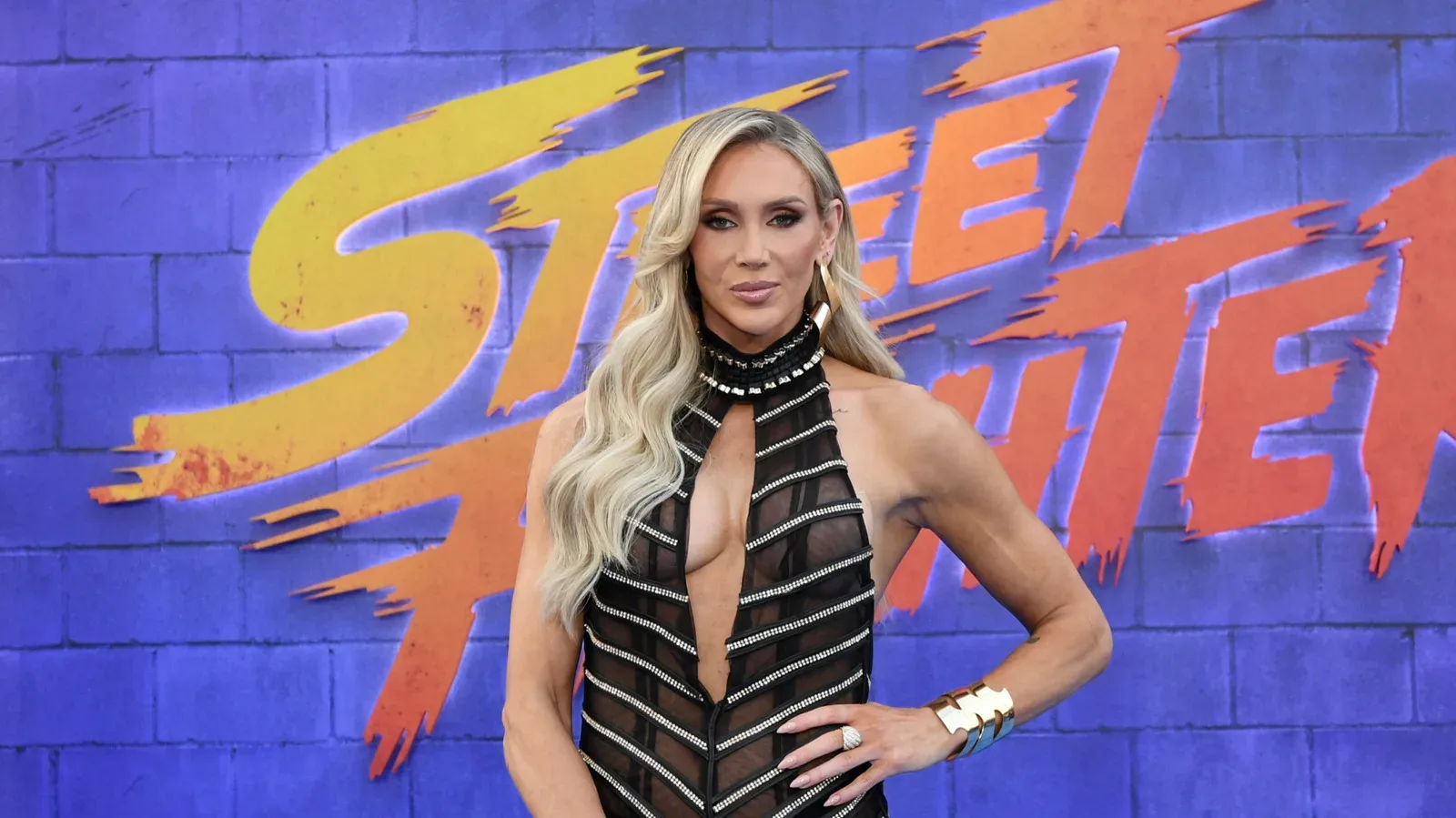
Charlotte Flair has spent much of her WWE career presented as an untouchable standard-bearer: decorated, confident, demanding, and rarely willing to show an opponent or an audience a moment of doubt. That presentation helped establish “The Queen” as one of the defining performers of her generation, but Flair says her most meaningful recent growth has come from lowering the emotional armor that built up around the character.
Speaking on Set, Hut! with Russell Wilson and Kyle Long, Flair discussed the complicated relationship she has had with fans throughout her career, the expectations that followed her as Ric Flair’s daughter, and the perspective she gained after suffering a serious knee injury. Her central takeaway was straightforward: vulnerability, rather than weakening her, has made her stronger.
“Being vulnerable makes you powerful and resilient and strong,” Flair said.
That realization carries particular weight for someone whose WWE identity has long been tied to dominance. Flair has been a fixture around the championship picture for roughly a decade, collecting 14 titles and becoming synonymous with major matches and high-pressure moments. Her in-ring accomplishments are unquestioned, but she acknowledged that the success and the character’s stature did not always produce a natural bond with the audience.
For more background on this topic, read Ilja Dragunov Says WWE Exit First Entered His Mind Around April.
The Weight of the Flair Name
Flair entered WWE with a wrestling surname that immediately created attention and expectation. As the daughter of Ric Flair, one of the most recognizable names in professional wrestling history, she had a built-in association with greatness before she had the opportunity to define herself on her own terms. She said that association also brought a difficult reaction from portions of the fan base.
“Being Ric’s kid came with a lot of hate,” Flair said.
That reaction became part of the foundation of her on-screen identity. Flair noted that she has largely been a villain during the last 10 years, a role she has enjoyed. The arrogance, edge, and certainty of “The Queen” have allowed her to thrive as a performer, especially when positioned against fan favorites. Yet the same traits that made the character effective could also create distance between Charlotte Flair the WWE persona and Ashley Fliehr the person.
Flair described how the growth of the Charlotte character was accompanied by a growing layer of protection. Criticism from fans could lead to more armor, reinforcing the icy confidence that defined her presentation. In a business where audience reaction is central to every performer’s role, that cycle can be useful creatively while still making authentic connection more difficult.
For Flair, the issue was not simply whether fans cheered or booed. It was whether they understood anything beyond the champion who expected the spotlight, the athlete who carried herself as a star, and the rival who often appeared certain she belonged above everyone else in the division.
A Knee Injury and a Different Perspective
Flair said tearing her knee two years ago was a significant turning point. Time away from the ring placed her in a different position than the one she had occupied for much of the previous decade. Instead of constantly moving from one major program, championship pursuit, or marquee event to another, she had the opportunity to reflect on her career and her relationship with WWE audiences.
When she returned, Flair felt there was a disconnect with fans. Rather than treating that divide solely as a creative problem to overcome with the established version of “The Queen,” she began to recognize that being more open could create a new kind of relationship with viewers.
Her approach included a personal article for The Players’ Tribune, which she described as an opportunity to distinguish the larger-than-life Charlotte character from Ashley Fliehr. The goal was to reveal more of the person behind the performer known for championship reigns, high expectations, and an uncompromising public persona.
That separation matters because WWE characters can become so deeply identified with the people portraying them. Flair’s character has often projected invulnerability. Ashley Fliehr, however, has lived through the pressure of family expectations, public criticism, physical recovery, and the challenge of remaining at the top of a demanding profession. By letting fans see more of that human side, Flair believes she reached them in a way the character alone could not.
“Being able to share that side of me with the audience, from being on top for 10 years,” Flair said. “I have won 14 titles, I am synonymous with gold. But I haven’t had a title match since in the last year since I lost at WrestleMania. It’s like, how is this my best year? Which is crazy to think, but really it’s the bond with the fans.”
Why This Can Be Her Best Year Without a Title Match
Flair’s comments offer an important measure of how she currently defines success. For most of her WWE tenure, title matches and championship victories have been a central part of her story. She has been positioned as one of the company’s premier women’s stars, and her résumé is built around winning at the highest level. Under that standard, a year without a title match might appear unusual for a performer of her standing.
But Flair’s assessment is rooted in something beyond championships. She said she has not had a title match in the past year since losing at WrestleMania, yet she sees the period as potentially her best year because of the connection she has developed with the audience.
That perspective does not diminish the value Flair places on championships or competition. Rather, it recognizes that a wrestler’s relationship with fans can be as consequential as any accolade. Championships define achievement within WWE’s on-screen landscape. Trust and emotional investment from the audience can define longevity, versatility, and how much impact a performer has when the stakes become personal.
For Flair, who has spent so much time framed as a competitor audiences were meant to resist, finding an authentic bond changes the emotional texture of everything that comes next. It offers fans a fuller understanding of her journey while giving her a foundation that does not rely exclusively on the familiar imagery of gold around her waist.
A Heel Turn With Greater Stakes
Flair also sees a creative benefit to having shown a more personal side. She remains aware that another move into a villainous role is possible, and she believes it will mean more now that fans have had an opportunity to learn who she is beyond “The Queen.”
That is an important distinction for a wrestler who has excelled as a heel. A performer can generate boos through arrogance, insults, or ruthless tactics, but a stronger reaction can emerge when audiences feel they know the person behind the character. Flair’s view is that a future turn will carry more emotional weight because the audience has seen an aspect of Ashley Fliehr that was previously shielded by the character’s confidence.
In other words, vulnerability does not mean abandoning the traits that made Charlotte Flair successful. It gives those traits more context. The audience can recognize the person who worked through setbacks and scrutiny, then still react when “The Queen” reasserts herself with the ruthless ambition that has made her such a formidable WWE presence.
Flair said she has come to understand that it was not merely the “The Queen” persona that made her who she is. The personal experiences that brought her to this point have been equally important. That statement reframes her career from a list of titles and major-event appearances into a longer story about endurance, adaptation, and learning how to let audiences see more than the polished champion.
Charlotte Flair’s Evolving Legacy
Charlotte Flair’s legacy in WWE will always include the championships, the WrestleMania moments, and the elite-level expectations that come with her name. Her 14 title reigns and long-standing place near the main-event scene ensure that. Yet her recent comments suggest she is placing greater value on a different kind of accomplishment: creating a connection with fans that feels personal rather than purely transactional.
For a performer who spent years using confidence as both a character trait and a shield, that is a notable evolution. Flair is not rejecting the persona that helped make her a star. She is instead explaining that the persona no longer has to conceal every difficult experience or personal truth.
That balance could become increasingly significant in the next chapter of her WWE career. Whether Flair is competing for championships, confronting a new rival, receiving cheers, or once again embracing the role of a villain, the audience now has more insight into the person behind the entrance robe and the royal imagery.
And for Charlotte Flair, that insight has changed the meaning of power. It is no longer limited to being dominant in the ring, holding a title, or standing above the division. It can also come from being open enough to let people understand the journey that made her who she is.
In pictures


Darryl Polo
Darryl Polo is a passionate wrestling fan covering WWE, AEW, TNA and beyond. He loves great rivalries, breakout stars and the moments that keep fans talking long after the bell. How we work.