
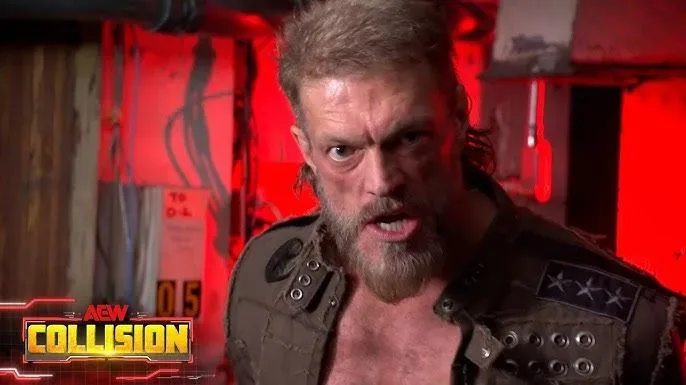
Swerve Strickland has built a reputation as one of AEW’s most distinctive performers, blending a controlled in-ring style with an increasingly assured presence in major-match settings. A former AEW World Champion and one of the promotion’s most prominent male stars, Strickland has also had the unusual opportunity to work in the same company as several of the wrestlers who helped shape his own vision of the profession.
During an appearance on Hot 97, Strickland discussed the figures who most inspired him as a fan and as a performer. Rey Mysterio sits at the top of that list, with Adam Copeland and Shawn Michaels rounding out a particularly influential top three. More importantly for Strickland’s continued development, he has been able to learn from each of them in different ways.
For Strickland, Mysterio remains the standard-bearer among his childhood and professional influences.
“Rey Mysterio is my number one. Always. Uncle Rey is my guy. I would say Copeland, or Edge, then Shawn Michaels are my top three.”
For more background on this topic, read Swerve Strickland Says He Wrestled Through Torn Meniscus for Years Before Surgery.
Those choices reflect three wrestlers whose careers covered different styles and eras while sharing a common ability to connect with audiences. Mysterio revolutionized the mainstream perception of smaller, faster wrestlers in North America. Michaels became synonymous with high-level performance, ring psychology and major-event pressure. Copeland developed from a decorated tag team star into a multi-time world champion whose longevity has made him a respected locker-room presence.
Strickland’s admiration has not remained limited to watching footage or studying old matches. He has had direct access to all three in some form. He wrestled Mysterio, spent private time studying with Michaels, and now sees Copeland regularly through their shared time in AEW.
Learning From Three Different Generations of Greatness
Strickland explained that his interactions with Mysterio, Michaels and Copeland have each provided a different kind of education. The chance to wrestle Mysterio gave him firsthand experience against the performer he calls his number one influence. That is an especially meaningful milestone for a wrestler whose own career has featured versatility, speed, athleticism and an ability to adapt his presentation to major moments.
His experience with Michaels came in a more focused learning environment. Strickland said he was not able to wrestle Michaels, but he was able to participate in detailed one-on-one tape study sessions with him. Rather than a group setting, Strickland described those conversations as private, concentrated time built around examining wrestling and performance at a deeper level.
“I was able to learn from all three. I wrestled Rey. Couldn’t wrestle Shawn. Yep, yep. Tape studies with him. Like one-on-ones, like close the door. Boom, it’s me and him locked in. Nobody else. Like one-on-one time. That changed my mindset for wrestling and performing.”
That description speaks to the importance of film study for performers who want to move beyond simply executing moves and begin understanding why matches work. Michaels’ career was defined not only by athletic execution, but by pacing, body language, crowd manipulation and an ability to make key moments feel larger than the action around them. Strickland’s comments suggest those sessions had a lasting effect on how he approaches the complete performance rather than only the physical side of a match.
Strickland has frequently been positioned in AEW as a performer capable of carrying significant emotional and competitive stakes. His path to becoming AEW World Champion required a presentation that went beyond ring work, and his remarks about changing his mindset provide useful context for that evolution. A wrestler can draw from a wide range of influences, but personal instruction from established stars can offer a clearer understanding of how to apply those lessons under the bright lights of television.
Adam Copeland as a Weekly Resource in AEW
While Mysterio and Michaels have played important roles in Strickland’s development, Copeland is the mentor figure he can access most consistently at this stage of his career. Copeland’s AEW run has placed him alongside a roster filled with talent from different generations and backgrounds. For someone like Strickland, that proximity creates opportunities for immediate feedback while preparing for weekly television and major events.
Strickland said Copeland has become a trusted person to approach when he is unsure about an idea for a match. The former world champion described a familiar creative situation: having multiple possibilities in mind on the day of a performance and needing a clear perspective on which direction best serves the wrestler and the match.
“Copeland, I get to see him every week. I’ll be coming up with something for the match that night, and I’m like, ‘hmm, I’m on the fence with this.’ I go to him and he’ll like, ‘nope, this is the one you should take.’”
That kind of input can be invaluable in a promotion with a demanding schedule and a deep roster. Wrestlers often have to make creative choices quickly, whether those choices involve match structure, a specific sequence, character presentation or the emotional direction of a segment. A veteran perspective is useful not because it dictates every decision, but because it can help identify the strongest option when a performer is weighing competing ideas.
Strickland also emphasized what he appreciates most about Copeland’s approach: the sense that the advice is offered with the performer’s welfare and success in mind.
“He always has the best interest on the performer, too, which always feels good to me.”
That point is significant in an industry where creative feedback can be highly personal. Trust is essential when a wrestler seeks counsel from a more experienced peer. Strickland’s comments indicate that Copeland has earned that trust by giving direct advice while keeping the performer’s long-term interests at the center of the conversation.
A Valuable Dynamic for Strickland’s Next Chapter
Copeland brings decades of experience across tag team wrestling, singles competition, championship programs and major-event environments. His career has included dramatic character shifts, extended periods at the top of the card and the challenge of adapting to changing audiences over time. That background gives him a broad reference point when offering advice to current AEW talent.
For Strickland, the relationship is not presented as an attempt to imitate Copeland’s career or style. Instead, it is a practical resource that helps him make choices as Swerve Strickland. That distinction matters. The strongest mentorship in wrestling does not erase a younger talent’s identity; it sharpens the tools that allow that talent’s own identity to come through more clearly.
Strickland’s list of influences also illustrates the wide range of ideas he has absorbed. Mysterio represents innovation and explosive movement. Michaels represents a detailed command of match construction and performance. Copeland represents durability, adaptability and an experienced viewpoint that is available in real time. Taken together, those influences offer a blueprint for a wrestler seeking to remain dynamic in the ring while improving every layer of presentation around it.
Elsewhere in the interview, Strickland confirmed that he suffered a torn meniscus in 2019 and wrestled on the injury for more than five years. That revelation adds another dimension to the toughness and persistence behind his ascent. Wrestling through a significant knee issue while continuing to pursue top-level opportunities underscores the physical demands that accompany a place near the top of a national promotion.
As Strickland continues his AEW career, he does so with the benefit of lessons gathered from some of the most influential names in modern wrestling. He has wrestled his top inspiration in Mysterio, studied the craft in private with Michaels, and found a dependable weekly sounding board in Copeland. For a former AEW World Champion still focused on refining his work, that combination of experience, access and trust could remain an important advantage.
Darryl Polo
Darryl Polo is a passionate wrestling fan covering WWE, AEW, TNA and beyond. He loves great rivalries, breakout stars and the moments that keep fans talking long after the bell. How we work.