
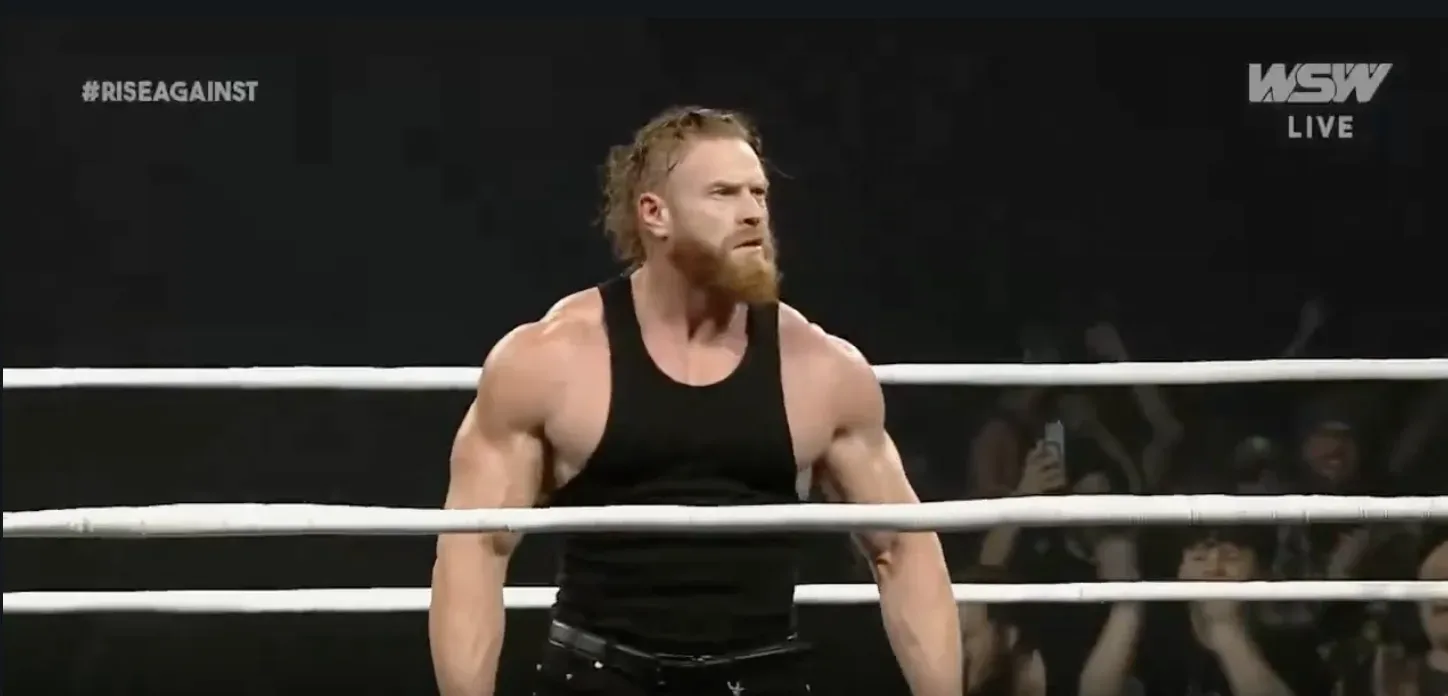
Buddy Matthews has made it clear that he views his eventual return to All Elite Wrestling as more than a routine comeback. After losing a significant stretch of time to injury, Matthews says he has no interest in stepping back into AEW merely to continue where he left off. His goal is for the moment to carry weight and for his next chapter to establish something different.
Matthews has been absent from AEW competition since Grand Slam Australia in February 2025, when he sustained an ankle injury during his match with Kazuchika Okada. The injury put an abrupt halt to his momentum and kept him away far longer than he expected. Although Matthews has been cleared since August, he has not yet appeared back on AEW programming.
That separation from the ring has informed how he is approaching his comeback. Matthews acknowledged that he has a substantial amount of time to recover creatively as well as physically, and he wants his first major appearance back to reflect that reality.
“When I come back, I’m not coming back to do the same things I was doing before,” Matthews said. “I have two years to make up, so when I return, I’m coming back to leave a mark.”
For more background on this topic, read Brian Cage Voices AEW Frustrations After Missing Continental Classic Field.
The statement leaves open plenty of questions about what a new direction could look like for Matthews. There is no announced date for his return, no confirmed opponent, and no indication that AEW has publicly committed to a specific storyline. Still, Matthews’ own comments suggest that he does not see the comeback as a simple return to familiar matches, familiar alliances, or a spot that merely restores the status quo.
For a performer who has often been defined by intensity, athleticism, and a hard-hitting presentation, the extended delay has created an opportunity as well as a challenge. Time away can cool momentum, particularly in a promotion with as many active wrestlers and ongoing stories as AEW. At the same time, a long absence can give a return added significance if it is presented with purpose. Matthews is signaling that purpose matters more to him than getting back on television as quickly as possible.
Matthews Does Not Want to Rush the Moment
While he has been medically cleared, Matthews emphasized that clearance alone does not mean it is time to force a return. He wants the situation, timing, and presentation to feel right rather than treating his comeback as a box that needs to be checked.
“I don’t want to force it or rush anything,” Matthews said. “I’ve lost the better part of two years to this. When I return, I want it to mean something. I want it to be special, and I want it to be right.”
That distinction is important. A wrestler may be physically ready to compete, but an effective television return also depends on having a reason for fans to invest in it. Matthews’ comments show he is looking beyond the medical timeline. He is focused on the larger value of the moment and on making sure that his reintroduction advances his standing in the company.
The ankle injury suffered against Okada was especially unfortunate because it occurred on a high-profile stage against one of AEW’s most prominent names. A match with Okada naturally places a wrestler in a major spotlight, and the injury interrupted Matthews’ ability to build from that exposure. Since then, AEW’s roster and title pictures have continued to move forward without him, making the need for a clear return strategy even more pronounced.
Matthews is a former AEW World Trios Champion, a credential that underlines his prior success in the company. But he appears to be looking past the idea of simply reclaiming what he had before the injury. The language of “leave a mark” suggests an ambition to make a more substantial individual impact, whether that ultimately comes through championship contention, a personal rivalry, a reshaped place within the roster, or another direction entirely.
A Long Road Back From Grand Slam Australia
Grand Slam Australia in February 2025 marked Matthews’ last AEW match before the injury layoff. His bout with Kazuchika Okada became the point at which his ankle issue changed the course of his AEW run. What might have been a temporary interruption turned into an extended period away from active competition.
Matthews has described the time lost as the better part of two years. That framing explains why he is resisting the temptation to return without a meaningful plan. From his perspective, the absence was not a brief detour. It was a major interruption to a career that demands forward motion, and he wants the eventual payoff to match the scale of the time he has spent on the sidelines.
There is also a practical element to that approach. AEW’s depth means that a returning wrestler needs more than recognition to stand out. Established names, younger talent, championship programs, faction stories, and major events all compete for attention. Matthews knows that entering that environment without a defined purpose could make it difficult for his return to gain traction.
Instead, he is setting expectations for a comeback designed to be noticed. That does not guarantee a particular role or outcome, but it communicates a mindset. Matthews does not intend to present himself as someone grateful simply to be back. He intends to return with the expectation that he can make up for lost ground.
What a Meaningful Return Could Require
Matthews did not reveal the details of AEW’s plans, so any specific scenario remains speculative. What is clear from his comments is that the return must feel distinct from his previous work. That could mean a new opponent, a fresh competitive objective, a different level of singles emphasis, or a storyline that directly acknowledges the time he has been gone.
AEW has several ways to make an absence matter on television. A surprise appearance can immediately create a reaction, but lasting impact usually comes from what follows. A strong first match, a clearly defined target, and consistent presentation would all help establish that Matthews is back to pursue more than a familiar supporting role. If AEW chooses to use the injury absence as part of the story, Matthews’ desire to make up lost time provides a straightforward motivation.
His history as a Trios Champion also gives the company an established foundation to reference. Yet Matthews’ insistence that he is not returning to repeat his old work means fans should not assume that prior achievements alone will define the next phase. The key issue is not simply whether he returns to an existing structure, but whether that structure gives him the platform he believes his comeback deserves.
There is no shortage of potential competition for a wrestler with Matthews’ physical style and stated ambition. However, Matthews did not name an opponent or a title goal, and no return match has been announced. Until AEW provides more information, the most concrete part of the story is the wrestler’s own standard: the comeback needs to feel earned, special, and consequential.
Patience Over a Premature Comeback
In an industry where momentum can be fragile, the instinct to return quickly is understandable. Matthews, however, is taking the opposite position. He has already spent a lengthy period away from action, and he does not want to diminish the value of that wait by appearing before the circumstances are right.
That patience may be frustrating for viewers eager to see him compete again, especially because he has been cleared since August. But Matthews’ perspective is that a delayed return is preferable to an underwhelming one. He wants the audience to understand that he is back for a reason and that the time off has changed the stakes.
For now, AEW has not announced when Buddy Matthews will return to television or who he will face when he does. What Matthews has offered is a clear mission statement. His injury kept him out of action for the better part of two years, and he does not intend to treat the next opportunity as business as usual. Whenever the moment arrives, he wants it to be a statement that he has returned to make an impact.

Darryl Polo
Darryl Polo is a passionate wrestling fan covering WWE, AEW, TNA and beyond. He loves great rivalries, breakout stars and the moments that keep fans talking long after the bell. How we work.