
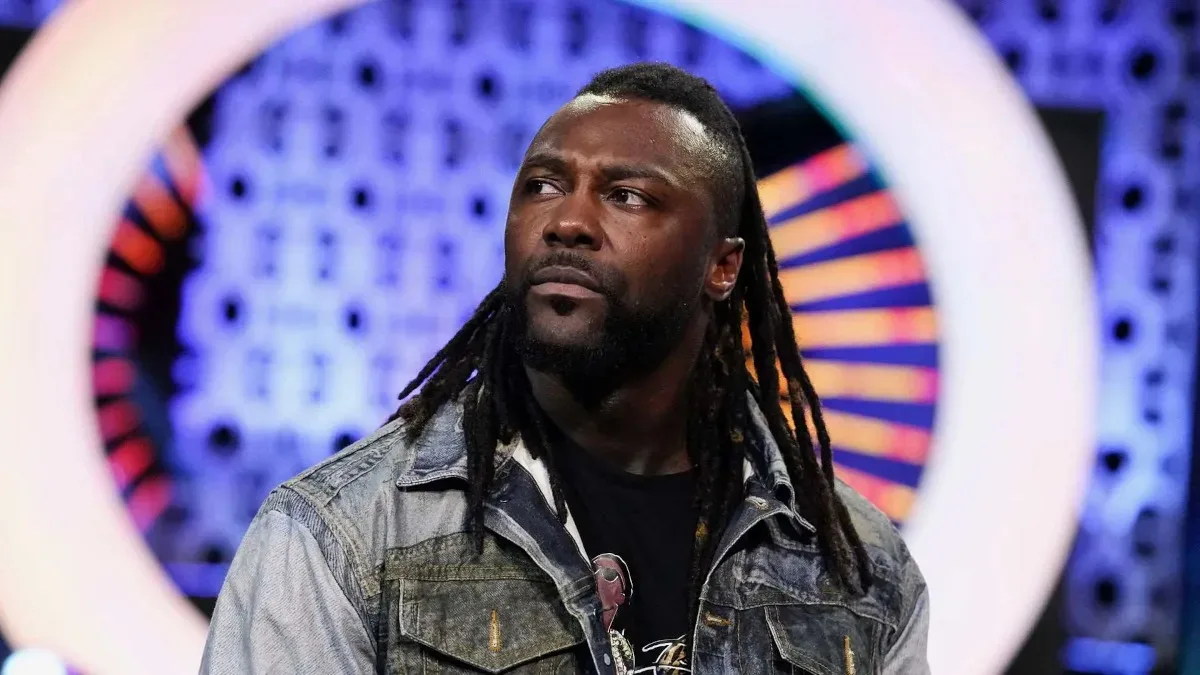
Swerve Strickland has opened up about the significant knee issue he carried for years while continuing to perform at a high level across his professional wrestling career.
Strickland stated in a recent interview that he tore his meniscus in 2019 and continued wrestling without immediately undergoing surgery. The AEW star explained that the injury was something he managed while remaining active, allowing him to keep pursuing major professional goals before eventually taking time away for a procedure.
“I never had bad injuries. I just had like, I tore my meniscus like 2019. I didn’t get the surgery until 2026. So like, I just wrestled on it for like five years. I was performing. I never stopped. So that was just like something I just dealt with just to like, you know, get all the achievements and stuff. Then I was like, okay, I feel like I can take a break now.”
The timeline in Strickland’s comments has drawn attention because his surgery had previously been connected to the period following AEW All In 2025. He was sidelined for several months after that event before returning to AEW action at Full Gear in November 2025. While Strickland referred to receiving surgery in 2026 during the interview, the central point of his remarks was clear: he had spent more than five years wrestling on a torn meniscus before making the decision to step away and address it surgically.
For more background on this topic, read Kevin Knight Leaves Door Open for Future JetSpeed Reunion With Mike Bailey.
A Long-Term Issue Behind an Uninterrupted Run
Meniscus injuries can be especially challenging for a wrestler because of the stress routinely placed on the knees. Wrestling demands bursts of speed, changes in direction, landings, lifting, striking, and repeated impact. Continuing to compete with a torn meniscus for an extended period speaks to both the physical discomfort Strickland was willing to tolerate and the importance he placed on remaining available during key stages of his career.
Strickland was careful to distinguish the injury from what he considered a run of “bad injuries.” In his view, this was not a series of major setbacks that consistently removed him from the ring. Instead, it was a persistent issue he learned to live with while still performing. That distinction is meaningful, as it frames the injury less as an abrupt derailment and more as an ongoing physical challenge that accompanied a productive stretch of his career.
His comments also provide context for why he delayed surgery. Strickland said he continued through the issue to pursue “all the achievements and stuff” that were in front of him. For a performer aiming to build momentum and capitalize on opportunities, choosing when to take an extended absence can be one of the hardest decisions in the profession. Time away can interrupt a wrestler’s rise, but continuing through pain can carry its own risks.
Ultimately, Strickland said he reached a point where he felt able to take that break. The wording reflects a deliberate decision rather than an implication that he had simply ignored the issue. He continued working while he felt the circumstances required it, then stepped away once he believed it was the right time to prioritize the procedure and recovery.
Return at Full Gear Followed Months of Recovery
After AEW All In 2025, Strickland underwent surgery for the torn meniscus and spent several months out of action. His return came at AEW Full Gear in November 2025, bringing him back into the company after a notable absence.
That return marked the end of a period in which the emphasis was necessarily on healing rather than competition. A knee procedure can require patience even when the initial rehabilitation progresses well, particularly for an athlete whose job involves the kind of explosive and repetitive movement seen in professional wrestling. Returning to the ring is not simply a matter of feeling better day to day; it also requires confidence in the knee during live matches and the ability to withstand a demanding schedule.
Strickland’s remarks make the Full Gear return more significant in retrospect. It was not just a comeback from a recent procedure. It followed years of wrestling with the underlying damage already present. The surgery closed a long chapter for an injury he said began in 2019, while the return represented his willingness to resume competing after giving himself the time to recover.
Why the Admission Matters for Strickland’s Career
Professional wrestling fans often see only the finished performance: the entrance, the match, the storylines, and the major moments that make up a wrestler’s body of work. Discussions of injuries can reveal a different side of that experience. They show the personal calculations performers make regarding pain, timing, ambition, and longevity.
In Strickland’s case, the revelation adds another layer to the work he accomplished between 2019 and his eventual surgery. He did not stop performing during that period, and he described continuing to work through the injury while seeking to reach important career milestones. The statement does not change the visible record of what he achieved, but it does offer a fuller understanding of the physical reality that existed behind it.
It also underscores why the decision to undergo surgery can be viewed as a career-preserving move rather than a pause in momentum. Wrestlers often face pressure to stay active, especially when opportunities are available. However, addressing an injury before it becomes more limiting can be essential to sustaining a long-term career. Strickland’s explanation suggests he viewed the break as necessary once he had reached a point where taking it made sense.
There is no indication in his comments that the torn meniscus prevented him from working during those years, and he plainly said he kept performing. At the same time, his description leaves little doubt that the injury remained a factor in his life and career until he underwent surgery.
Strickland Continues Expanding His Creative Output
Outside of his in-ring work, Strickland has also remained active creatively. He recently released a new single, adding another project to a career that extends beyond the wrestling ring.
That broader creative activity fits the profile Strickland has developed as a performer who approaches his career through multiple outlets. His recent comments about the meniscus injury reinforce the determination behind that approach. Even while carrying a problem he said began in 2019, Strickland continued to perform and work toward the accomplishments he wanted before making room for surgery and recovery.
For AEW, his return after the post-All In 2025 absence restored an established name to the roster. For Strickland personally, the recovery period represented the resolution of an issue he had managed for years. His candid account now puts that absence and comeback in sharper perspective: the procedure was the culmination of a long-delayed choice to address an injury that had been present throughout a substantial portion of his career.
Darryl Polo
Darryl Polo is a passionate wrestling fan covering WWE, AEW, TNA and beyond. He loves great rivalries, breakout stars and the moments that keep fans talking long after the bell. How we work.