
Barbed wire has long occupied a particular place in professional wrestling: it is visually immediate, inherently dangerous and capable of making even a brief moment in a match feel severe. For Stu Grayson, however, one of his most painful experiences with the weapon was not necessarily a spot the audience could clearly identify in real time.
Grayson has recalled suffering a nerve injury to his finger during a Ring of Honor bout that pitted himself and The Righteous against Dark Order. The incident occurred while he was preparing a barbed-wire-assisted knee strike for John Silver, a sequence that was designed to heighten the intensity of the match. Instead, a moment of positioning with the wire produced an injury that left Grayson without normal feeling and use in the finger for roughly a month.
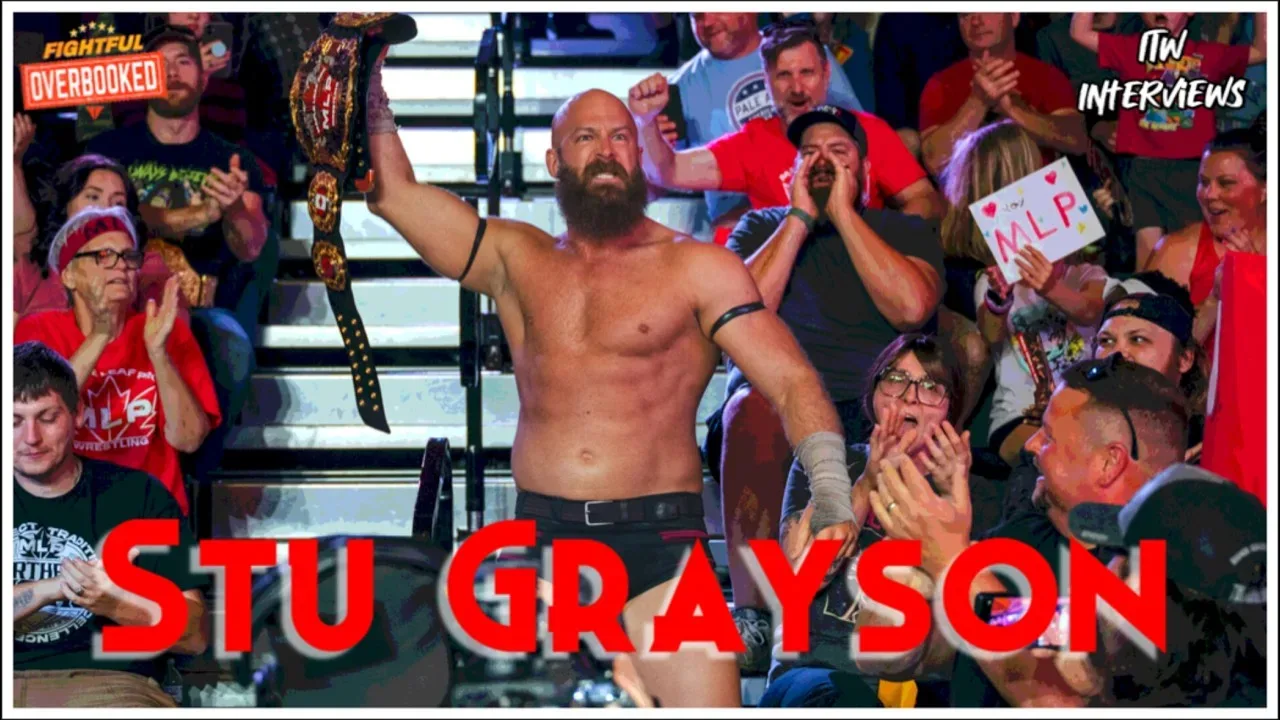
The veteran wrestler discussed the incident during an appearance on In The Weeds, explaining that it remains among the worst injuries he has dealt with despite being almost invisible to everyone watching the match.
“The only time I’ve ever cut my hand really well was actually in Ring of Honor,” Grayson said. “We did myself and The Righteous versus Dark Order. At some point in the match, I’m wrapping my knee with barbed wire. So then I’m going to knee strike John Silver in the face.”
For more background on this topic, read Paul Walter Hauser Says a High-Level Wrestling Star Took Shots at Him Behind His Back.
A Routine Setup Became a Serious Injury
In Grayson’s recollection, the problem came as he was wrapping the wire around his leg. He said he stepped on the barbed wire as he pulled it into place, causing it to drive deeply into his finger. What might have appeared to be a simple cut instead affected a nerve.
“The barbed wire went inside my finger so far that it actually cut the nerve,” Grayson explained.
That diagnosis had an immediate impact beyond the ring. Grayson said he lost the use of the finger for around a month, an unsettling outcome for an injury that spectators and even others participating in the bout did not recognize at the time. He noted that doctors advised him that the nerve had not been completely severed and that its function was expected to return with time.
That recovery ultimately took approximately one to two months. Grayson said the feeling eventually returned to his fingers, offering a positive conclusion to what had initially been a painful and uncertain stretch.
The incident speaks to the unusual nature of wrestling injuries. Major injuries can sometimes be apparent immediately, whether through a match stoppage, a visible limp or a performer being unable to continue. But other issues develop in moments that do not receive attention from the crowd, cameras or even fellow wrestlers. A hand injury sustained while setting up a weapon spot can be every bit as disruptive to the person experiencing it, regardless of whether it becomes a memorable visual for the audience.
The Risks Behind Barbed Wire Spots
Barbed wire spots require performers to balance presentation with safety while working around a material that cannot be entirely controlled. The intended effect in Grayson’s case was clear: wrap the wire around the knee and deliver a dramatic strike to Silver. Yet the danger emerged before that strike, while Grayson was getting the wire into position.
His story also illustrates how quickly a wrestler can be hurt through an awkward shift of weight or a small miscalculation. Stepping on the wire while pulling it meant that the tension and movement worked against him. The result was not a moment built for the match’s audience, but an injury with lingering consequences.
Grayson described the pain as intense, even if the injury itself did not have the kind of spectacle that is commonly associated with barbed wire in wrestling. He also addressed the strange disconnect that can come with an injury no one else sees. There was no obvious visual for fans to react to and no major spot for him to point toward afterward. In his own words, it was difficult to “brag” about because the cause felt so mundane.
“It’s like one of the worst injuries I’ve had, and it’s nothing, really,” Grayson said. “But it’s the kind of thing that no one in the ring even knew about. So the fans can’t even say, ‘Oh, my God, he almost cut off his finger.’ Like, you don’t even see it. But it was so painful.”
That perspective is revealing. Wrestling’s physical toll is often measured through the most obvious moments: crashes through tables, violent strikes, blood, high-risk landings and matches that visibly spiral into chaos. But Grayson’s experience was a reminder that the work also includes injuries that do not make a highlight reel. Those can still affect a performer’s mobility, comfort and ability to train or compete while healing.
Grayson, Dark Order and The Righteous
The match in question brought together Grayson and The Righteous against his Dark Order counterparts. The setting added another layer to the recollection, given Grayson’s history with Dark Order and the personal familiarity among the wrestlers involved. Silver was the intended recipient of the knee strike when the barbed wire mishap occurred, though Grayson’s injury happened during the preparation rather than on contact.
Grayson’s account does not suggest that anyone else in the ring was aware of the extent of the injury in that moment. That is often part of the challenge for wrestlers dealing with an unexpected physical issue during a match. They must make rapid decisions about whether they can continue, how to protect the injured area and whether the situation needs to be communicated without disrupting the flow of the bout.
In this case, the nerve damage was not fully understood by observers in the arena. Grayson was able to look back on it later, after the recovery process had run its course and sensation had returned. The fact that the finger recovered is the key positive outcome, particularly after he initially lost its use.
His comments do not frame the story as a complaint about the use of barbed wire or as an attempt to elevate the injury into something larger than it was. If anything, Grayson presented it with a degree of self-deprecating humor. He called it “dumb” precisely because it was painful and consequential without being something the crowd could appreciate as a dramatic accident.
An Injury Fans Never Saw
There is a practical reality to that kind of story. Fans generally experience a wrestling match through what the camera catches and what the performers are able to communicate through their reactions. An injury to a finger during a setup can be hidden by the speed of the sequence, the placement of bodies in the ring and the broader chaos surrounding a weapon-filled match.
Grayson’s injury therefore did not become a defining visual of the contest. It did not prompt the kind of immediate response that accompanies a clearly visible laceration or a shocking fall. But for the wrestler, it had real consequences: weeks of impaired function and a recovery period that required patience while the nerve healed.
His experience also underscores why some of the most significant physical struggles in wrestling become known only after the fact. Wrestlers are trained to maintain the performance, and the audience’s attention is usually directed toward the planned action. An unexpected injury can be absorbed into that action, especially when it does not visibly alter the match.
For Grayson, the barbed wire incident has become a memorable example of that reality. It was a painful accident during a Ring of Honor match, one that temporarily affected his finger and left him waiting for sensation to return. It was also an injury that escaped the notice of fans and, by his account, the other people in the ring.
Elsewhere in the same conversation, Grayson also discussed his recent match with Josh Alexander. But the barbed wire story stands out as a sharp reminder of wrestling’s less visible hazards: sometimes the injuries that hurt the most are not the ones the audience ever gets to see.

Darryl Polo
Darryl Polo is a passionate wrestling fan covering WWE, AEW, TNA and beyond. He loves great rivalries, breakout stars and the moments that keep fans talking long after the bell. How we work.