
Home releases in ROH’s early viewing model
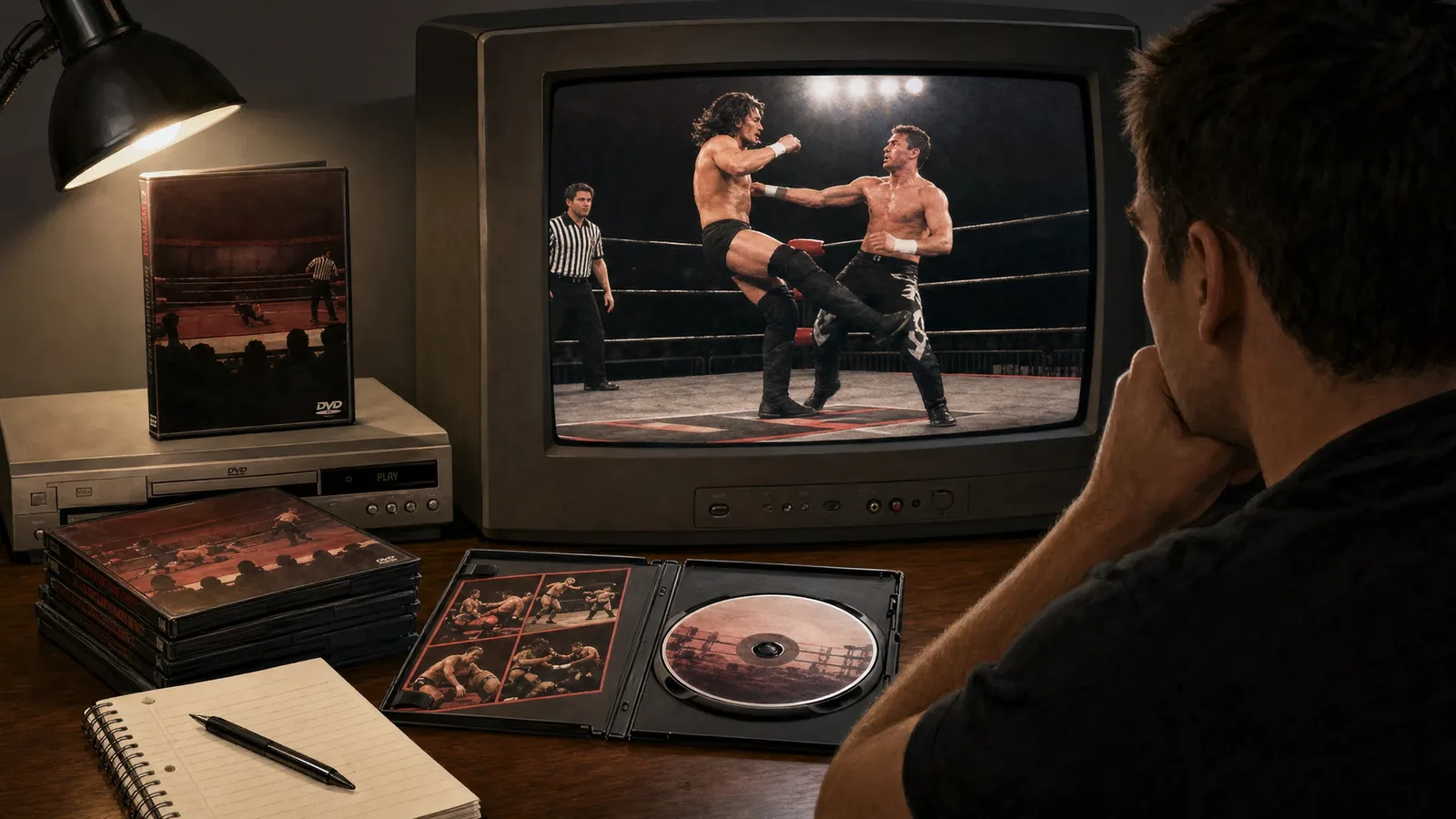
In a February 2005 interview reflecting on 2004, ROH booker Gabe Sapolsky said the promotion did not have television and described home releases as a central means for events to continue reaching viewers beyond the building. That is Sapolsky’s account of ROH’s distribution situation, rather than a measurement of its audience. It nevertheless sets a useful starting point for revisiting the catalog: home releases were part of how ROH presented an event after the live night, giving a viewer access to a card that had originally taken place in one venue.
The release model also sits alongside ROH’s stated approach to talent. Sapolsky said ROH was not based on long-term contracts or television exposure, describing wrestlers as receiving a limited number of bookings while using ROH to develop their reputations and perform the work they wanted to do. He characterized the movement of talent as a planned revolving-door model, with hoped-for runs of roughly one to two years before performers pursued other opportunities. A DVD catalog can therefore be read as a record of changing lineups and presentations, not as a snapshot of a permanently fixed roster.
Release timing and event sequence
Timing was an explicit concern in Sapolsky’s account. He said buyers wanted to purchase a show immediately after it happened, while early-2004 home releases had not been arriving quickly enough or in their intended sequence. According to him, this upset parts of the fan base. He also said delays could reduce immediate revenue and the remaining buzz around an event. Those business observations are promoter testimony, not a numerical sales study, but they establish that release speed and catalog order mattered within ROH’s own discussion of its home-video operation.
Sapolsky specifically described two- or three-month release gaps as damaging to a show’s momentum. The documented point is a simple but important qualification for DVD viewing: the live event and the home release were not always experienced at the same time. A person approaching the disc encountered a card after that gap, rather than in the moment it happened. That distance should keep a viewer from assuming that a DVD release reproduces the exact circumstances of live attendance. It is a later presentation of the event, with its own place in the release sequence.
By the period discussed in the interview, Sapolsky said ROH’s home releases had been caught up and put into order. This establishes a reported improvement in the availability and sequence of releases; it does not demonstrate a particular audience response or business result. For a catalog viewer, however, ordering has a practical interpretive value. A sequence can make it easier to track recurring feuds, title situations, and changes in which wrestlers were featured prominently. That makes it possible to consider a match both as an attraction on one disc and as part of an event-to-event run.
Fall 2004 as a group of releases
Slam Wrestling’s review treated six ROH shows from roughly three months in fall 2004 as a connected group of home releases. That framing matters because the review did not present the discs only as isolated cards or as containers for one celebrated match. It presented a run that could be bought and viewed as a group. The reviewer also said the set combined appearances by established names with featured matches, offering several possible entry points to ROH’s regular wrestlers and ongoing stories. The catalog format gave the reviewer a basis for discussing both individual events and the broader set.
The September 11, 2004 Glory by Honor 3 release illustrates the amount of material a complete-event disc could include. The fall review identified Alex Shelley versus Bryan Danielson, CM Punk versus Austin Aries, John Walters versus Nigel McGuinness, and Samoa Joe versus Doug Williams, along with an Ultimate Endurance tag-title match. It also presented the release as containing ongoing feuds and title matches. A viewer interested in one pairing could thus find other wrestlers, championship material, and continuing conflicts on the same release, rather than encountering a single bout alone.
The October 2 Midnight Express Reunion release shows another form of packaging. It was named for appearances by Stan Lane, Bobby Eaton, Dennis Condrey, and Jim Cornette, but the review also listed Samoa Joe versus Bryan Danielson and a developing Steamboat–Foley conflict. The named attraction and the rest of the event were therefore distinct parts of the same release. This is useful when revisiting a catalog because the reason a disc first attracts attention need not be the only material worth noting. The event can be approached as a package with more than one documented point of interest.
Headline matches and complete-release judgments
The October 16 Chicago event provides a clear example of a prominent match positioned within a broader DVD. It was headlined by Samoa Joe versus CM Punk, a rematch of their June 60-minute draw. Slam Wrestling identified that rematch as the release’s obvious selling point, while also naming other matches and a Foley–Steamboat promo as added value. The review’s framing leaves room for more than one way to assess the disc: a viewer may begin with the headline match, then consider how the rest of the card and its non-match material sit around that attraction.
Contemporary recognition should be described with its limits intact. Sapolsky said a 2004 replacement match between Samoa Joe and CM Punk received a five-star rating from Dave Meltzer and finished among the top three in Match of the Year polls. Slam Wrestling likewise reported a five-star Meltzer rating and top-three placement in most Match of the Year polls for Joe versus Punk. These are specific markers of critical and poll-based recognition. They document notable reception for the match without establishing that all viewers ranked it alike or shared one definition of its standing.
ROH Gold provides a useful contrast to an approach focused exclusively on the most praised match or card. The fall review called it ROH’s 50th show and said it continued major storylines, while judging it less exceptional than other releases in the group. That distinction separates a reviewer’s comparative assessment from the value of following an ongoing sequence. Someone working through the releases may want the connective storyline material even if a particular disc is not the reviewer’s preferred installment. Collection-completion and match-quality preference are related viewing choices, but they are not the same judgment.
Changing roles across a DVD catalog
Sapolsky contrasted an older ROH pattern of gradually moving wrestlers from opening matches toward possible main-event opportunities with a 2004 effort to accelerate newer acts after roster disruption. This does not show that DVD releases created those changes in status. It does help explain why complete-event records can be useful for observing presentation over time. Card placement, opponents, and recurring appearances can be compared across releases. Watching in sequence may make a shift in a wrestler’s placement more visible than watching only a small selection of frequently discussed bouts.
Sapolsky cited Paul London’s ROH matches with AJ Styles and Bryan Danielson as examples of work that performers could look back on after moving elsewhere. He also said those DVDs continued to sell well, though he offered no numerical sales data. The careful takeaway is about preservation rather than sales scale. A home release can retain a specific pairing and performance after the people involved have taken other opportunities. For a fan revisiting ROH, the disc offers a way to place a remembered match within the event where it appeared, rather than treating it only as an isolated career reference.
Commentary as part of the release
The fall-2004 review treated commentary as part of the viewing experience rather than as an invisible extra. It highlighted CM Punk’s commentary work on the Liger shows and on Glory by Honor, while naming Jimmy Bower and Mark Nulty on other releases. For a person watching at home, commentary is one element of the presentation accompanying the matches. Along with entrances, promos, and crowd response, it can affect how an event is encountered as a complete release. Comparing DVDs, then, is not limited to comparing the bouts listed for each card; the surrounding presentation is also documented material.
Slam Wrestling explicitly recommended the fall release series to people who had not previously experienced ROH. That is contemporary evidence that the reviewer regarded the DVDs as suitable entry points for newcomers, although it does not measure how many people began with them. The recommendation also should not be mistaken for a claim that one run of discs represented every aspect of ROH. A useful viewing question is narrower: what does a particular release foreground for someone seeing ROH for the first time, including wrestlers, conflicts already in progress, match selection, and the commentary that accompanies the card?
Crowd response is another documented part of what a DVD viewer received. Reviewing Live in Tokyo, ProWrestling.net observed that a quiet, respectful Japanese audience altered the feel of at least one match compared with the reviewer’s expectation of a hotter U.S. crowd. The same review recorded the audience increasingly reacting to nearfalls during Takeshi Morishima versus Nigel McGuinness and ending with an ROH chant. These are observations from that review, not an objective scale for crowd quality. They show that venue atmosphere and audience rhythm can be relevant when considering the feel of a recorded match.
Live in Tokyo as a complete-event record
A ProWrestling.net review published in January 2008 identified Live in Tokyo as the DVD documentation of ROH’s July 16, 2007 Tokyo event. The release is an example of the complete-event DVD model being used for a show in Japan. During the second match, commentary described ROH’s growth from eleven shows a year in a recreational center to events in London and Japan. Because that statement came from commentary on the release, it is best understood as the program’s own framing of ROH’s development rather than as an independent measurement of the promotion’s reach.
Live in Tokyo also shows that a DVD was a produced presentation, not simply unmediated event footage. The review said Dave Prazak and Lenny Leonard performed commentary off-camera while presenting the atmosphere as though they were in the venue. The reviewer gave the complete DVD a 7.5 out of 10 while separately praising its main event. Those details support a useful distinction between evaluating the presentation, the card as a whole, and a particular match. A strong reaction to one of those levels does not require the same reaction to the other two.
Questions for revisiting a release
A practical viewing approach begins by identifying what draws attention to a specific disc: a headline rematch, a title match, an established name, a wrestler, or a continuing feud. Then watch the complete event before deciding whether that first attraction accounts for the whole release. The fall 2004 group supports this method because the reviewed packages combined featured matches, regular-roster appearances, title material, and ongoing conflicts. A well-known match may be the reason to choose a DVD, while the surrounding card supplies the additional context documented on that same release.
It is also helpful to separate three questions that can otherwise blur together. First, what did a contemporary reviewer or poll specifically recognize? Second, what does the surrounding event show about a match’s place on the card? Third, what did the release presentation contribute through commentary and crowd atmosphere? The documented Joe–Punk recognition addresses the first question. The Chicago event’s additional matches and promo address the second. Commentary credits in the fall review and observations from Live in Tokyo address the third. Keeping these categories separate preserves the difference between attributed reception and a viewer’s own assessment.
Finally, the evidence calls for modest conclusions. Sapolsky’s statements about buyers wanting timely releases and delays harming buzz provide a promoter’s account of ROH’s release concerns, not a numerical sales analysis. Slam Wrestling’s recommendation of the fall series for people new to ROH shows the reviewer considered it suitable for newcomers, but does not quantify its audience. The catalog can be examined as a record of how complete events were released and framed. Match reputation, meanwhile, can be traced through identifiable ratings, poll mentions, reviews, production choices, and individual viewing responses rather than reduced to one unanimous verdict.
Explore more

Darryl Polo
Darryl Polo is a passionate wrestling fan covering WWE, AEW, TNA and beyond. He loves great rivalries, breakout stars and the moments that keep fans talking long after the bell. How we work.