
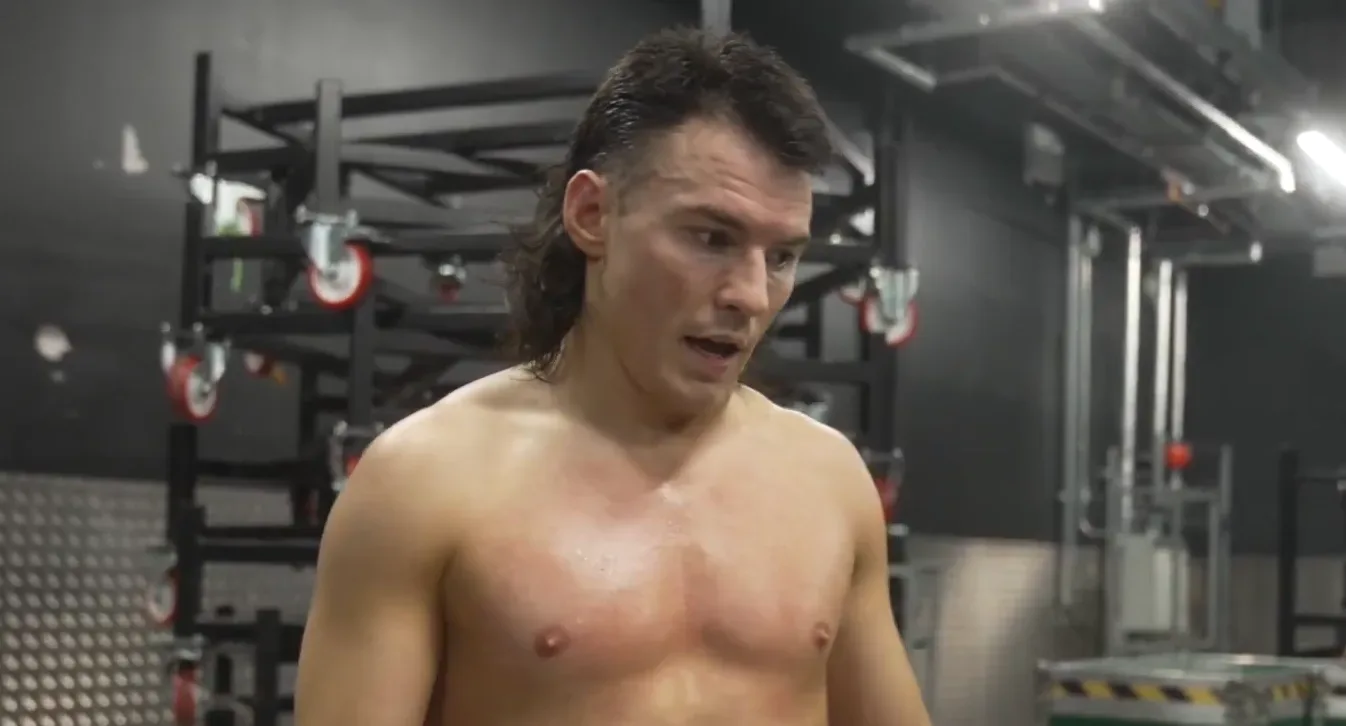
Speedball Mike Bailey believes one of the simplest ways to explain professional wrestling to a newcomer is to compare it to an action movie — with one major difference. Instead of watching events unfold on a screen, the audience is in the building, watching the action happen in real time and becoming part of the experience.
Speaking with WCHS, Bailey described wrestling as a form of live entertainment that combines physical action, ongoing character stories and a direct connection between performers and fans. In his view, that interaction is what separates wrestling from conventional film, television and many other scripted forms of entertainment.
“If you don’t know pro wrestling, imagine you’re going to see an action movie, right? But it’s not on screen. It’s live in front of you. And it’s not just a movie that you’re going to see. It’s a unique performance that is tailored to who’s seeing it every single time, and not only is it unique, it’s going to tell a story that’s going to play out from match to match, from show to show, and all throughout the year, and the best part is you as the audience get to change the story. Whether you choose to boo or cheer someone, you can actually affect the outcome of the matches, and that’s the best part. There’s just nothing like it.”
Bailey highlights wrestling’s live connection
Bailey’s comparison gets to the core of why wrestling has maintained its appeal across generations. A wrestling match can contain the kinds of visual moments associated with action cinema: dramatic fights, explosive movement, escalating danger, surprise confrontations and clear emotional stakes. But wrestling presents those elements before an audience that can react at every turn.
For more background on this topic, read Speedball Mike Bailey Details How Independent Wrestling Kept His Dream Alive.
That response is not a background detail. The crowd can change the feeling of a match from one moment to the next. A wrestler attempting a high-risk maneuver may receive anticipation, concern and then a major reaction when the move lands. A villain’s attempt to slow the pace or avoid a fight can generate boos that add to the audience’s investment in seeing that performer finally get what is coming to them. A comeback can become bigger because the people in attendance are willing it to happen.
Bailey specifically pointed to cheering and booing as a meaningful part of the process. Fans do not merely observe the presentation; their reactions help define the atmosphere around it. That element is especially important because no two crowds are identical. A character who enters one city to a deafening positive reaction may encounter a different reception elsewhere. Performers must recognize the audience in front of them and shape their work around that energy.
It is that adaptability that makes a wrestling event feel immediate. While the broad contours of a rivalry may carry over from one event to another, the response inside the arena can influence the way its key moments are experienced. The timing of a pause, a stare, a taunt, a near fall or a sudden burst of offense all takes on greater significance when the wrestlers and crowd are feeding off one another.
A story that continues beyond one match
Bailey also emphasized the long-form nature of professional wrestling storytelling. A single match can have a beginning, middle and end, but it can also serve as one chapter within a larger story. Tensions can build over multiple appearances, major victories can alter a wrestler’s standing, and a loss can lead to renewed determination, frustration or a shift in attitude.
For fans, that continuing structure can make wrestling distinctly rewarding. Viewers may follow the same competitors through rivalries that unfold across weekly programming, special events and live appearances. They can watch an alliance form, break apart and potentially return years later under very different circumstances. Championships bring another layer to the narrative, as each title defense can affect both the champion and the challengers pursuing them.
Bailey’s description of stories playing out “from match to match, from show to show, and all throughout the year” reflects that ongoing format. Wrestling is built to give audiences reasons to stay invested after one bell rings. A decisive result might settle one issue while creating another. A wrestler can emerge from defeat with greater support than before. A surprise appearance or confrontation can redirect an entire program in a matter of minutes.
That continuity is one reason fans often develop strong attachments to performers and rivalries. They are not just watching isolated action scenes. They are following careers, partnerships, setbacks and breakthroughs in a medium where the next chapter may arrive quickly and where the emotional reaction from the audience remains visible throughout.
The appeal of an action-oriented performer
The action-movie comparison is particularly fitting coming from Bailey. His in-ring identity has been shaped by speed, precision and an approach that regularly puts an emphasis on dynamic striking and fast-paced movement. The “Speedball” name itself immediately communicates the kind of energy audiences can expect when he competes.
Wrestlers with an action-heavy style can provide some of the clearest entry points for new viewers. Even someone unfamiliar with championship histories, rivalries or character motivations can recognize the impact of a fast exchange, an acrobatic escape or a sudden kick. At the same time, the most memorable matches typically add more than athletic spectacle. They give those moments context by making viewers care about who is fighting, why the fight matters and what each competitor stands to gain or lose.
Bailey’s comments acknowledge both sides of that equation. Wrestling offers the visual thrill people might expect from an action feature, but it is also a storytelling medium. The physical contest and the emotional narrative work together. The audience can enjoy the athletic accomplishment while also responding to the personalities and stakes that have been established around the match.
That balance is vital in an arena setting. A move may be impressive on its own, but the reaction grows when it arrives at exactly the right moment in the story. Similarly, a simple strike or a brief facial expression can become powerful when it follows months of conflict. Wrestling’s ability to pair athletic performance with clear emotion is central to the experience Bailey described.
Why every audience helps create a different show
One of Bailey’s strongest points was his assertion that each performance is tailored to the people who are watching it. Wrestlers enter a venue with plans and objectives, but the crowd creates a specific environment that cannot be fully duplicated. An audience may be loud from the opening bell, take time to warm up, strongly support an underdog or respond unexpectedly to a competitor who was expected to be disliked.
That uncertainty challenges performers while also making live wrestling compelling. They need to understand what the audience is giving them and use it effectively. A crowd’s reaction can encourage a wrestler to lean further into a particular mannerism, alter the pace of a sequence or give a pivotal moment additional room to breathe. The essential work remains physical and demanding, but it is also communicative.
For those in attendance, this creates the feeling that they were present for something that belongs to that particular night. Fans may watch a match later or see similar encounters elsewhere, but they remember the building’s response, the chants, the tension around a close decision and the release that follows a major payoff. The collective reaction becomes part of the event’s identity.
Bailey’s explanation also offers a useful answer to the common question of why wrestling is best experienced live. Television can capture the action and tell the stories, but a live crowd supplies an extra dimension. Every reaction is instantaneous. There is no distance between the fans and the performance taking place in front of them.
More than a spectacle
Professional wrestling can be celebrated for its spectacle, but Bailey’s comments stress why the medium has deeper staying power. It is not solely about spectacular moves, dramatic entrances or surprising outcomes. Its distinct appeal comes from the way those elements are shared between the wrestlers and the crowd.
The performers bring the conflict, athleticism and character work. The audience brings its voice, emotional investment and willingness to respond. Over time, those reactions can help elevate matches, shape the reception to competitors and make a continuing storyline feel significant.
For Bailey, the closest comparison may be an action movie playing live in front of the viewer. Yet even that comparison only goes so far, because wrestling offers something film cannot replicate: the sense that the people watching are actively participating in the moment. As Bailey put it, “There’s just nothing like it.”

Darryl Polo
Darryl Polo is a passionate wrestling fan covering WWE, AEW, TNA and beyond. He loves great rivalries, breakout stars and the moments that keep fans talking long after the bell. How we work.