
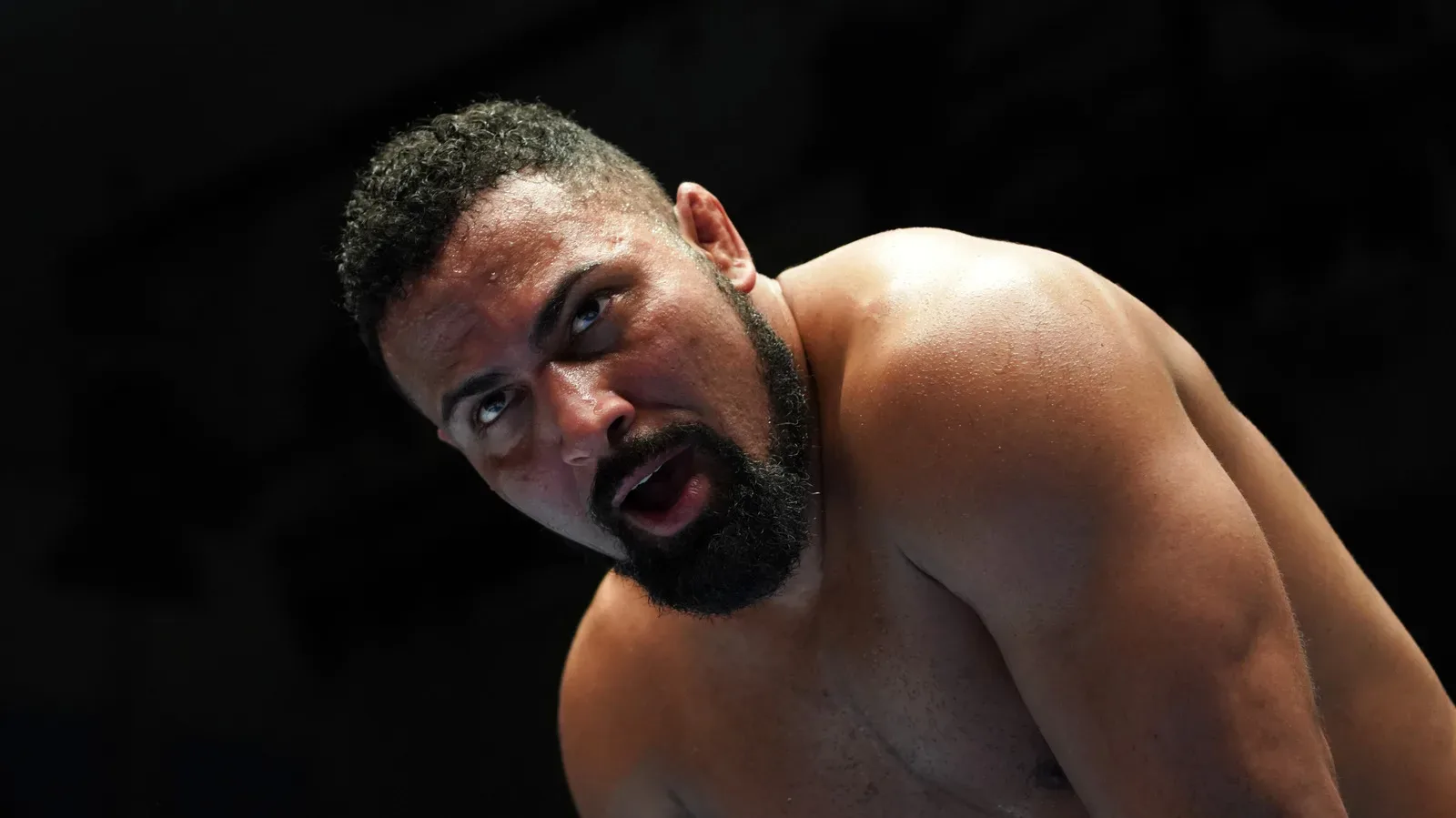
Rocky Romero’s role in All Elite Wrestling extends considerably beyond his on-screen association with the Don Callis Family. While Romero remains an active wrestler, his most significant responsibilities may be the work he performs away from the cameras, helping maintain the operational connection between AEW, New Japan Pro-Wrestling and Consejo Mundial de Lucha Libre.
Those relationships have become an increasingly important part of the modern wrestling landscape. Talent moves between the three companies, championships appear outside their home promotions, and major events can feature representatives from multiple rosters. None of that happens smoothly without regular communication between the people responsible for talent coordination, schedules, travel and creative logistics. Romero, who has spent major portions of his career in both Japan and Mexico while also becoming an established AEW presence, is uniquely positioned to help bridge those worlds.
Speaking on What Happened When, Romero described the scope of a job that asks him to work with three promotions operating year-round schedules. He made clear that the role is demanding even if much of the daily communication can be handled remotely.
“I wear a lot of hats,” Romero said. “It’s a very demanding job on many ends, you know, not only for AEW but New Japan and CMLL as well. These are three companies that run full-time schedules. So coordinating between all three, it’s a lot. It’s a lot.”
For more background on this topic, read Kris Statlander Reflects on AEW’s Pandemic Era and the ACL Injury That Halted Her Early Momentum.
Romero’s comments underline the scale of the balancing act. AEW’s national television schedule and pay-per-view calendar are substantial commitments on their own. NJPW operates a busy touring system in Japan while also presenting major events in the United States and elsewhere. CMLL, meanwhile, has one of the deepest and most active wrestling infrastructures in the world, with its historic Arena México operation and a packed rhythm of cards in Mexico.
Coordinating across those companies means working around more than just match announcements. Each promotion has different tour cycles, talent obligations, championship programs and travel demands. Wrestlers who are available on one weekend may be committed to a tour or major show in another country shortly thereafter. For an international partnership to function effectively, the people involved need a clear understanding of who can travel, when they can travel, and how a particular appearance fits within each company’s existing plans.
A Career Built Across International Wrestling
Romero is well suited to that responsibility because his career has been defined by international experience. He has been heavily associated with New Japan for years, both through his own in-ring work and his long-running RPG Vice partnership with Trent Beretta. He has also developed strong ties in Mexico, including extensive work connected to CMLL. That history gives Romero familiarity with the professional environment, communication styles and practical expectations that come with working in each territory.
His role also reflects the value of having people who understand the cultural and logistical differences among partner promotions. An international talent exchange is not simply a matter of identifying a wrestler for an event. It can require discussions about timing, passports, flights, lodging, promotional materials, title recognition and the presentation of talent once they arrive. It also requires a degree of trust between companies that may be collaborating while each continues to protect its own priorities.
AEW’s partnerships with NJPW and CMLL have created notable opportunities for performers and fans alike. The Forbidden Door concept, in particular, has helped establish a major annual platform for matches involving AEW and NJPW talent, with CMLL wrestlers also becoming a meaningful part of the wider crossover environment. Beyond the biggest shows, the working arrangements can lead to appearances that broaden a wrestler’s profile in front of audiences who might not otherwise see them regularly.
Romero’s behind-the-scenes role is therefore connected to a larger strategy of keeping those pathways open. The ability to send talent between companies and produce credible crossover matchups depends on reliable coordination. Romero did not lay out every aspect of his responsibilities, but he emphasized that the work is constant because all three organizations maintain active schedules.
Remote Work Does Not Eliminate the Travel
Despite the international nature of the job, Romero said much of the process happens online. That is unsurprising in a role spanning the United States, Japan and Mexico, where schedules and time zones make in-person meetings impractical as the sole method of communication. Still, Romero is not limited to calls and messages. He remains a regular physical presence at AEW and CMLL events and makes recurring trips to Japan.
“A lot of it’s online,” Romero said on What Happened When. “But I’m in the flesh in a lot of these places.”
For NJPW, Romero explained that his current travel schedule is more manageable than it was when he was touring on a full-time basis. He said he now travels to Japan roughly once every quarter. That is a significant reduction from an earlier period in his career, when he was taking at least 12 trips a year and could be away for vastly different lengths of time depending on the tour.
“For Japan right now, it’s every quarter I’m going for, so it’s not as hectic as it was before when I was touring full-time with them, and on twelve trips a year at least,” Romero said. “And you know, they can vary from a couple of days, a few days, to a month.”
The distinction matters because touring as a wrestler and making periodic work trips as a liaison demand different kinds of preparation. A full-time tour can involve weeks away from home, repeated long-distance travel and the physical toll of performing multiple times per week. Romero remains active in the ring, but his present responsibilities require him to preserve time for AEW and CMLL while still maintaining direct contact with NJPW.
Romero admitted that the older schedule is not something he misses as much now that he is “getting older and busier.” It is a candid assessment from a veteran who has spent years navigating one of wrestling’s most travel-heavy career paths. The international circuit can be rewarding, particularly for a performer who enjoys different audiences and styles, but the practical strain becomes more pronounced when a person is also responsible for administrative and coordinating duties.
Regular Presence in Mexico and AEW
Mexico remains a particularly frequent stop for Romero. He said he is at CMLL regularly, estimating that he makes an appearance around once a month. Those visits give him the chance to check in directly with people in the company and continue coordinating the relationship in person.
“CMLL I’m there all the time, or at least once a month or so, I’m there making an appearance, and you know, kind of checking in on things and coordinating with everybody,” Romero said.
That consistency is especially useful given CMLL’s place in AEW’s wider international network. The promotion has an immense roster and a distinct lucha libre identity, meaning that even a short-term exchange can offer fresh match possibilities. The relationships also allow AEW fans to become more familiar with CMLL wrestlers while providing opportunities for AEW talent to work in Mexico.
At AEW, Romero said he is present for nearly every show unless an obligation with CMLL or NJPW prevents him from attending. That level of attendance illustrates that his work is not an occasional consulting position. He is deeply involved with AEW’s weekly ecosystem while serving as one of its key connectors to two major international partners.
“I’m pretty much at almost every AEW show, if I don’t have any commitments with CMLL or New Japan,” Romero said.
For viewers, Romero’s appearances on AEW programming may only reveal one part of what he contributes. His in-ring role can shift with storylines and alliances, but the organizational work he described has a longer-term impact. Maintaining communication among AEW, NJPW and CMLL supports the kind of cross-promotional activity that has become a defining feature of the current wrestling era.
Romero’s experience also shows why those partnerships depend on more than public goodwill. The biggest announcements and surprise appearances attract attention, but they are supported by detailed planning from people who understand the demands of each promotion. With AEW, NJPW and CMLL all running full-time, Romero’s workload is unlikely to become simple. As he put it, coordinating all three is “a lot” — and his travel schedule demonstrates exactly why.
In pictures
Darryl Polo
Darryl Polo is a passionate wrestling fan covering WWE, AEW, TNA and beyond. He loves great rivalries, breakout stars and the moments that keep fans talking long after the bell. How we work.