
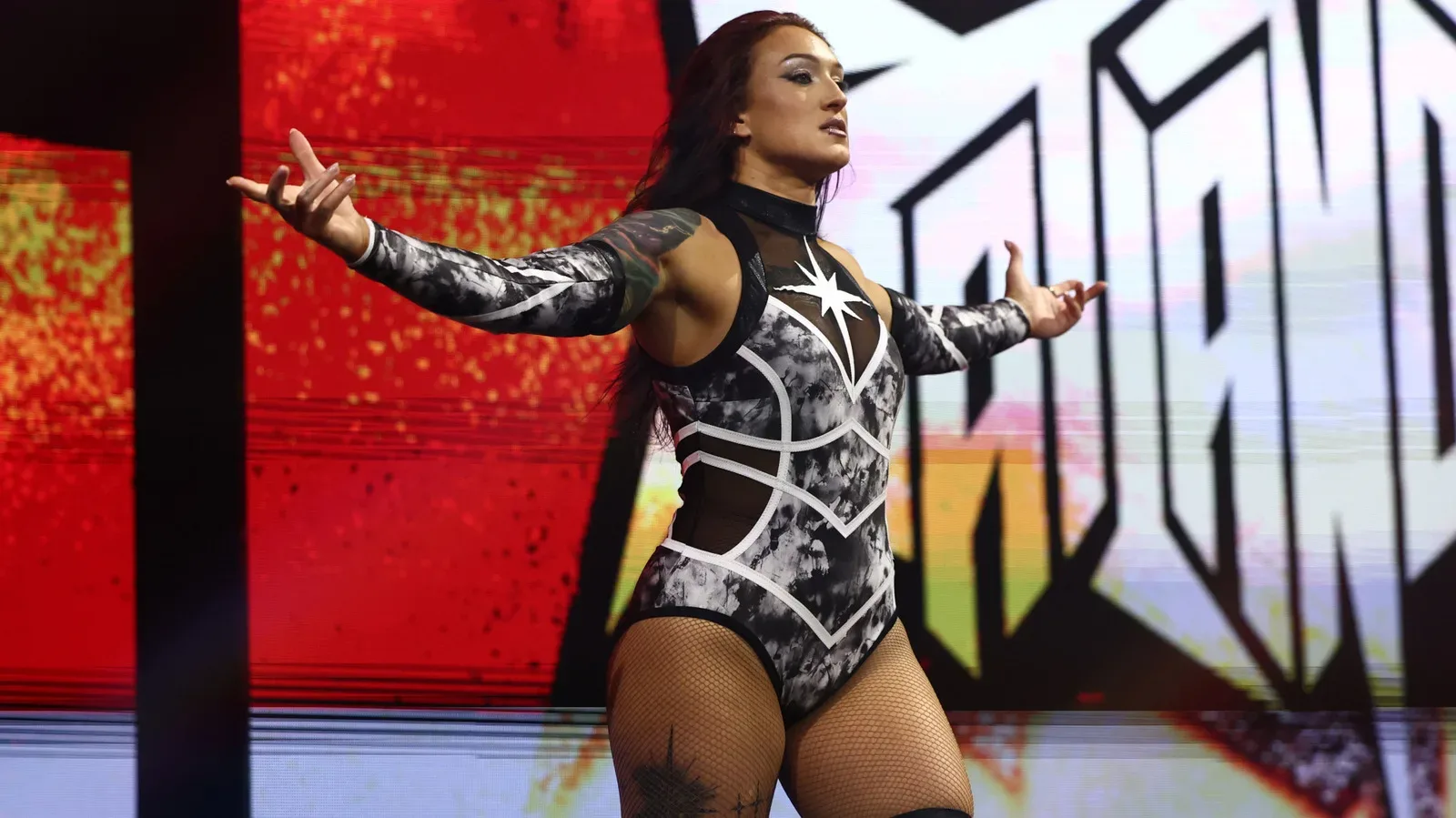
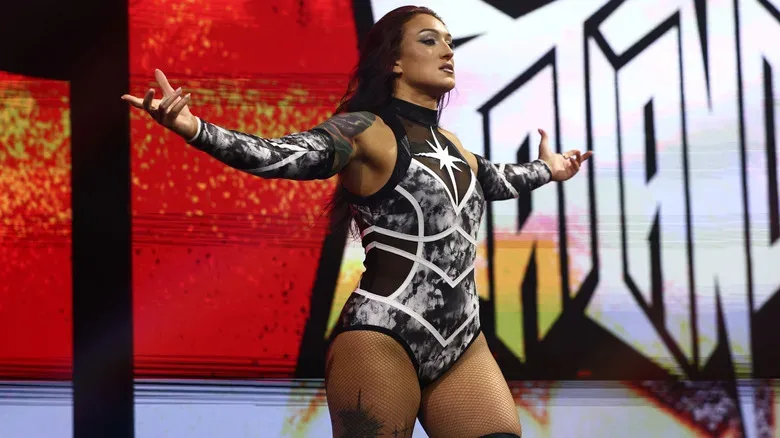
Kris Statlander’s rise into one of AEW’s most accomplished women’s wrestlers was not a straightforward climb. Before becoming TBS Champion and later reaching the AEW Women’s World Championship, Statlander had to navigate an unusually difficult beginning to her time with the company: a global pandemic, an abrupt change to the wrestling industry’s normal routine, and a serious knee injury that left her unable to walk normally while much of the world was already confined at home.
Speaking with 98 Rock Baltimore, Statlander looked back on entering AEW at a formative point in her career and explained why that stretch remains such a strange and challenging memory. She was still relatively new to professional wrestling when she signed with the promotion, with only three years of in-ring experience behind her.
That made the adjustment to national television and a rapidly growing company significant on its own. Then the pandemic changed the environment around her. Wrestling continued in a limited form, but the usual travel, crowd energy, locker-room interaction and career-building rhythm were all altered. For a performer still learning how to establish herself at that level, the circumstances created an experience unlike the one she expected when she joined AEW.
“I was so new in my wrestling career, too,” Statlander said. “When I got signed, I was three years into wrestling, so I’m just still kinda like — I’m just doing what I need to do.”
For more background on this topic, read The New Level Explain Why Their AEW Name Fit Kofi Kingston And Austin Creed’s Next Chapter.
A difficult start to a major opportunity
Statlander’s comments underline how early she was in her development when AEW became her full-time platform. A wrestler can make rapid progress after signing with a major company, but that process often depends on repetition, regular matches, travel and the opportunity to learn from peers in a consistent live setting. The pandemic disrupted every part of that process across the wrestling industry.
For Statlander, the interruption became more severe in June 2020, when she tore her ACL. The injury required knee surgery and kept her out of action for nine months. It was not merely a pause in ring time. The recovery left her dealing with the physical limitations of an ACL tear while also enduring the isolation that defined the early pandemic period for so many people.
She described being at home for an extended period as difficult in ways that went beyond the ordinary frustrations of being sidelined from competition. Statlander was not only separated from the momentum and opportunities of an active wrestling career; she was also recovering from surgery and unable to walk.
“I had a weird experience where the world shut down, I was doing a couple of shows during the pandemic era and tore my ACL, so I had to get knee surgery,” Statlander said. “So I was kinda stuck at home for a good amount of time like everybody too. Not only was I stuck at home, I couldn’t walk. It was a bit of a rough time for me.”
That combination helps explain why Statlander views that phase of her AEW run through a different lens than a standard injury absence. Wrestlers are accustomed to adversity, but the normal support systems around an injured performer were affected by the wider shutdown. There were fewer conventional routines, fewer normal social outlets and less certainty about when the industry itself would return to something resembling its previous schedule.
Nine months away from the ring
An ACL injury is among the most serious setbacks a wrestler can face. The demands of professional wrestling place enormous pressure on the knee through running, landing, lifting, jumping, sudden direction changes and repeated impact. Returning from that injury requires patience as much as toughness, particularly for an athlete whose style depends on explosive movement and confidence in the leg.
Statlander’s first ACL tear in June 2020 sidelined her for nine months. The length of that absence illustrates the scale of the rehabilitation required, especially for a wrestler attempting to return safely rather than rushing back before the knee was ready for the responsibilities of televised matches.
Her path was complicated further by the fact that she suffered two ACL injuries during her first several years with AEW. The first injury came during the pandemic-era period she discussed, and the broader history of repeat knee setbacks makes her eventual championship achievements even more notable. Statlander had to repeatedly rebuild physically and mentally before she could establish the sustained momentum that later defined her ascent in the women’s division.
Rather than allowing those injuries to define her AEW tenure, Statlander ultimately moved beyond them. Her career developed from the uncertainty of a young wrestler signed only three years into the profession into one marked by major title success. She became TBS Champion before eventually capturing the AEW Women’s World Championship.
AEW’s internal support mattered
While Statlander did not minimize the difficulty of her recovery, she also identified the support she felt from within AEW as a key part of getting through it. She credited the company’s family-like environment and said the people around her made it clear that her return was wanted.
“Luckily, the family environment that we had at AEW, they were welcoming and excited to see me back,” Statlander said.
That sentiment speaks to an important element of a long injury recovery for any performer. Time away can create anxiety about lost position, missed opportunities and whether the audience or a promotion will move on without them. For a wrestler who was still establishing her identity on a major stage, reassurance from colleagues and the company could be especially meaningful.
Statlander’s eventual accomplishments suggest that the support was matched by a meaningful opportunity to resume her progression. Winning the TBS Championship placed her among the central figures in AEW’s women’s division, while winning the AEW Women’s World Championship represented the highest singles prize available to the division. Those outcomes were far from guaranteed when she was at home recovering in 2020.
Her story also offers a reminder that championship milestones often obscure the difficult stretches that come first. Fans may most readily associate Statlander with title victories, high-profile matches and her place near the top of the roster, but the route to those moments included a nine-month recovery from a torn ACL during a period when the entire wrestling world was operating under unusual pressure.
From uncertainty to championship success
Statlander’s reflection is particularly revealing because she does not frame her early AEW experience as a simple comeback tale. She was learning the profession at a high level, adapting to a changing world, dealing with surgery and confronting the frustration of being physically limited all at once. The pandemic made the experience “weird,” in her words, but it was also plainly isolating and demanding.
At the same time, her account emphasizes the value of having a supportive environment during that uncertainty. AEW’s welcome upon her return helped provide a bridge between a difficult rehabilitation period and the career accomplishments that followed.
Statlander’s journey from a wrestler with only three years of experience at signing to a former TBS Champion and former AEW Women’s World Champion is therefore inseparable from the setbacks she overcame. Two ACL injuries in her first years with the company could have stalled that trajectory permanently. Instead, she returned, rebuilt and eventually reached the top of AEW’s women’s division.
For Statlander, the pandemic-era injury remains a rough chapter. But it is also part of the larger story behind the championships: a young performer confronting an unprecedented professional and personal challenge, receiving support when she needed it, and finding her way back to the ring.
In pictures
Darryl Polo
Darryl Polo is a passionate wrestling fan covering WWE, AEW, TNA and beyond. He loves great rivalries, breakout stars and the moments that keep fans talking long after the bell. How we work.