
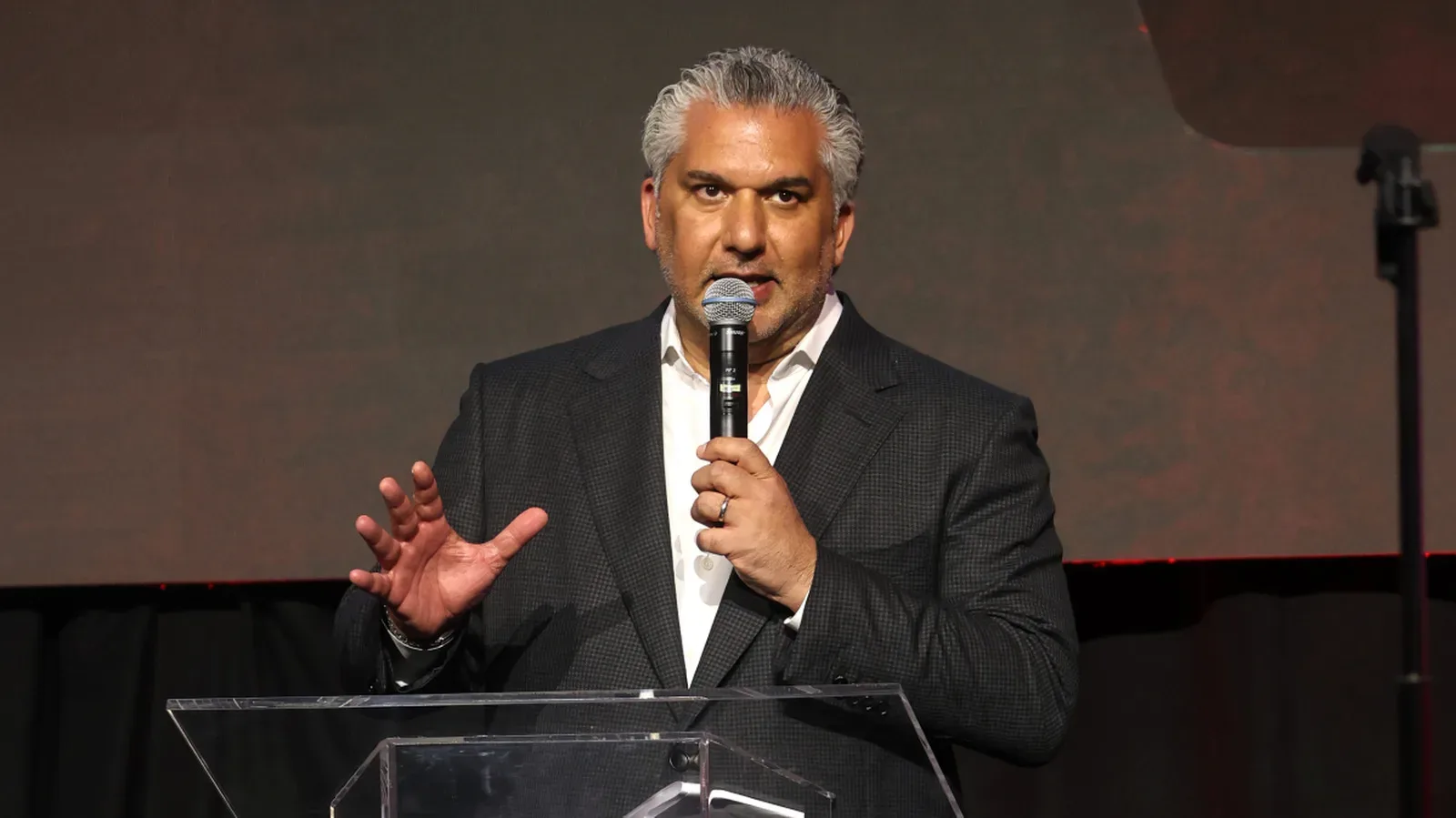
WWE President and TKO Board member Nick Khan has offered an upbeat assessment of the company’s current media landscape, emphasizing the reach provided by its major platform partners while also spotlighting what he described as substantial audience gains for Lucha Libre AAA Worldwide.
Speaking on The Varsity with John Ourand, Khan discussed WWE’s presence across major services including ESPN, Netflix, The CW Network and YouTube. He also addressed AAA, the lucha libre promotion WWE acquired in April 2025, and the decision to make its content widely accessible both inside and outside Mexico.
AAA’s current distribution model places particular importance on free viewing options. Its weekly programming is available in the United States through AAA and WWE’s YouTube channels, while viewers in Mexico and Latin America can watch through Fox and Fox One. Khan noted that the arrangement in Mexico also includes Tubi, offering an additional free-to-air avenue for audiences there.
“We have that intentionally on YouTube outside of Mexico, where it’s on Fox Mexico,” Khan said. “And that’s Rupert Fox, not to be confused with the other Fox, where there’s some litigation and stuff that we have nothing to do with. So, part of being on Fox Mexico is being on Tubi. That’s free to air in Mexico. We love that for the country.”
For more background on this topic, read Lex Luger Recalls Discussions About Trying The Torture Rack On Yokozuna.
Khan’s comments underscore a central part of WWE’s approach to AAA following the acquisition: prioritize broad exposure. Rather than putting the product exclusively behind a paid subscription service, AAA’s programming is being made available through YouTube globally and through free platforms in Mexico. That strategy can reduce barriers for casual viewers, longtime lucha libre followers and fans who may be encountering AAA for the first time through WWE’s broader promotional ecosystem.
For a company with AAA’s history and identity, accessibility is particularly significant. Lucha libre has long been built around distinctive personalities, colorful presentation, generational rivalries and a style that differs from WWE’s core in-ring product. The ability to present AAA content to a global audience gives WWE another way to serve fans interested in that tradition while potentially introducing wrestlers and stories to viewers who may not have previously followed Mexican wrestling closely.
“And YouTube is obviously free globally,” Khan continued. “So, you’re seeing significant audience growth in our Lucha Libre AAA product.”
Khan did not provide specific viewership figures during the interview, so the full scale of that growth remains unclear. Still, his use of the phrase “significant audience growth” indicates that WWE and TKO see early value in the distribution plan. YouTube offers an especially useful platform for measuring international interest, as programming can be viewed across markets without requiring fans to navigate regional cable packages or sign up for another paid streaming service.
The comments arrive following AAA’s annual TripleMania event series. TripleMania 34 was split across two nights, with the first night held in Las Vegas this past Friday and the second staged in Mexico City on Sunday. The two-city presentation reflected AAA’s effort to maintain its major presence in Mexico while also bringing one of its signature events to the United States.
Las Vegas has become an important destination for major combat sports and professional wrestling events, making it a notable setting for the first portion of TripleMania 34. At the same time, Mexico City remains central to AAA’s identity. Holding the second night there kept the event connected to the promotion’s home audience and the culture that has defined AAA for decades.
WWE’s Media Portfolio Continues to Evolve
Khan framed AAA’s reach within the wider scope of WWE’s distribution arrangements. WWE now has a collection of high-profile outlets serving different pieces of its programming, reflecting the increasingly fragmented but expansive modern media environment.
Netflix has become a major destination for WWE programming, while ESPN represents another enormous sports-media platform. The CW Network carries WWE content as well, and YouTube remains a key free digital outlet. Each platform reaches fans in different ways: traditional television viewers, streaming subscribers, sports audiences and viewers who primarily consume content online.
That variety gives WWE multiple paths to build awareness for its brands and talent. It also allows the company to tailor individual products to the platforms that make the most sense for them. AAA’s YouTube-driven strategy is notably different from premium programming designed for subscription services, but that difference appears intentional rather than secondary.
Free distribution can be especially effective for a brand that is seeking rapid awareness outside its traditional market. A fan who sees an AAA match, highlight or weekly episode on YouTube can become familiar with the promotion without making an immediate financial commitment. From there, major events such as TripleMania can benefit from a larger pool of potential viewers who already recognize the wrestlers, presentation and stakes.
It also gives WWE an opportunity to develop AAA as a complementary product rather than simply duplicating its established weekly wrestling formats. The promotion’s lucha libre foundation and its Mexican audience provide WWE with a major connection to a wrestling culture that has a deep history and a passionate fan base. Maintaining that identity while increasing distribution will be one of the most important long-term tests of the acquisition.
AAA’s Place in WWE’s International Strategy
Since acquiring AAA in April 2025, WWE has had a clear incentive to grow the promotion’s visibility without losing the elements that make it distinct. International expansion has long been an important part of WWE’s business, but owning and promoting a major lucha libre company creates a different kind of opportunity. It is not only about bringing WWE events into another country; it is about supporting a promotion already rooted in that country’s wrestling landscape.
Khan’s emphasis on Fox Mexico, Tubi and YouTube suggests that local availability remains a priority alongside international growth. Fans in Mexico are not being asked to rely solely on a global platform for AAA programming. The Fox Mexico and Tubi arrangement is designed to provide access within the promotion’s home market, while YouTube opens the door for viewers elsewhere.
That dual focus could be important for balancing audience growth with AAA’s established identity. International attention can bring new viewers and commercial opportunities, but AAA’s core Mexican fan base remains essential. Keeping the weekly show available through multiple free channels demonstrates an effort to reach both groups.
The reference to Fox Mexico also clarified that Khan was speaking about the Mexican broadcaster associated with Rupert Fox, rather than the separate Fox entity involved in litigation that he said WWE has no connection to. The distinction was a brief but notable point of clarification during a broader discussion about rights and distribution.
What ‘Significant Audience Growth’ Could Mean
Without publicly disclosed numbers, it is too early to draw firm conclusions about the size or durability of AAA’s viewership increase. Audience growth can take several forms, including higher live viewership for weekly programming, stronger engagement with clips and highlights, increased interest in premium events, or broader geographic reach across YouTube.
What is clear from Khan’s remarks is that WWE considers the available audience data encouraging. The company’s decision to promote AAA across its own YouTube presence gives the weekly product visibility alongside one of the largest wrestling digital platforms in the world. That type of cross-promotion can help familiar WWE viewers discover AAA while also allowing AAA fans to find related content without leaving the platforms they already use.
TripleMania 34 provided another major showcase for that approach. With one night in Las Vegas and another in Mexico City, the event series was positioned to serve both international and domestic audiences. The annual TripleMania name has considerable importance within AAA, and its use across multiple locations reinforces the promotion’s ambition to broaden its footprint.
For now, the most immediate takeaway is that WWE is presenting AAA as an accessible global brand with a strong Mexican foundation. Khan’s comments make clear that the company views free distribution as a feature of that strategy, not a limitation. By placing weekly content on YouTube outside Mexico and using Fox Mexico and Tubi within the country, WWE is seeking to maximize the number of people who can sample and follow the product.
As WWE’s broader media relationships continue across ESPN, Netflix, The CW Network and YouTube, AAA is becoming another important part of the company’s worldwide portfolio. The next phase will be determined by whether the reported audience gains continue and whether increased exposure translates into sustained interest around AAA’s weekly shows and marquee events. Khan’s assessment indicates that, at this stage, WWE is pleased with the direction of the brand’s reach.
In pictures

Darryl Polo
Darryl Polo is a passionate wrestling fan covering WWE, AEW, TNA and beyond. He loves great rivalries, breakout stars and the moments that keep fans talking long after the bell. How we work.