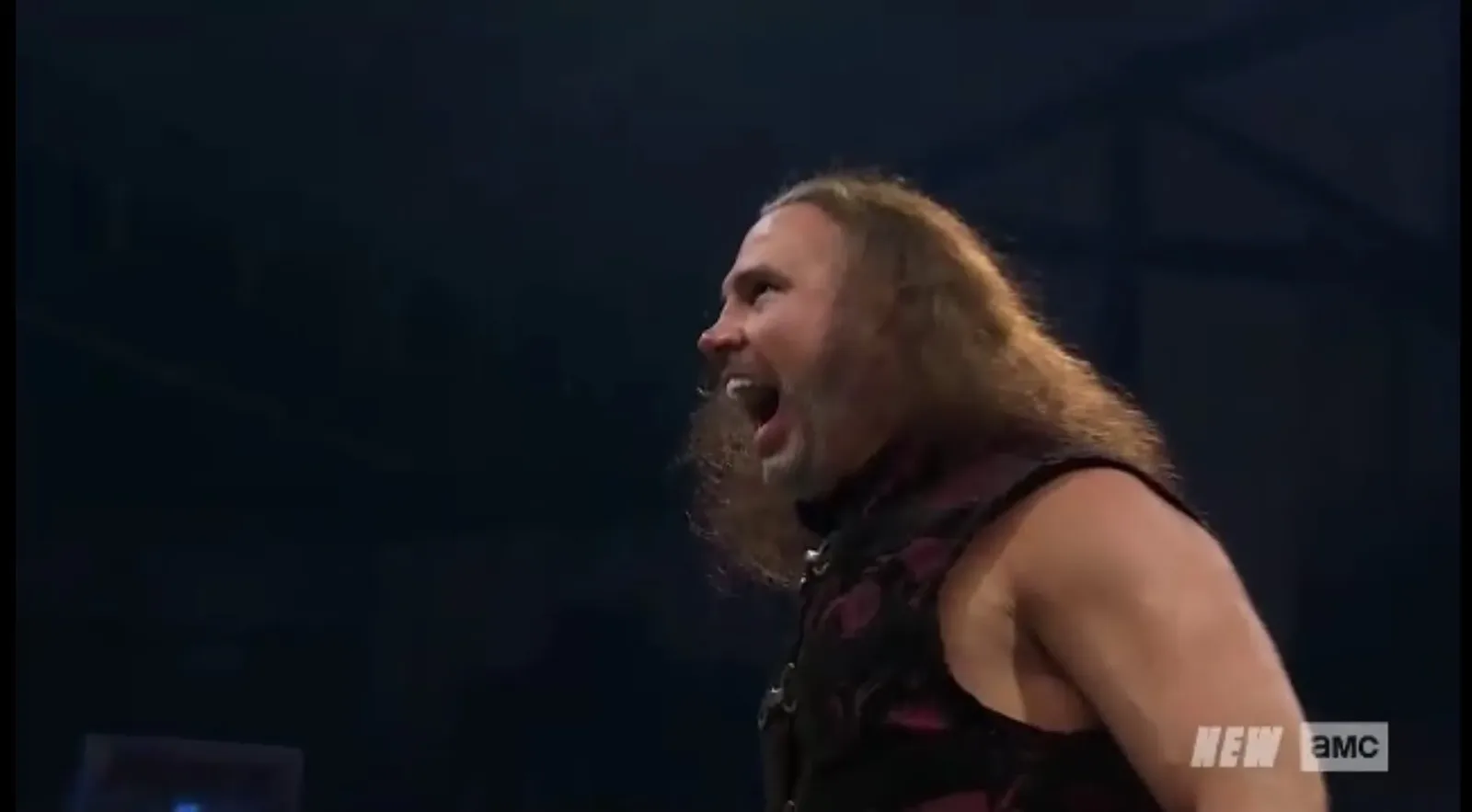
Matt Hardy used his recent TNA MVP recognition as an opportunity to deliver a broader message to the locker room: performers should be prepared to make sacrifices when necessary to protect the main event and the overall flow of a television show.
Hardy discussed the moment during an appearance on The Extreme Life of Matt Hardy with Jon Alba. The veteran explained that he had specific points he wanted to make to the roster, particularly after the TNA Lockdown main event involving The Hardys and The Nemeths had time removed from its planned allocation.
At Lockdown, Matt and Jeff Hardy faced Nic Nemeth and Ryan Nemeth in the night’s main event. The Nemeths won the bout and captured the TNA Tag Team Titles. While the match remained a major spotlight for both teams, Hardy said the reduced time prompted him to address an issue that matters well beyond one match or one event.
“I had a couple of things I wanted to say to the crew and the roster, especially because our match had time cut from it at Lockdown,” Hardy said. “I definitely wanted to address a couple of things.”
For more background on this topic, read Awesome Kong Details the Determination That Turned a WWE Rejection Into a Landmark Wrestling Career.
The message was not framed as a complaint about losing time. Instead, Hardy presented it as a professional standard for wrestlers working anywhere on a card. In his view, talent who recognize that a show is running long and can responsibly trim their own match should consider doing so in order to preserve the time intended for the closing attraction.
“I was just saying that if you see the show is over and you can save a minute in your match to make sure the main event gets all their time, step up,” Hardy said. “Step up and be a star. Do what you can do.”
A Locker-Room Message About the Bigger Picture
Hardy’s comments speak to one of wrestling’s most fundamental live-production realities. A card may be carefully timed before the show begins, but live events are not always predictable. Entrances, interviews, crowd responses, production needs and the natural pace of a match can all affect the running order. When the clock becomes an issue, the decisions made by talent throughout the evening can have a direct impact on the match positioned to close the show.
For Hardy, recognizing that reality is part of what separates a wrestler simply performing their own assigned role from one who understands the needs of the full production. His argument was that saving even a small amount of time can matter. A minute taken out of one match may not seem significant on its own, but those small adjustments can help ensure that the final match has room to reach its intended conclusion without being rushed.
That concept is especially important when a main event carries a championship outcome. The Lockdown match between The Hardys and The Nemeths ended with Nic and Ryan Nemeth becoming TNA Tag Team Champions, making the allotted time for the bout significant not only for the teams involved but also for the presentation of the title change.
Hardy did not identify any particular wrestler or match as being responsible for the show’s timing situation. His remarks were directed toward the roster in general and centered on how talent can respond constructively when time pressures arise.
Hardy Connects Professionalism With Opportunity
The former world champion also tied that awareness to advancement within a company. Hardy’s message was that coaches, producers and decision-makers notice when talent are dependable under live-show conditions. A wrestler’s performance is not limited to executing moves or receiving a crowd reaction; being able to communicate, adapt and make choices that benefit the program can build trust.
“That’s something that is important and that helps you rise up through the card,” Hardy said. “It makes people want to push you or promote you. If you’re a professional, they know you’re out there working for the greater good.”
Those comments underline a familiar principle in a promotion’s internal culture. Talent may be evaluated on their ability to deliver in the ring, but reliability is often just as valuable in a televised environment. A performer who knows when to shorten an exchange, streamline a sequence or move efficiently toward a finish can help a production recover from unexpected timing issues without making the adjustment apparent to viewers.
Hardy’s emphasis on the “greater good” is particularly notable because the immediate example involved his own match. Rather than focusing solely on The Hardys having less time in a main event, he used the experience to encourage a roster-wide mentality. The central point was not that any performer should sacrifice the quality of their work casually. It was that, if someone is in a position to save time without harming the match, doing so can serve the entire show.
That is a demanding standard. Wrestling matches are built around pacing, audience investment and planned narrative beats. Cutting time is not always as simple as removing a move or two, particularly when a match has a defined story, an established finish or a championship implication. Hardy’s comments nevertheless point to the importance of being prepared to adapt, rather than treating the originally assigned duration as immovable.
The Lockdown Main Event and TNA Tag Team Title Change
The Hardys entered Lockdown’s featured match opposite The Nemeths, with Matt and Jeff Hardy bringing their long-established partnership into a high-profile TNA setting. Across their careers, the brothers have been involved in numerous major tag team bouts, while Nic Nemeth and Ryan Nemeth represented the opposing duo in a contest that ended with the championship changing hands.
The Nemeths’ victory made them the new TNA Tag Team Champions. That result ensured the bout had lasting consequences regardless of the time reduction Hardy referenced. Still, Hardy’s discussion offers a look at a side of the business fans do not always see when watching a finished broadcast: the balancing act required to keep an entire event moving while preserving major moments at the end of the card.
In that sense, the main event became an example rather than the sole subject of Hardy’s remarks. His focus was on the collective responsibility of performers to be attentive to the show around them. A wrestler may have a carefully laid-out segment, but Hardy believes there are moments when the best contribution is finding a way to tighten that material for the benefit of the match or segment that follows.
Experience Behind the Advice
Hardy’s ability to speak on the issue comes from his extensive experience in major wrestling environments and in prominent match positions. His perspective is rooted in the understanding that a wrestling card functions as one complete presentation, not merely a collection of individual bouts. Every segment has its role, and every adjustment can affect what comes next.
His advice also puts value on selflessness. The desire to maximize time is understandable for any wrestler, particularly for talent trying to establish themselves or make the most of a televised appearance. Hardy’s point, however, is that the willingness to prioritize the entire show can ultimately make a performer more valuable. In his view, that kind of judgment is not invisible to the people responsible for assembling cards and making promotional decisions.
“That’s a very important aspect of pro wrestling,” Hardy said.
The statement is concise, but it captures the heart of his address. Hardy was not discussing a flashy in-ring technique or a particular match formula. He was talking about awareness: awareness of time, awareness of the card and awareness that the success of one segment can be connected to the choices made in another.
For TNA’s roster, the takeaway from Hardy’s speech was clear. When a show is running late and there is an opportunity to help preserve the time needed for the main event, he believes talent should be willing to take it. To Hardy, that is not a sign of losing importance. It is a sign of being a professional teammate and, potentially, of demonstrating the kind of value that leads to bigger opportunities.
Darryl Polo
Darryl Polo is a passionate wrestling fan covering WWE, AEW, TNA and beyond. He loves great rivalries, breakout stars and the moments that keep fans talking long after the bell. How we work.