
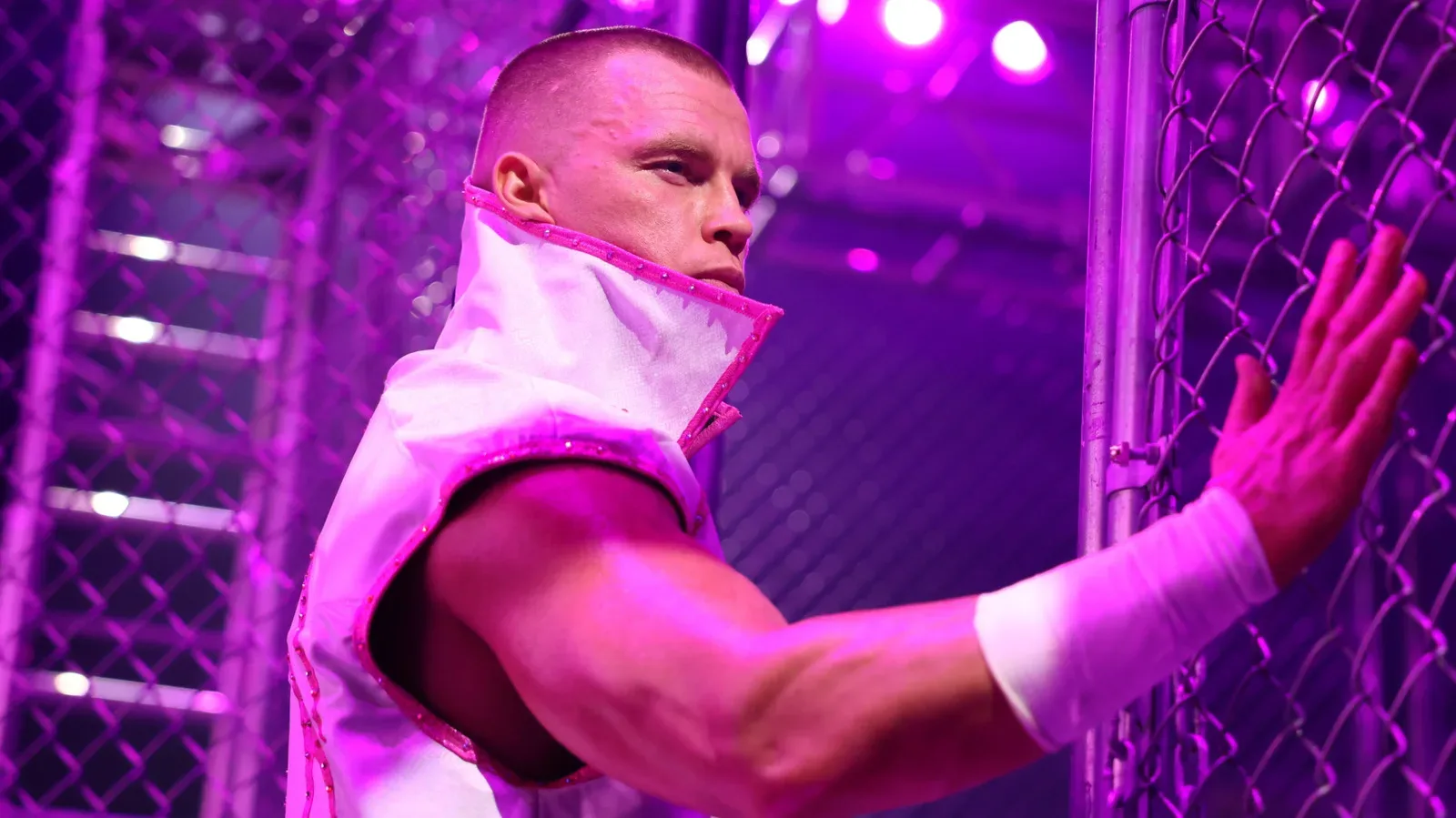
Kyle Fletcher has heard the comparisons to Randy Orton, and he understands why wrestling fans make them. The visual similarities have become more noticeable since Fletcher shaved his head, while his confidence, intensity, and increasingly polished big-match presentation have also invited parallels with one of WWE's most accomplished modern stars.
But Fletcher is not treating the comparison as a declaration that he has already reached Orton's level. Instead, the AEW standout sees it as a compliment that also reinforces the responsibility of becoming a distinct performer in his own right.
Speaking on What Happened When with AEW commentator Tony Schiavone, Fletcher addressed a fan question about whether references to Orton are purely flattering or whether they create added pressure for him to establish his own identity. The answer, Fletcher explained, is somewhere in the middle.
“When I first started hearing it, it was that reaction of, ‘Ah, man. Randy Orton’s great. I love Randy Orton,’” Fletcher said on What Happened When. “So, to be even mentioned in the same kind of sentence as him, I was like, ‘Wow. That’s awesome.’”
For more background on this topic, read Mark Davis Explains Blood & Guts Workwear Look With Jake Doyle Ahead Of Full Gear.
That initial appreciation has not changed. Orton is a future WWE Hall of Famer with a résumé built across decades, and Fletcher made clear that he recognizes the scale of what Orton has accomplished. At the same time, Fletcher believes every wrestler should be focused on developing a career that cannot simply be defined through comparisons to somebody else.
“But, yeah, at the same time, I think any wrestler should want to carve their own path and I think that I’ve started to do so,” Fletcher continued. “I think that it’s hard to compare us because Randy is, whatever, 30 years in the business. He’s won 13 world championships. Obviously, I’m not at that level yet, so obviously people are going to make the comparison.”
Fletcher understands the gap in experience
Fletcher's response is notable for its balance. He did not dismiss the comparison or frame it as an unwanted label. Nor did he overstate where he stands beside an established main-event figure with decades of experience. Instead, he acknowledged that being associated with a wrestler of Orton's stature is meaningful while emphasizing the obvious reality that a successful run in AEW is still very different from matching a career as decorated as Orton's.
Orton's longevity, championship history, and place in WWE history make him an unusually high bar for any rising wrestler. His 13 world championship reigns are part of the reason Fletcher feels the comparison has limits at this stage. Fletcher has already earned notable championship accomplishments, but he is still constructing the long-term body of work that will define him.
That does not mean Fletcher sees the Orton discussion as a negative. Quite the opposite: he said it gives him additional motivation to continue moving forward under his own name and identity.
“The Protostar” said he does not take the comparison as a negative “whatsoever,” adding that it makes him more determined to carve out his own path.
For Fletcher, the key is not to reject admiration for Orton. It is to make sure admiration does not become imitation. Wrestling has always involved visual and stylistic comparisons, particularly when a younger talent begins to break through with traits fans associate with an established star. A wrestler's look, movement, timing, facial expressions, ring gear, and attitude can all lead audiences to draw familiar connections.
Yet the performers who last are generally the ones who turn those early comparisons into a platform rather than a permanent definition. Fletcher's comments suggest he is approaching the situation in precisely those terms. He can recognize why people see an Orton influence or similarity without allowing that association to become the entire story of his career.
The shaved-head look intensified the discussion
The Orton comparisons have been especially common since Fletcher adopted a shaved-head look in the ring. The change came as Fletcher looked to move beyond comparisons to Will Ospreay, another major figure whose connection to Fletcher had already been part of the conversation among fans.
Fletcher's decision to alter his appearance was therefore not merely cosmetic. It represented an effort to create clearer separation and to present himself as a singular act. In an industry where presentation can rapidly shape perception, the move helped give “The Protostar” a more immediately recognizable visual identity.
The result, however, also opened the door to a different set of comparisons. Fans saw a resemblance to Orton, and Fletcher's forceful style in the ring added to that perception. Those reactions are understandable, but Fletcher's own comments underline that the similarities should not obscure the differences in their respective journeys.
Fletcher is forging his résumé in AEW, in an environment that has allowed him to compete across a wide range of singles and multi-person settings. His route to prominence, his rivals, and the championship opportunities he has pursued are his own. The comparisons may be useful shorthand for viewers, but Fletcher is aiming to ensure that his accomplishments ultimately speak louder than any resemblance.
A growing championship résumé in AEW
Fletcher has already accumulated significant success during his AEW run. He is a former two-time TNT Champion and has also held the AEW International Championship as well as the World Trios Championships. Those accolades give him a foundation that many wrestlers would welcome, particularly while still working to establish a lasting singles identity at the highest level.
The TNT Championship is historically a major measuring stick for wrestlers seeking to show they can carry a prominent role on AEW programming. Fletcher holding that title twice indicates the confidence placed in him and the progress he has made as a featured competitor. His International Championship reign further demonstrates his ability to operate as a champion in another central division, while the World Trios Championship success reflects the breadth of his experience within the company.
Those achievements do not erase Fletcher's own assessment that he has much more to accomplish before anyone can reasonably put him on equal footing with someone of Orton's tenure. Rather, they illustrate why the conversation exists at all. Fletcher is no longer simply a wrestler with potential; he has championship evidence that he can perform in meaningful positions.
That distinction matters. Potential can create hype, but repeated title success creates expectations. Fletcher now has the challenge of meeting those expectations while continuing to separate his persona, style, and career story from the stars to whom he is compared.
Creating an identity beyond comparisons
Fletcher's comments also reflect a broader truth about professional wrestling. Comparisons can be flattering, but they can also become restrictive if a performer is not allowed room to develop. Fans naturally use familiar names to describe what they see in a new talent. For the wrestler, however, the goal is to eventually reach a point where newer names are compared to them.
That is the stage Fletcher appears to be pursuing. “The Protostar” branding gives him a specific identity, while his title record has supplied tangible credibility. His willingness to discuss the Orton comparison without defensiveness also shows a level of perspective. He appreciates the praise, recognizes the distance still to travel, and remains focused on what he can control.
There is no need for Fletcher to deny Orton's influence on the audience's perception. Orton is a major point of reference for a generation of wrestling fans, and being mentioned beside him carries obvious prestige. But Fletcher's objective is not to duplicate a WWE Hall of Fame-bound career. It is to build an AEW career with enough accomplishments, memorable matches, and defining moments that the Kyle Fletcher name stands independently.
His championship history suggests that process is already underway. The next task is sustaining it over time. Fletcher himself made the clearest case for keeping the comparison in perspective: Orton's career has been built over roughly 30 years, with 13 world championships among its defining achievements. Fletcher is not claiming to have reached that standard. He is acknowledging it while continuing to chase his own version of greatness.
For now, Fletcher is comfortable accepting the compliment. He simply wants the conversation to grow beyond it. If “The Protostar” continues adding major victories and championships to his AEW record, the day may come when fans see the comparison not as a description of who he resembles, but as a reminder of the level he intends to reach.
In pictures

Darryl Polo
Darryl Polo is a passionate wrestling fan covering WWE, AEW, TNA and beyond. He loves great rivalries, breakout stars and the moments that keep fans talking long after the bell. How we work.