
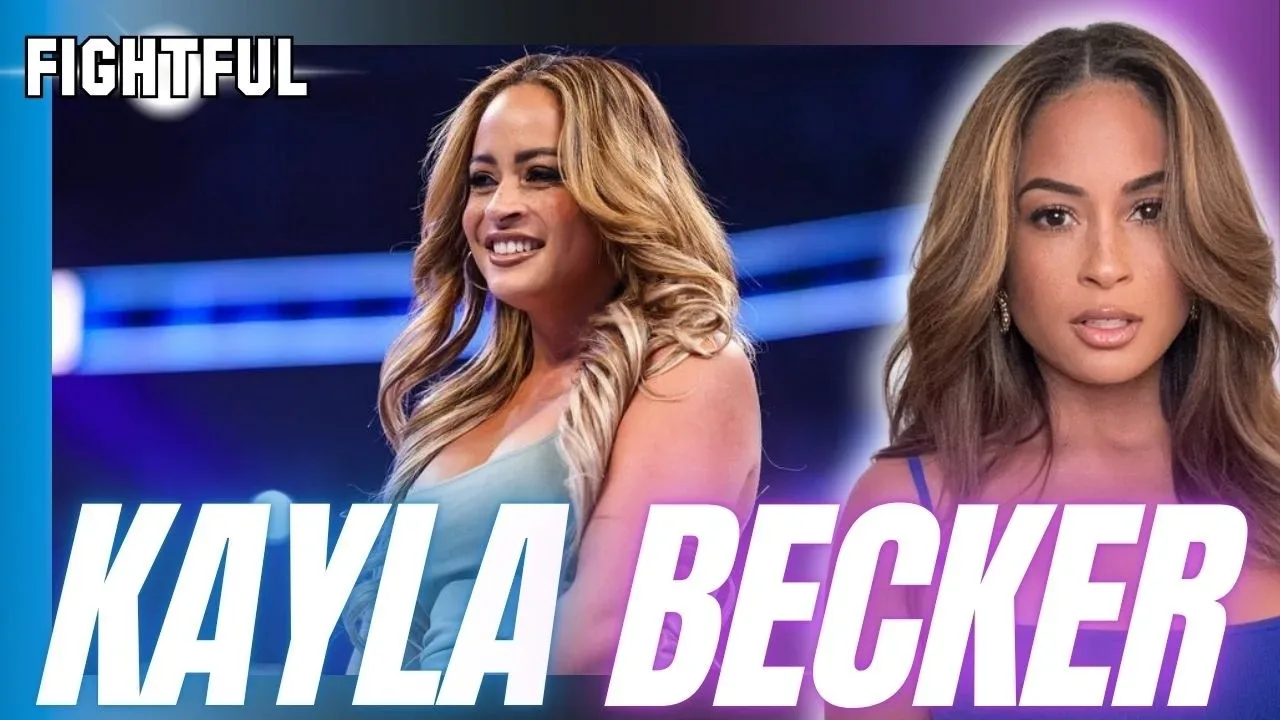
Kayla Becker has offered high praise for Paul Heyman while looking back on their memorable WWE association, calling the longtime manager and promo specialist a foundational figure for everyone in wrestling whose role involves holding a microphone.
Becker and Heyman developed a familiar on-screen dynamic during Becker’s WWE tenure, particularly through Talking Smack. Their exchanges often carried an edge, with Heyman’s sharp verbal style and allegiance to Roman Reigns regularly creating friction with Becker’s attempts to steer interviews and discussions. Behind that televised back-and-forth, however, Becker said she came away with lasting appreciation for Heyman and the guidance he provided.
“It was great. Listen, we all know Paul paved the way for all of us microphone holders,” Becker said. “It was really cool to get to spend that much like close time with him over the years. He taught me a lot. Did he get on my nerves all the freaking time? But hey, I love that man, thankful for him all the time.”
A WWE Dynamic That Extended Beyond the Bickering
The Becker-Heyman pairing was especially visible after Talking Smack returned in August 2020. That period coincided with the beginning of Heyman’s alliance with Roman Reigns, an on-screen partnership that soon became central to WWE programming. As Reigns’ “Special Counsel,” Heyman brought a highly protective, often confrontational presence to appearances surrounding the Universal Champion.
For more background on this topic, read Grayson Waller Tells John Cena to Ask Permission Before Entering ‘His’ NXT.
That created a natural fit for interview segments. Becker, tasked with asking questions and guiding conversations, frequently found herself dealing with Heyman’s interruptions, evasions, and efforts to frame every discussion around Reigns’ status. The tension was part of the presentation, but Becker’s comments show that the working relationship also gave her an opportunity to spend considerable time around one of wrestling’s most recognizable talkers.
Heyman’s body of work in the industry has made him synonymous with the art of the wrestling promo. Across multiple eras of his career, he has been a manager, advocate, executive, commentator, and on-screen strategist, consistently using verbal delivery as a major part of his presentation. For a broadcaster operating in WWE’s fast-moving television environment, close proximity to that approach can provide a valuable education in pacing, character, timing, and the importance of making an interview feel consequential.
Becker’s description of Heyman as someone who “paved the way” speaks to that broader influence. Wrestling interviewers and hosts are not simply there to ask a question and move on. They must react in real time, protect the structure of a segment, create room for personalities to shine, and maintain their own presence when a performer or manager attempts to take control of the conversation. Heyman’s on-screen style has long demanded that type of response from the people opposite him.
The fact that Becker could acknowledge both his ability to irritate her and the lessons he passed along also fits the nature of their WWE dynamic. Their interactions were built around conflict, but the chemistry depended on mutual timing. A broadcaster cannot make that kind of exchange work without being willing to push back, and a performer cannot sustain it without giving the host material to play off. Becker and Heyman repeatedly found that balance during their appearances together.
Why Talking Smack Provided a Different Setting
Talking Smack has historically given WWE personalities more freedom to expand on the stories playing out on SmackDown. Rather than relying solely on short backstage interview windows, the format allowed for extended conversations, debates, reactions, and character-driven confrontations. That made it an effective platform for someone like Heyman, whose strengths are often most apparent when he has time to build an argument or reshape a question to suit his client.
It also put Becker in a role that went beyond reading a prompt. She had to manage the energy of the conversation while working with talent who could be unpredictable, intensely funny, deliberately evasive, or fully committed to an angle. Her recollection of Heyman suggests that the experience was demanding in a productive way. Even when he got on her nerves, she viewed the chance to work closely with him as meaningful.
For WWE viewers, the strongest interview segments often come from that tension between structure and disruption. The interviewer needs enough authority to keep the discussion moving, while the guest needs enough freedom to make the moment feel alive. Heyman has spent much of his career exploiting those spaces, turning a straightforward question into a monologue, a warning, or a declaration on behalf of the wrestler he represents.
During the early stages of his work alongside Reigns, that skill helped establish the tone of their alliance. Heyman’s role was not merely to introduce Reigns or repeat his accomplishments. He helped define an atmosphere around him, presenting Reigns as a figure whose presence and demands had to be taken seriously. On a program such as Talking Smack, Becker’s interactions with Heyman could add another layer to that presentation by showing how difficult he could be for anyone trying to get a direct answer.
Becker Names the WWE Stars Who Made Her Laugh
Heyman was also among the first names Becker mentioned when discussing WWE figures who could make her laugh. She cited Bayley, Zelina Vega, Sami Zayn, and Kevin Owens as other personalities who made it difficult to remain composed during interviews and appearances.
“Obviously Paul. Bayley was very hard. Zelina Vega / Thea. Sami Zayn or Kevin Owens, easily,” Becker said.
Becker then recalled one of her final interviews with Owens in Paris before a pay-per-view, describing the challenge of keeping him focused while they were out in the city.
“I think one of my last interviews with Kevin Owens, we were in Paris before a pay-per-view. We got to walk around. It was literally trying to keep a kid with me. Like, ‘Stay focused here,’ he was like chasing down baguettes and ducks the entire time.”
The memory captures a side of WWE media work that audiences do not always see. While the finished product may be a polished interview package or a tightly edited television segment, the process can involve trying to keep pace with performers whose personalities naturally pull a moment in unexpected directions. Owens has long been known for quick humor and a willingness to lean into spontaneity, and Becker’s Paris story reflects how that energy could continue away from the ring.
Becker said WWE’s developmental system stressed the importance of maintaining composure in those situations.
“One thing they teach you at NXT is you have to breathe through those moments because it is so hard not to laugh,” she said. “Because these guys and girls are hilarious. They’re hilarious.”
The Balance Between Professionalism and Personality
That advice highlights a key element of working as an on-air personality in wrestling. A broadcaster must be prepared to react naturally without losing control of the assignment. Laughter can be contagious, particularly when working with wrestlers who are intentionally trying to break the person across from them. At the same time, the host has to remain aware of the camera, the story being promoted, and the tone WWE wants the segment to convey.
Becker’s comments point to the range of challenges involved. Heyman could make an interview difficult through verbal pressure and intensity. Bayley, Vega, Zayn, and Owens could make it difficult by being funny. Each situation requires a different response, but all of them demand presence and adaptability from the interviewer.
Her reflections also offer a warmer perspective on the relationships built through WWE’s day-to-day production environment. The company’s programming often presents its personalities in adversarial roles, and Becker’s exchanges with Heyman were designed to reflect that. Yet her comments make clear that the frustration was accompanied by respect, affection, and gratitude.
For Becker, Heyman remains both a memorable on-screen foil and an important influence. Their bickering on Talking Smack may have provided entertaining television, but the experience also gave Becker a close look at the standards required to communicate effectively in professional wrestling. In her view, Heyman’s impact reaches far beyond the people he has managed: he helped set the bar for everyone entrusted with a microphone.

Darryl Polo
Darryl Polo is a passionate wrestling fan covering WWE, AEW, TNA and beyond. He loves great rivalries, breakout stars and the moments that keep fans talking long after the bell. How we work.