
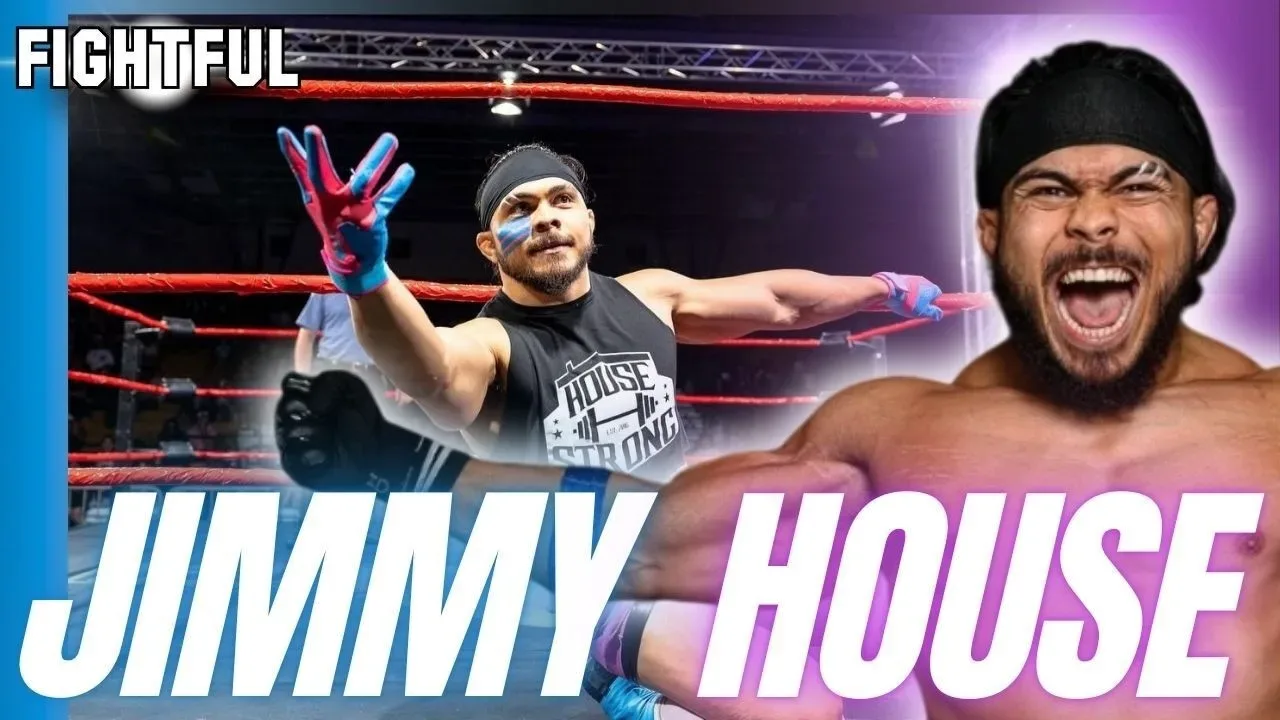
Jimmy House’s route toward WWE was not built on one phone call, one connection, or a direct leap from another athletic field. It was a years-long pursuit marked by an early opening that did not lead immediately to a tryout, a move across states to begin from the ground up on the independent scene, and a commitment to developing every aspect of his presentation.
House, who joined the WWE ID program in March before later departing it, has reflected on the process that led to his January WWE tryout. In doing so, he placed major credit on Gabe Sapolsky, describing Sapolsky as the first person who truly opened the door to a WWE opportunity for him.
The story begins well before House began working independent wrestling matches. After earning a black belt in jiu-jitsu, House viewed the achievement as the completion of an important chapter in his athletic life. Rather than slowing down, he saw it as a potential launch point toward a new challenge, including professional wrestling and acting. His goal, he explained, was to test his potential and find a platform where he could make an impact.
Not long after receiving his black belt, House was referred to WWE’s recruitment department by multiple people. At that point, the department operated differently from its current structure, but the early outreach gave House reason to believe a tryout might be on the horizon. He received a call from Stamford, Connecticut, asking him to submit a resume after WWE had heard about him through those referrals.
For more background on this topic, read Kit Wilson Calls Roman Reigns ‘A Walking Case Of Toxic Masculinity’.
Believing that an opportunity could come quickly, House began putting in foundational wrestling work at Phoenix Championship Wrestling in Arizona. Under coach Dom Vitalli, he started learning how to take bumps and perform rolls. Yet the anticipated return call did not arrive, and the immediate WWE path he had envisioned failed to materialize.
An Early Setback Became a Reason to Start From the Bottom
Rather than treating the lack of a follow-up as the end of the process, House used it as motivation. He said that once he had publicly identified himself as someone pursuing pro wrestling, he felt compelled to keep going, whether the road proved short or long. That mindset ultimately led him to relocate from Arizona to Austin, Texas.
House characterized the move as an intentional choice to begin at the bottom of the professional wrestling business. He did not frame that starting position negatively. Instead, he embraced the idea of following the same basic path as countless wrestlers before him: working on the independent circuit, gaining experience, learning the craft, and putting himself in a position to be seen.
That period proved important not only because it gave House ring time, but also because it changed the context of his eventual WWE tryout. The opportunity was no longer something he expected based solely on his athletic background or initial referrals. It became the result of a sustained commitment to wrestling after he had chosen to make personal sacrifices for the career.
After approximately a year on the independents, House got the call in November telling him he had eight weeks to prepare for a WWE tryout. For House, the timing carried a full-circle quality. The first possibility of a tryout had pushed him to learn the most basic in-ring skills, but the actual invitation came only after he had moved, worked independent dates, and continued building his experience.
“It was very full circle for me,” House said of finally receiving the call after the earlier opportunity appeared to disappear.
House approached the eight-week preparation window with a detailed plan. He compared the physical component to a bodybuilding preparation, a process he already understood from prior experience. He also leaned on his athletic training knowledge, sought help from people in his network, and worked on the elements that would be evaluated beyond physique and conditioning, including in-ring performance and microphone work.
By the time he arrived at the tryout, House believed he had prepared more thoroughly than he ever had for anything in his life. He did not reveal the specific feedback he received there, but he stated with confidence that he felt he stood out among the attendees.
House Believed He Had to Overcome Questions Before the Tryout
House’s confidence at the tryout did not mean he ignored the factors he felt could have worked against him. He said there had been uncertainty about whether he would receive the opportunity because of his relative inexperience, his age, previous knee injury history, and his height.
Those concerns made the invitation significant on its own. But House’s outlook was that earning a spot in the room was only the first part of the task. Once there, he believed he could show both what he could do physically and what he could offer as a person and professional.
That distinction is notable in the modern WWE recruitment environment. Athletic credentials can create interest, but a tryout requires prospects to demonstrate adaptability, coachability, presence, communication, conditioning, and the ability to function within a wrestling setting. House’s preparation reflected an understanding that he would be judged on far more than a single athletic specialty.
His independent experience also gave him a different foundation from the one he had when WWE first contacted him years earlier. At the time of the initial outreach, House had only begun learning bumps and rolls. By the time he attended the tryout, he had committed himself to the wrestling industry and had accumulated the perspective that comes with starting on the independent level.
Why Gabe Sapolsky’s Role Stands Out
While House had relationships with people throughout wrestling, he emphasized that his route to the WWE tryout did not come through the personal network that some may have assumed. Instead, he said his work with Gabe Sapolsky was central to the process.
House began using Sapolsky’s one-on-one consultation calls, taking the feedback he received and putting it into practice. He stressed that the relationship was not a matter of simply knowing the right person. In House’s telling, the opportunity followed a process in which he accepted critique, demonstrated progress, and continued refining himself until his overall presentation fit what WWE was seeking for that specific tryout.
“I went the route of doing his one-on-one consultation calls and taking his feedback and working on that feedback and showing him that I was willing and able to make progress,” House said.
Sapolsky has long been associated with talent development and scouting within wrestling, making his feedback meaningful for performers attempting to advance from regional and independent settings. For House, the value of those consultations was practical: the advice gave him a clearer picture of what needed to change, and his response to that advice helped establish that he could make the necessary improvements.
House said he essentially “squeaked open the door” once his build and presentation aligned with the needs of that particular tryout. He then recalled Sapolsky telling him that he “kicked through the door” once he got inside, suggesting that House was able to show more in the WWE setting than he could through the matches Sapolsky had reviewed.
That point speaks to the limits of evaluating a wrestler exclusively through match footage. Matches can show athletic ability, timing, character work, and fundamentals, but a tryout environment can also reveal preparation, professionalism, physical presence, communication, and how a performer responds under direct evaluation. House believes the in-person setting allowed him to display a fuller version of what he brought to the table.
Momentum Beyond WWE ID
House has since left WWE and the WWE ID program, but he does not view the experience as a dead end. He said the tryout and the opportunities that followed created a major stretch of momentum that he can continue to use in his career. He also pointed to the knowledge gained through the process as something that remains valuable regardless of where he wrestles next.
His comments offer a clear assessment of Sapolsky’s influence in that progression. House credited him not merely for advice in a general sense, but for being the first person to open the WWE door for him after years of persistence and an initially unsuccessful effort to get a tryout.
“I have to give so much credit to Gabe,” House said. “Really he was one of the first people and, if anything, the first person to open that WWE door for me.”
House has also discussed learning how to work as a heel in WWE EVOLVE, another part of the development he has taken from his time around WWE’s system. Taken together, his reflections present a career path shaped by patience and adjustment. An early recruitment call did not lead where he hoped. The response was to move, train, work the independents, seek targeted coaching, and arrive at the eventual tryout ready to capitalize.
For House, that is why the WWE tryout remains meaningful even after his WWE ID departure. It represented the payoff from years of effort, and it gave him a foundation of experience and momentum to carry into the next stage of his wrestling career.

Darryl Polo
Darryl Polo is a passionate wrestling fan covering WWE, AEW, TNA and beyond. He loves great rivalries, breakout stars and the moments that keep fans talking long after the bell. How we work.