
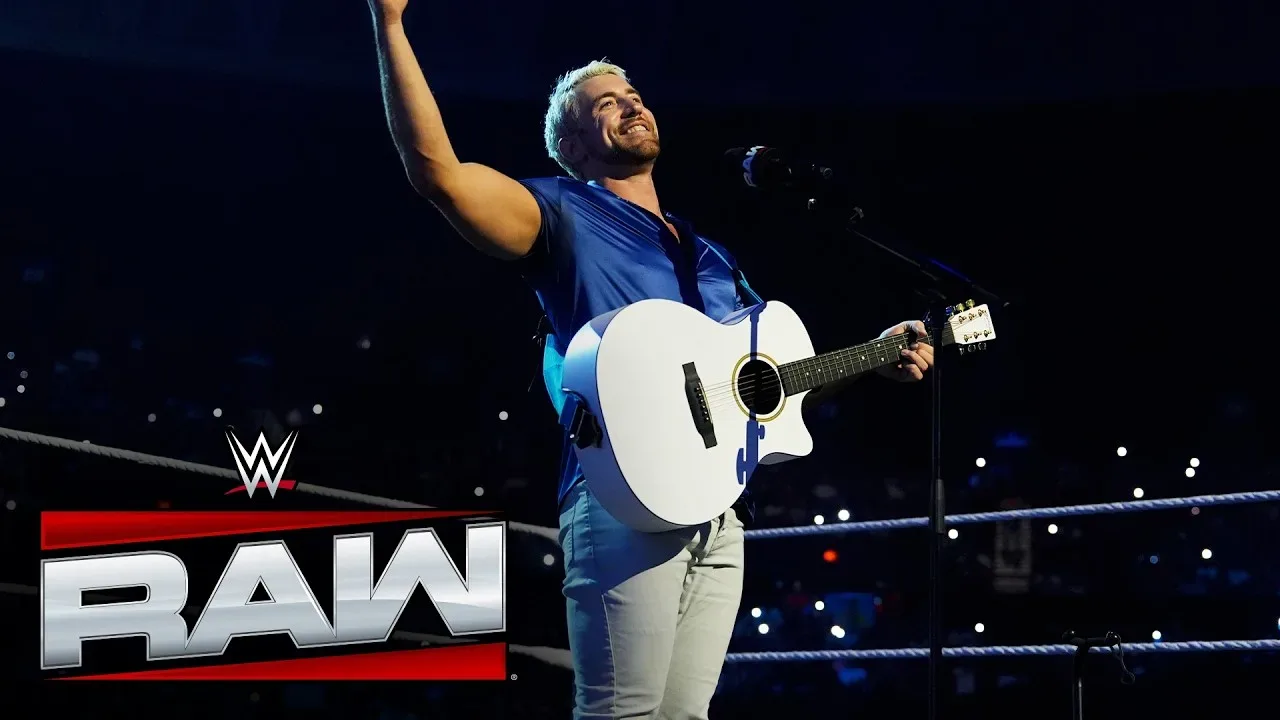
Joe Hendry has drawn a firm line when it comes to sharing one of the most recognizable parts of his wrestling presentation: his music.
During a recent media tour tied to the release of his new album, Beyond Belief, Hendry was asked whether he would consider writing entrance songs for other wrestlers. His answer left little room for negotiation. Hendry said he has no intention of taking on that kind of work, explaining that the process behind creating music at the level he expects would take too much attention away from his own career.
“Absolutely. Hell no, it’s not happening,” Hendry said. “Writing that song, I Believe in Joe Hendry, took me like two and a half weeks full-time. So to do that for somebody else, I don’t know, man. I’ve got to focus on Joe Hendry here. Come on.”
It was an emphatic response, but it also underlined how seriously Hendry views the role music plays in his overall act. An entrance theme can be a major part of a wrestler’s identity, setting the atmosphere before a match begins and giving audiences a clear signal that a particular personality is about to arrive. For Hendry, his music is not simply a song played on the way to the ring. It is part of the Joe Hendry brand, and he appears determined to keep his creative attention centered there.
For more background on this topic, read Xia Brookside And Indi Hartwell Set For Final Bound For Glory Face-Off On TNA iMPACT.
Hendry Protecting His Own Creative Focus
Hendry’s comments were made while he has been actively promoting Beyond Belief, placing his musical work in the spotlight alongside his professional wrestling career. That timing makes his position especially understandable. He is not dismissing the importance of entrance music; if anything, he is stressing how much work goes into producing a track that can truly function as a defining piece of a wrestler’s presentation.
By noting that “I Believe in Joe Hendry” required roughly two and a half weeks of full-time work, Hendry offered a useful glimpse into the time commitment behind a song that is intended to make an impact. A wrestler’s entrance music has to do more than sound good on its own. It must fit a character, establish a mood quickly, work within the rhythm of a live entrance, and remain memorable after repeated exposure. A song that becomes associated with a performer can be enormously valuable, but getting there is not necessarily a simple or fast process.
Hendry clearly does not see himself as someone who can casually hand that work off to other performers while maintaining the same standards. His answer suggested that the issue is not a lack of appreciation for fellow wrestlers or for songwriting as a service. Instead, it is a matter of priorities. He wants the hours, effort, and creative focus that would go into another wrestler’s theme to remain directed at his own music and his own presentation.
That approach is also consistent with the blunt, self-assured tone Hendry has made part of his public persona. Rather than offering a diplomatic “maybe someday,” he answered with an unmistakable rejection and immediately framed the decision around concentrating on himself. In the world of wrestling, where confidence is often central to the way performers communicate with audiences, Hendry’s response carried the same larger-than-life certainty that listeners would expect from someone defending a signature piece of his act.
No Interest In Replacing His Own Theme
Hendry was also asked a related question: whether he would ever trade his own entrance theme for the music of another wrestler. That answer was just as decisive.
“Hell no. I’ve got the best entrance theme in the game. No one has a better entrance theme than mine.”
The statement was characteristically bold, but it further reinforced the importance Hendry places on his music. He is not only unwilling to write themes for others; he is equally uninterested in surrendering the song that has become closely identified with him. In Hendry’s view, there is no reason to exchange it for any other track because he believes his entrance theme stands above the competition.
Whether fans agree with the claim is ultimately part of the fun of a statement like that. Wrestling audiences have strong opinions about entrance songs, and a great theme is often remembered as vividly as a major match, a championship win, or a defining promo. The songs that connect most effectively can produce immediate reactions from a crowd and become inseparable from the wrestlers who use them.
Hendry’s confidence in “I Believe in Joe Hendry” shows that he sees the song as more than background music. It is a calling card. It tells the audience who he is before he says a word in the ring, and it provides a foundation for the reaction that follows. For a performer who is also engaged with music beyond wrestling, maintaining ownership over that element of his act has clear significance.
Music And Wrestling Remain Connected For Hendry
The discussion arrives as Hendry continues to promote Beyond Belief, an album that puts his musical output front and center. Yet he has also made clear elsewhere that professional wrestling remains his first priority. That distinction matters when considering his refusal to make entrance music for other performers.
Hendry may be promoting an album and discussing his songwriting, but his focus remains on advancing Joe Hendry as a wrestler. The music is an important part of that pursuit rather than a separate lane that has replaced it. His stance on creating themes for others reflects that balance: he is willing to devote himself to his own material, but he is not looking to build a parallel role as a songwriter for the rest of the wrestling roster.
There is a practical side to that decision as well. Creative work demands time, and Hendry has already explained how extensive the process was for “I Believe in Joe Hendry.” Producing an entrance theme that genuinely fits another wrestler would likely require more than writing a generic track. It would require understanding that person’s character, style, desired audience response, and on-screen direction. Hendry’s comments suggest he does not want to divide his attention across those kinds of projects.
Instead, he intends to continue putting that effort into his own work. His answer did not leave the door visibly open for exceptions, favors, or future commissions. “It’s not happening” was the key message, and it came with an explanation that made his reasoning clear: the creative investment is too substantial, and his focus needs to remain on himself.
A Clear Message During the Beyond Belief Promotion
Hendry’s media appearances around Beyond Belief have naturally invited questions about the relationship between his music and wrestling career. The entrance-theme discussion gave him an opportunity to address that connection in direct terms. He views his own theme as elite, regards the songwriting process as demanding, and does not intend to turn that process into a service for other wrestlers.
That message is notable because entrance music is often treated as an essential ingredient in wrestling presentation. It can amplify a character, help establish a connection with an audience, and create anticipation before the performer even reaches the ring. Hendry’s remarks demonstrate that he recognizes that value. His decision is not to downplay it, but to protect it as a distinctive part of what he does.
For now, anyone hoping that Hendry might lend his musical talents to another wrestler’s entrance will have to look elsewhere. He has made his position plain: his songwriting time is reserved for Joe Hendry, and he sees no reason to replace the entrance theme he already believes is the best in the game.

Darryl Polo
Darryl Polo is a passionate wrestling fan covering WWE, AEW, TNA and beyond. He loves great rivalries, breakout stars and the moments that keep fans talking long after the bell. How we work.