
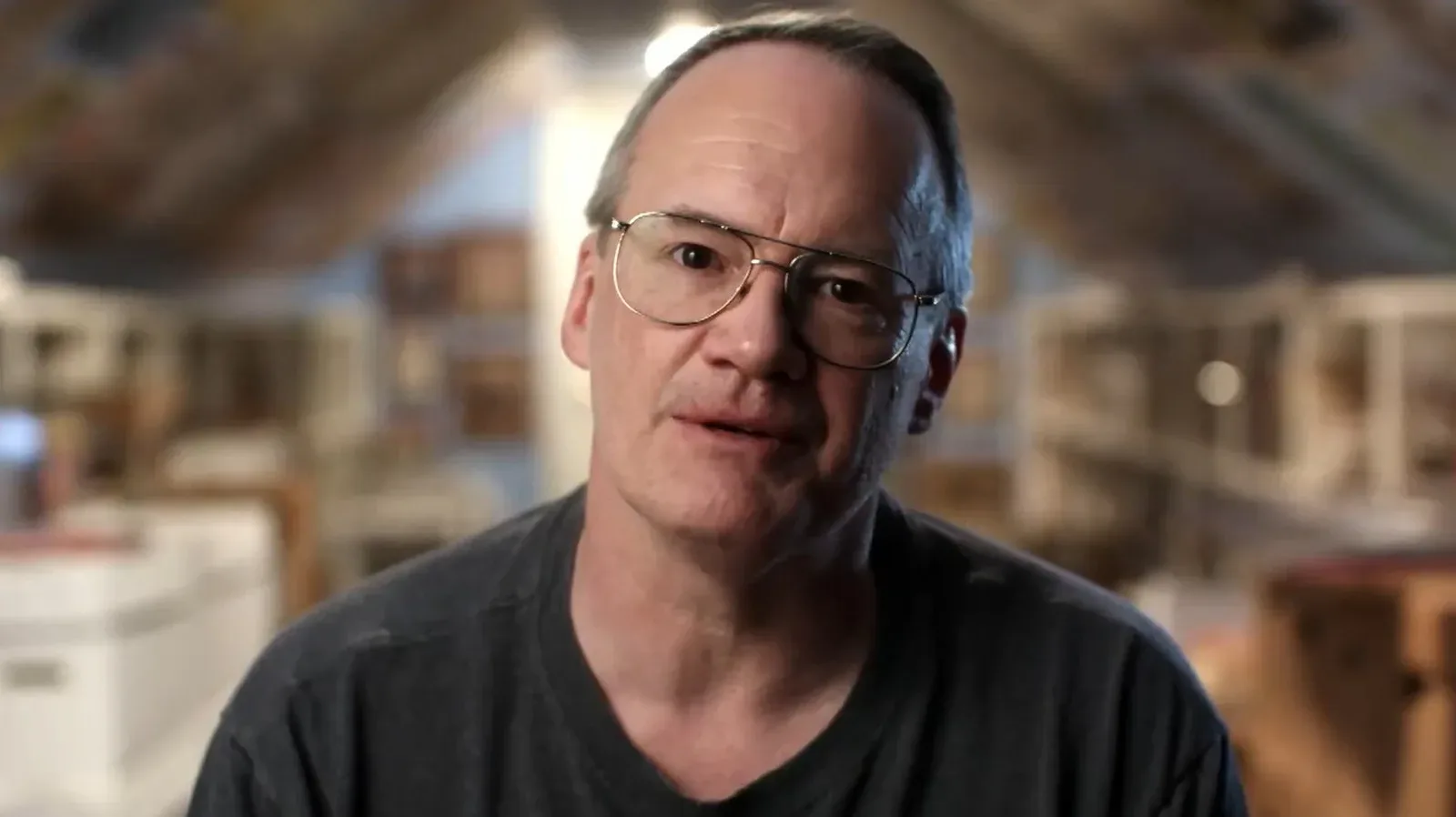
Jim Cornette is once again bringing his perspective to the world of Dark Side of the Ring, this time as the central voice of a new companion series built around infamous moments from professional wrestling history.
The first installment of Cornette Side of the Ring has premiered on the Dark Side of the Ring YouTube page. Cornette’s opening subject is WWE’s 2002 Katie Vick storyline involving Kane and Triple H, an angle that has remained one of the most controversial segments of its era.
The debut video is titled When WWE Tried Necr*philia, immediately signaling the seriousness of Cornette’s criticism toward the storyline. In the episode, the veteran manager and commentator lays out the basic context behind the angle before sharply condemning it. Cornette said the creative direction was so off-putting to him that it led to him no longer watching WWE.
The new project is positioned as an extension of the larger Dark Side of the Ring universe, with Cornette offering his direct, unfiltered thoughts on controversial, unusual, and memorable events from wrestling’s past. That framework suits a personality who has never been reluctant to offer strong opinions about wrestling presentation, booking, or the industry’s creative choices.
For more background on this topic, read Nattie Wants WWE to Explore International Brand Growth Beyond AAA.
A Familiar Voice in the Dark Side of the Ring World
Cornette is no stranger to Dark Side of the Ring. He has appeared across the series’ history, from its first season in 2019 through the recently released seventh season. His involvement has often brought a distinctive combination of firsthand experience, historical knowledge, and blunt commentary to subjects connected to wrestling’s complicated past.
With Cornette Side of the Ring, that role expands. Rather than appearing as one contributor among several voices in a documentary episode, Cornette is now the featured personality guiding viewers through the discussion. The format gives him room to frame an angle, explain why it became notorious, and assess its place within wrestling history from his own point of view.
The Katie Vick story is an especially fitting place to start because it remains a shorthand example of an angle that drew widespread backlash. It is also a storyline that has continued to carry an uncomfortable reputation long after its original broadcast. For many viewers, it represented a point where WWE’s attempts to generate shock and heat became excessively distasteful.
Why the Katie Vick Storyline Remains So Controversial
The 2002 storyline centered on Kane and Triple H and used Katie Vick as the focal point of the conflict. The angle was heavily criticized at the time, with its content provoking considerable outrage among fans and observers. The material was viewed by many as an attempt to push boundaries in a way that overwhelmed the wrestling narrative around it.
That reaction has endured. While professional wrestling has long used provocative characters and shocking angles to create emotional responses, the Katie Vick material is regularly discussed as an example of a segment that crossed a line for a substantial part of the audience. Its notoriety is not based simply on being controversial; it is rooted in the nature of the subject matter and the way it was presented on WWE programming.
Cornette’s decision to address it in the premiere gives the new series an unmistakable mission statement. It is not beginning with a lightly remembered oddity or a harmlessly eccentric storyline. It begins with one of the clearest examples of WWE creative drawing a severe negative reaction, including from people who worked in and around the company.
For Cornette, the issue is not merely that the segment was provocative. His response in the episode is that it represented a creative choice that fundamentally alienated him as a viewer. That makes his comments more than a routine retrospective critique. They frame the storyline as a turning point in his relationship with WWE programming.
Regret From People Connected to the Segment
The Katie Vick angle has also been revisited by figures who were involved with its presentation. Former WWE creative director David Sahadi has expressed embarrassment over the segment. Former WWE commentator and backstage interviewer Jonathan Coachman has likewise said that he regrets taking part in it.
Those reactions underscore why the storyline continues to be discussed decades later. Wrestling angles can age in different ways. Some become beloved pieces of nostalgia, some are remembered as amusing misfires, and others disappear from regular conversation. The Katie Vick story has remained visible because of the level of discomfort attached to it, including among people associated with the production.
That history gives Cornette’s discussion added context. He is not revisiting a story that only became controversial through revisionist debate years later. The angle was widely panned and generated outrage when it aired, and it has retained that reputation ever since. The fact that participants have publicly reflected on their involvement only reinforces the lasting impact of the response.
It is also difficult to imagine the same material being approved in the present-day WWE environment. The company, its audience, and the broader media landscape have all changed substantially since 2002. The story’s continued status as a cautionary reference point reflects the reality that some forms of shock content can create attention while still damaging the perception of the show presenting it.
A Format Built for Cornette’s Perspective
The premise of Cornette Side of the Ring is straightforward: Cornette examines outrageous, infamous, and unforgettable moments from professional wrestling and offers his view of what happened and why it mattered. The description for the series emphasizes his role as both a legendary manager and wrestling historian, two identities that have defined his public presence for decades.
That combination is central to the appeal of the format. Cornette has worked in numerous capacities across wrestling, and he also approaches the business with an intensely held philosophy about what wrestling should be. Whether viewers agree with every conclusion he reaches or not, his perspective is rarely vague. A series constructed around his commentary is therefore likely to place the emphasis on clear judgments rather than detached recollection.
The first episode demonstrates that approach. Cornette does not treat the Katie Vick storyline as merely a strange chapter worthy of a laugh. He discusses it as a serious example of what he believes went wrong in WWE’s creative direction. His personal statement that the angle caused him to stop watching the company provides the episode with a particularly forceful conclusion.
For the broader Dark Side of the Ring brand, the spinoff also creates a different kind of viewing experience. The primary series is known for examining difficult stories through a documentary structure and a range of interviews. Cornette Side of the Ring instead places the focus on one prominent wrestling voice reacting to individual moments and controversies. It is a companion format rather than a replacement for the main series.
An Infamous WWE Chapter Revisited
The Katie Vick storyline has not become less controversial with time. If anything, the distance from 2002 has made it easier to identify why so many people reacted negatively to it. It remains an example of how an effort to create an extreme television moment can eclipse the characters, the match programs, and the larger stories around it.
Kane and Triple H are both WWE Hall of Famers, and their association with the angle ensures that it remains part of discussions about their lengthy careers. Yet the storyline is generally remembered less for advancing either performer and more for the response it inspired. That is a difficult legacy for any wrestling segment, particularly one designed to intensify a major WWE rivalry.
Cornette’s new series begins by confronting that legacy head-on. The launch episode offers fans an opportunity to hear one of wrestling’s most outspoken historical voices explain why the segment still stands out to him for all the wrong reasons. Given Cornette’s long relationship with Dark Side of the Ring, the spinoff’s decision to start with such a polarizing WWE topic makes its intended tone clear.
Cornette Side of the Ring is now underway, and its first episode makes no attempt to soften its subject matter. By opening with the Katie Vick angle, the series has established itself as a forum for revisiting wrestling’s most disputed creative decisions through Cornette’s unmistakably candid lens.
In pictures

Darryl Polo
Darryl Polo is a passionate wrestling fan covering WWE, AEW, TNA and beyond. He loves great rivalries, breakout stars and the moments that keep fans talking long after the bell. How we work.