
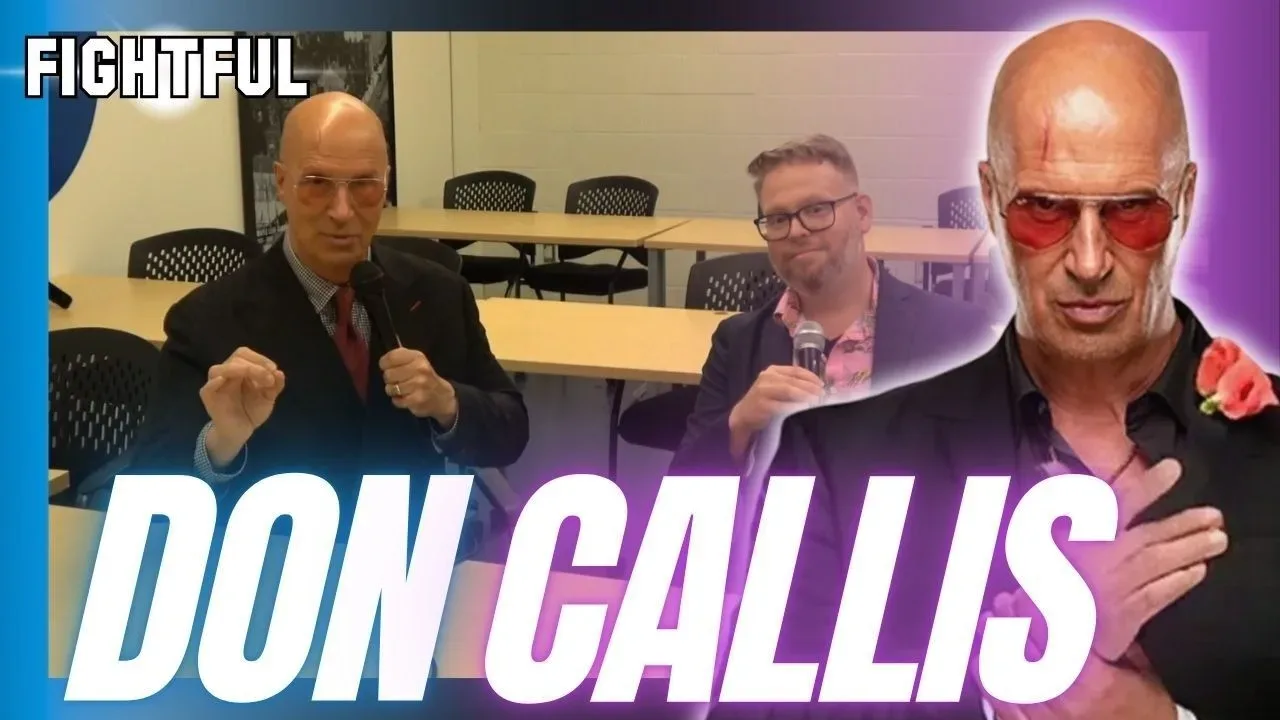
Don Callis has shared an emotional assessment of Benjamin Satterley, the wrestler known internationally as PAC, describing him as one of the finest in-ring performers of his generation and a person whose humility matched his remarkable athletic ability.
Callis spoke about PAC while previewing Maple Leaf Pro Wrestling’s Northern Rising event, which takes place October 3 at the Mattamy Athletic Centre in Toronto, the building formerly known as Maple Leaf Gardens. Callis is set to join Mauro Ranallo on commentary for the event. His remarks arrive days after All Elite Wrestling presented a tribute show for PAC on September 30.
The longtime wrestling executive, manager and broadcaster made clear that PAC’s reputation extended far beyond individual matches or championship pursuits. In Callis’ view, Satterley combined rare physical gifts with a grounded personality that made his standing among peers especially meaningful.
“For me, PAC was the best of us in terms of what he did in the ring and just an incredibly humble guy,” Callis said. “He was a guy I always would have loved to have in the Don Callis Family because he fit the profile. I mean, superior athlete.”
For more background on this topic, read Kofi Set for AEW Collision Singles Debut Against Lee Moriarty on October 3.
Callis recalls PAC as a peer for Kenny Omega
Callis’ comments carried particular weight because of his association with Kenny Omega, another wrestler widely recognized for elite athleticism and high-level in-ring performances. Callis recalled a time when he managed Omega as world champion and Omega was preparing to wrestle PAC. The prospect of that match, Callis said, created a real concern because PAC was among the very few men capable of matching Omega physically.
“I remember when I managed Kenny Omega and he was World Champion and we had to wrestle PAC and I remember being concerned about it because Kenny was used to being the best athlete and if there was anyone who could challenge Kenny with that, it was PAC,” Callis said. “He was just incredible.”
That comparison speaks to the level at which Callis placed PAC. Omega’s body of work has long been central to conversations about the most complete wrestlers of his era, and Callis’ recollection did not frame PAC simply as a difficult opponent or a compelling stylistic matchup. He characterized him as someone who could genuinely test the standard set by a world champion regarded as one of wrestling’s premier athletes.
PAC’s ring work was built around speed, precision, striking intensity and a willingness to make every exchange feel consequential. He could work at a punishing pace, but the athleticism Callis praised was not only about explosive movement. It was also reflected in PAC’s command of timing, his ability to transition between offense and defense, and the conviction he brought to his performances. Those qualities helped make even the possibility of a match with him feel significant.
For Callis, however, the most important part of the reflection was not limited to the physical traits that made PAC special in competition. He also focused on the respect Satterley earned from other wrestlers. Callis said that the people around the Don Callis Family understand why so many performers admired him because the group values wrestling history, talent and results.
“I think that everyone in my family understands because we respect history,” Callis said. “We respect, above all else, talent and results and I think when a lot of the guys looked up to Ben, and with very good reason.”
Respect for Benjamin Satterley beyond the character
Callis’ use of Satterley’s given name underscored the personal nature of his remarks. PAC was a distinctive presence on screen, marked by intensity and an unyielding competitive demeanor. Callis’ remembrance placed equal emphasis on the person behind that persona, calling him “an incredibly humble guy” while also acknowledging the respect he commanded as an athlete.
That combination is central to why tributes to Satterley have resonated across the wrestling world. Performers can be celebrated for their accomplishments, their signature matches or their championship credentials. Callis instead pointed to something broader: PAC was respected because his talent produced results, and because he carried that talent with humility. In a profession that places enormous demands on physical performance and personal resilience, those traits can shape how a wrestler is remembered by colleagues as much as any individual accolade.
Callis also offered an intriguing observation by saying PAC would have fit the profile of the Don Callis Family. The faction has centered itself around accomplished wrestlers and an insistence on results. In that sense, the comment was not merely a hypothetical about an onscreen association. It was a concise statement of how highly Callis rated PAC’s competitive credentials and how naturally he believed PAC would have matched a group constructed around elite ability.
The idea is especially notable given Callis’ long experience around major names and championship-level competitors. His praise did not present PAC as a talented wrestler with potential still to realize. It presented him as a finished, exceptional performer whose level was already clear to those who worked alongside him.
AEW’s September 30 tribute and a wider moment of remembrance
All Elite Wrestling held a tribute show for PAC on September 30, creating a moment for the company and its audience to recognize his legacy. Callis’ comments ahead of Northern Rising add another perspective from someone who knew the demands of working with and against PAC at the highest level.
The timing also illustrates how wrestling communities often come together across promotions, roles and eras when honoring an influential figure. Callis will be part of Maple Leaf Pro Wrestling’s broadcast team in Toronto, yet the substance of his message centered on a performer closely associated with AEW and respected throughout the industry. The setting may be different, but the sentiment is consistent: PAC’s impact was not confined to one locker room or one presentation of professional wrestling.
Northern Rising will bring Callis and Ranallo together at the Mattamy Athletic Centre, a venue with deep historical significance under its former Maple Leaf Gardens identity. Before taking his place at the commentary desk, Callis made space to discuss someone he considered among the best the business had to offer.
His comments provide a straightforward account of PAC’s standing through the eyes of a veteran manager and broadcaster: a superior athlete, a credible threat even to a champion of Omega’s caliber, and a humble person who gave others every reason to look up to him.
A legacy defined by excellence and example
There is a directness to Callis’ description that fits the way PAC was perceived as a performer. He did not need embellishment to create an impression in the ring. The standard of his work, the urgency of his style and the confidence behind his presentation spoke for themselves. Callis’ recollection of worrying about PAC as an opponent for Omega reinforces that the respect was practical as well as personal. PAC was viewed as someone capable of changing the outcome whenever he stepped into a match.
At the same time, Callis’ emphasis on humility ensures that the remembrance is not reduced to athletic comparison. The praise acknowledges Satterley as a person whose conduct mattered to those around him. That is why Callis believes the admiration from fellow wrestlers was warranted, and why he said many of them looked up to him “with very good reason.”
As AEW continues to honor PAC following its September 30 tribute show, Callis’ words stand as a strong reflection of the esteem in which Benjamin Satterley was held. In Callis’ estimation, PAC represented an exceptionally high bar for performance, professionalism and the kind of respect that is earned over time rather than simply claimed.

Darryl Polo
Darryl Polo is a passionate wrestling fan covering WWE, AEW, TNA and beyond. He loves great rivalries, breakout stars and the moments that keep fans talking long after the bell. How we work.