
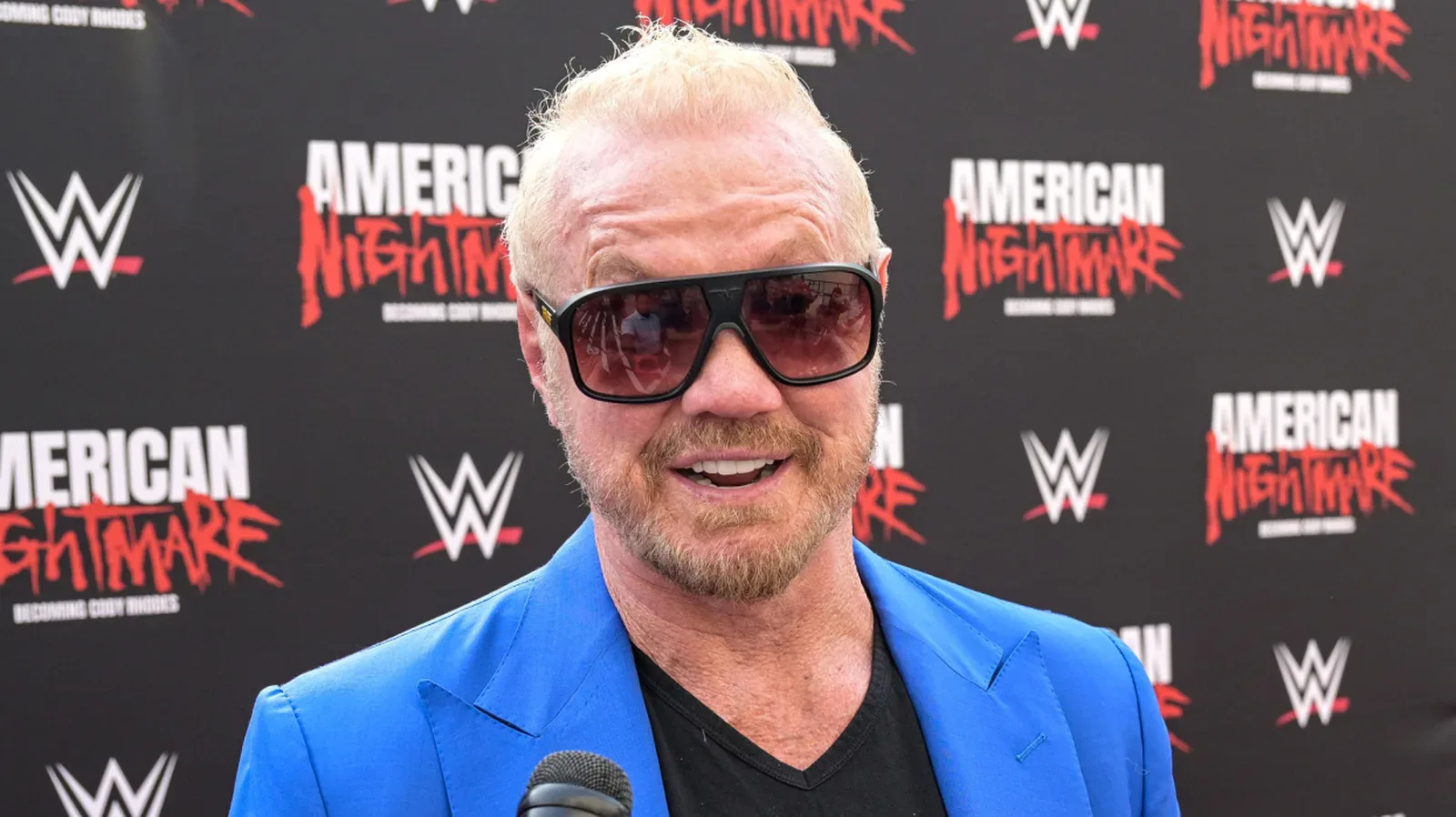
Diamond Dallas Page believes his first major WWE storyline did more than derail the momentum he hoped to carry from WCW. In his view, the creative direction of his 2001 debut helped push away WCW fans who were already uncertain about how their favorite stars would be treated after the company’s collapse.
Page arrived in WWE during the opening phase of the Invasion storyline, one of the most ambitious and closely examined angles in company history. As a multiple-time WCW World Heavyweight Champion and one of that promotion’s biggest homegrown stars, Page had the name recognition and resume to enter WWE as an immediate featured player. Instead, his first program centered on a reveal that he had been secretly stalking The Undertaker’s wife, Sara.
The angle led directly to a feud with The Undertaker, but Page’s recollection is that the premise put him in an impossible position from the start. Speaking on The Major Wrestling Figure Podcast, Page said he had initially envisioned a very different route into WWE—one involving The Rock and the shared association both men had with the “People’s Champion” label.
That potential matchup never materialized. Page explained that he chose to accept WWE’s direction in an effort to show that he was willing to work with the company’s plans rather than insist on protecting his own ideas.
For more background on this topic, read Baron Corbin Calls WWE SummerSlam His Career ‘White Whale’ After Championship Breakthrough.
“When you’re trying to make Vince McMahon feel like you want to be a team player, you give up yourself and you give him yourself and you give him yourself,” Page said on The Major Wrestling Figure Podcast. “So I let it go. And I let them set me up on an angle that was never going to work.”
A Major WCW Name Enters WWE in a Different Role
The contrast between Page’s WCW profile and his initial WWE portrayal remains at the center of his criticism. In WCW, Page grew from a flashy personality into one of the promotion’s most popular stars. His rise included multiple reigns as WCW World Heavyweight Champion, and he had long been presented as a resilient main-event figure who connected strongly with the audience.
That history created clear expectations when he appeared in WWE. The Invasion had the built-in appeal of pitting former WCW and ECW names against established WWE talent. For fans who had followed WCW, the arrival of performers such as Page represented an opportunity to see recognizable stars treated as meaningful threats on WWE television.
Instead, Page was introduced as the mystery stalker targeting Sara. The reveal placed him opposite The Undertaker and quickly established him as the antagonist in a personal story. Page ultimately lost the program decisively, and he now argues that the material did not make sense for the version of Diamond Dallas Page audiences had known.
His objection was not simply that he was cast as a villain. Wrestling characters change allegiances and evolve constantly, particularly when a performer joins a new promotion. Page’s issue was that the angle, as he saw it, relied on motivations that conflicted with his status and made his character appear lesser than the star WCW fans remembered.
Page questioned why an established name would need to use The Undertaker’s family to become famous, particularly when he had already achieved national recognition and championship success. He also pointed to the way the story repeatedly presented him as cowardly. That combination, Page believes, stripped away the qualities that had made his WCW run work.
The Rock Idea and the “People’s Champion” Connection
Page’s mention of The Rock underscores what he saw as a missed chance to make his WWE arrival feel consequential. Both men had been tied to variations of the “People’s Champion” identity, a natural point of comparison that could have given WWE an immediate promotional hook.
There is no indication from Page’s comments that the match was ever formally scheduled or that WWE had committed to the idea. Rather, it was an aspiration Page had when considering what a high-profile introduction could look like. In his mind, the shared nickname and the clash of two major personalities could have provided a clearer launchpad than the stalker reveal.
Instead of entering through a competitive rivalry built around status, Page was placed into a personal angle where the audience was asked to view him through an entirely different lens. The Undertaker, already one of WWE’s most protected and established attractions, emerged victorious. For Page, the larger issue was what the story communicated before the feud had even reached its conclusion: that the former WCW champion was not being positioned as an equal-level arrival.
Why Page Connects the Angle to the Invasion’s Audience Problem
Page went beyond describing the storyline as a disappointment for his own career. He connected it to the wider difficulty WWE faced in retaining viewers who had supported WCW. The Invasion was built around a collision of wrestling brands, but its success depended in part on audiences believing the incoming side had enough credibility to stand toe-to-toe with WWE’s roster.
From Page’s perspective, that credibility was weakened when prominent WCW names were introduced in ways that did not reflect how their established fan bases saw them. He said he committed to performing the role despite his reservations, but he feels the result frustrated viewers who had hoped to see a more authentic continuation of his WCW persona.
“I decided to go in on it and just play the role,” Page said on The Major Wrestling Figure Podcast. “And man, it just...it p****d off so many WCW fans and they stopped watching wrestling. They just stopped watching.”
That is Page’s assessment of the impact, and it speaks to a longstanding debate around the Invasion angle. The storyline remains notable because it had access to a rare premise: performers who had been associated with rival national promotions appearing under the WWE umbrella. Yet the available roster, the timing of arrivals and the portrayal of the invading group have all been discussed for years by wrestlers and fans looking back at that period.
Page’s experience is especially prominent in those discussions because his introduction was so sharply different from the role he had occupied in WCW. He was not a newcomer who needed to be defined for a national audience. He arrived with an established identity, major victories and a loyal following. His comments suggest that abandoning those strengths in favor of a storyline built around humiliation and cowardice made it harder for his supporters to invest in the new presentation.
Page’s WWE Run Remains a Point of Reflection
Page’s WWE tenure is often remembered as much for what might have been as for what it became. He is a WWE Hall of Famer, but that honor is closely tied to the body of work that made him a defining WCW success story. His championship accomplishments, his ability to connect with crowds and his unlikely ascent into the main-event picture remain central to his legacy.
The 2001 storyline with The Undertaker occupies a very different place in that legacy. Page’s latest comments do not suggest he was unwilling to adapt or participate. In fact, he framed his decision as an attempt to be cooperative. The regret comes from believing that cooperation led him to accept a concept he felt was fundamentally incapable of working.
For Page, the lesson is tied to character consistency and audience trust. A wrestler’s established reputation can be a powerful asset when moving between promotions, particularly when fans have invested years in following that performer. If that identity is discarded without a convincing reason, the reaction can extend beyond one storyline or one performer.
More than two decades later, Page still sees his WWE debut as a turning point that disappointed both him and a segment of the WCW audience. His proposed Rock program remains only an unrealized possibility, while the Undertaker feud stands as the direction WWE chose. But Page’s recollection makes clear why the storyline continues to be revisited: it represents a moment when one of WCW’s most recognizable stars entered WWE with enormous name value and, in his view, was immediately placed in a role that could not live up to it.
In pictures
Darryl Polo
Darryl Polo is a passionate wrestling fan covering WWE, AEW, TNA and beyond. He loves great rivalries, breakout stars and the moments that keep fans talking long after the bell. How we work.