
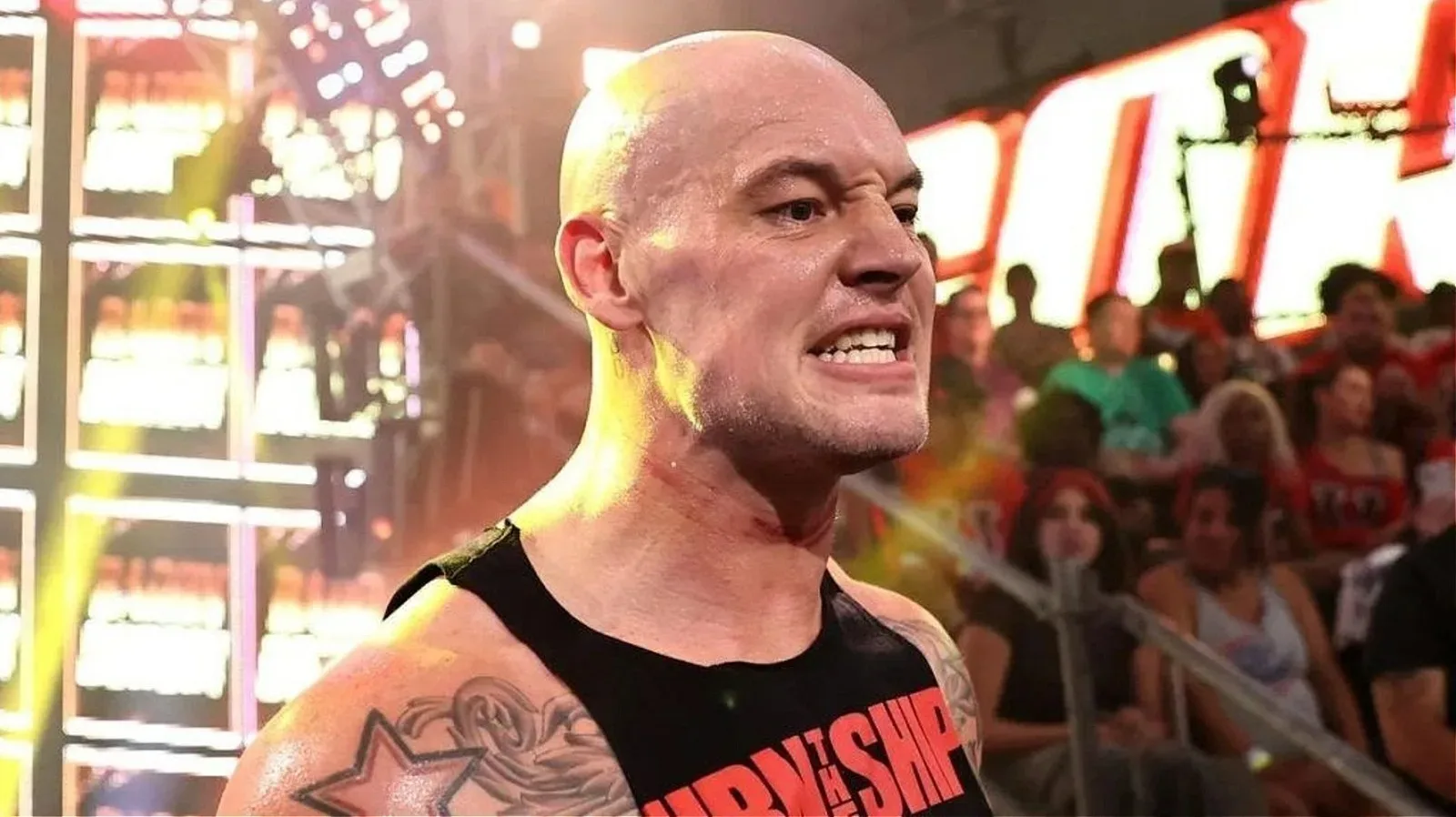
For Baron Corbin, WWE SummerSlam was never just another premium live event on the calendar. It was a stage that repeatedly seemed to offer major opportunities before taking them away, leaving him with a sense of unfinished business that followed him through different phases of his WWE career.
That is why Corbin has described SummerSlam as his personal “white whale.” The phrase, drawn from the famously relentless pursuit at the center of Moby-Dick, reflects how important it became for Corbin to finally have a defining moment at one of WWE’s biggest annual events. He had competed at SummerSlam before, including high-profile bouts involving John Cena and Finn Bálor, but the event had continued to carry difficult memories and what-ifs.
In 2026, Corbin finally got the result he had spent years chasing. After returning to WWE in July, he defeated Trick Williams at SummerSlam in Minnesota to win the United States Championship. The victory gave Corbin a major championship at an event he had long viewed as a source of bad luck, turning a frustrating history into one of the more meaningful accomplishments of his career.
A long and complicated SummerSlam history
Corbin’s connection to SummerSlam has included no shortage of prominent opponents. He pointed to his match against John Cena, which opened a SummerSlam card, as one of the significant chances he had received at the event. Opening a stadium-level WWE show is a major responsibility, and sharing the ring with Cena placed Corbin in a spotlight few performers get to experience.
For more background on this topic, read Blake Monroe Claims Giulia’s Weekly Spotlight Is Driven by Their WWE SmackDown Rivalry.
Yet Corbin’s memories of the event were not defined solely by the size of the names across from him. He also recalled facing Finn Bálor at SummerSlam, with Bálor appearing as The Demon. Corbin noted that match lasted only around four minutes, an outcome that left little room for the type of competitive showcase he had hoped to create on such a large stage.
“I always felt like SummerSlam was my white whale, even though I’ve had some big SummerSlam matches,” Corbin said. “I had [John] Cena to open SummerSlam, I had Finn Balor, but he pulled ‘The Demon’ out, and that match lasted like four minutes.”
The distinction is important. A wrestler can appear on an enormous event and still feel that a personal breakthrough has not arrived. Corbin had been part of SummerSlam’s history, but he did not feel he had gotten the complete moment he wanted from it. His previous appearances carried visibility, but not necessarily the kind of lasting victory or performance that could close the book on his frustrations with the event.
That feeling was compounded by other SummerSlam plans that never reached the ring. Corbin said he had two or three matches connected to the event that had been planned but did not happen, with Kalisto and Rey Mysterio among the names involved. Wrestling cards are routinely adjusted for a wide range of reasons, and planned matches do not always become official matches. For Corbin, however, those missed opportunities became part of the pattern.
Unfinished business became motivation
Over time, SummerSlam came to represent more than the individual bouts Corbin had already had or the contests that did not materialize. It became a symbol of goals that had remained just out of reach. That is the reason he connected the event to the “white whale” idea: no matter how many other accomplishments or appearances came along, SummerSlam remained a stage he wanted to conquer on his own terms.
“So getting that opportunity in Minnesota was humongous,” Corbin said of this year’s event. “And for a title?”
Winning the United States Championship elevated the moment beyond simply returning to a major WWE card. Championships give matches a clear legacy within a performer’s career, particularly when they are won on a signature event. For Corbin, the title victory over Williams attached a concrete achievement to a show that had previously been associated with disappointment and plans that fell through.
The Minnesota setting also gave the match a particular weight in Corbin’s eyes. A return in July had already put him back in the WWE environment, but a title opportunity at SummerSlam quickly created stakes far beyond an ordinary comeback appearance. Rather than gradually working his way through a lengthy series of smaller programs, Corbin was given a direct chance to rewrite a complicated relationship with one of WWE’s tentpole shows.
He made the most of it by beating Williams and claiming the United States title.
The United States title changes hands again
Corbin’s championship reign did not last long. At WWE Sunday Night’s Main Event the following month, Williams defeated Corbin to regain the United States Championship. The loss ended Corbin’s time with the title and restored Williams as champion, ensuring that their SummerSlam result did not stand as the final chapter of their rivalry.
Still, the brevity of the reign does not erase what the SummerSlam victory represented. Corbin was not discussing the event merely as a place where he wanted a lengthy title run to begin. His focus was on finally receiving, and capitalizing on, an opportunity that had felt elusive through much of his career. The win itself addressed a specific personal hurdle.
There is a difference between holding a championship for a prolonged period and winning it in a moment that carries deep individual significance. Corbin’s reign may have been short, but the road to that SummerSlam win had been years in the making. He had dealt with major opponents, an especially brief bout against The Demon, and several ideas for SummerSlam matches that never came together. In that context, defeating Williams was the payoff for persistence as much as it was a championship change.
What the moment means for Corbin
Corbin’s WWE career has featured a variety of roles, rivalries, and high-pressure situations, but SummerSlam occupied a distinct place in his mind. The event repeatedly brought him close to something memorable while also giving him reasons to feel unsatisfied. Those experiences can be difficult to separate from an athlete’s perception of a particular venue or event, especially when the missed opportunities accumulate over multiple years.
The 2026 SummerSlam result offered Corbin a different ending. Instead of another abbreviated appearance, another altered plan, or another defeat on a major stage, he left Minnesota with the United States Championship. For someone who had viewed the event as a recurring obstacle, that was a meaningful reversal.
Williams’ victory at Sunday Night’s Main Event means the United States Championship is no longer around Corbin’s waist, and it keeps the spotlight on the ongoing competitive issue between the two men. But Corbin’s SummerSlam breakthrough remains part of his record. He did not simply return to WWE; he returned in time to win a title at the show he had spent years trying to solve.
For Corbin, SummerSlam had represented bad luck, unfinished business, and missed connections. In Minnesota, for one night at least, it became the stage where he finally caught the prize he had been pursuing.
In pictures
Darryl Polo
Darryl Polo is a passionate wrestling fan covering WWE, AEW, TNA and beyond. He loves great rivalries, breakout stars and the moments that keep fans talking long after the bell. How we work.