
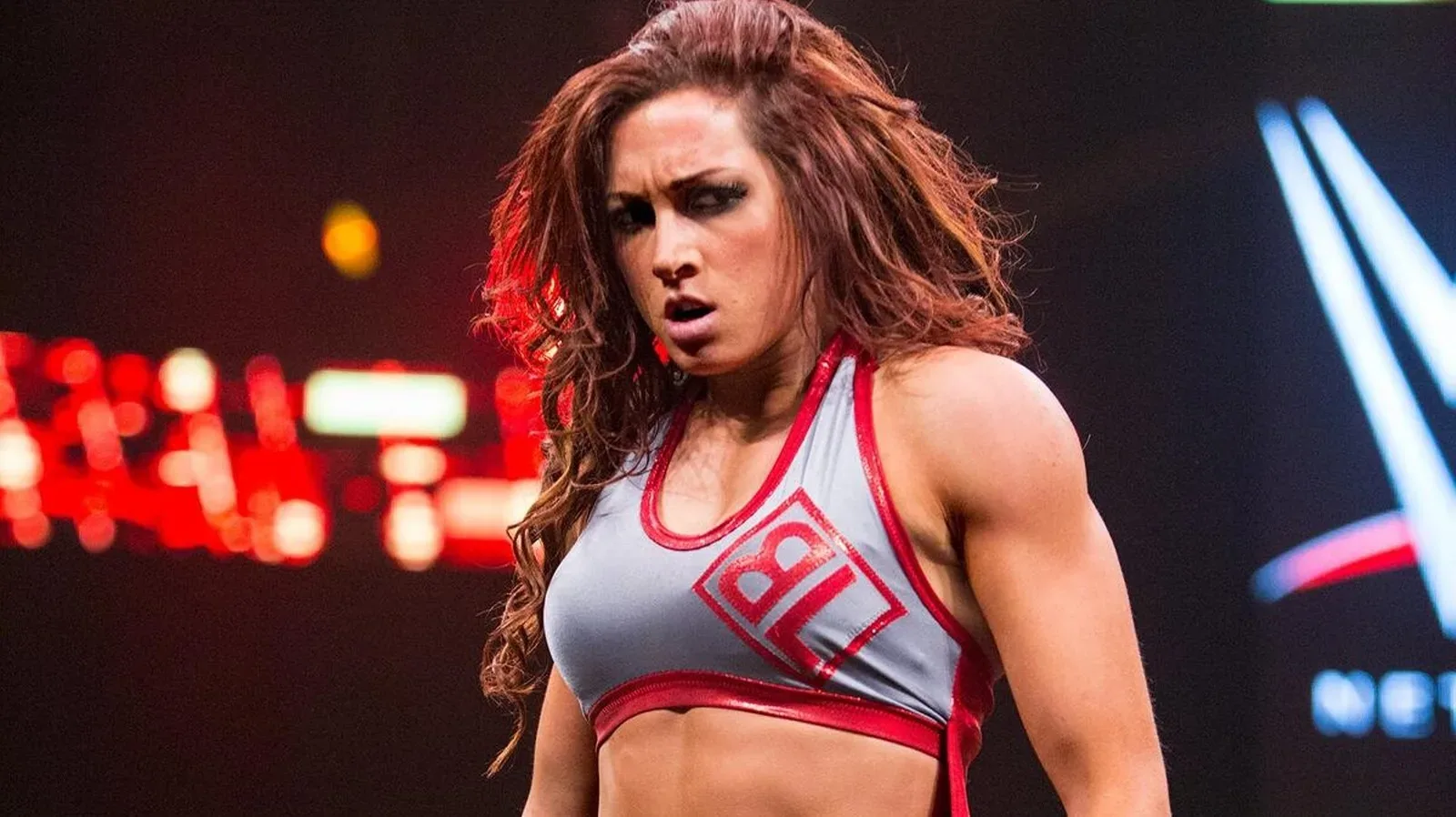
Becky Lynch has spoken candidly about the insecurity that followed her into WWE during the first years of her run with the company, explaining that the opportunity she had wanted for so long also came with a persistent fear of losing it.
Appearing on So U Think U Can Sports?, Lynch looked back at the uncertain period between leaving wrestling at 19 and eventually signing with WWE in 2013. She had started in the industry at a young age, but spent six years away before getting the chance to return through WWE. That return brought her back to something she felt deeply connected to, even as she questioned whether she belonged there.
“Very grateful for it, because it was this thing that I started so young and that I loved, and I kind of had a knack for, and I didn’t have a knack for, God, anything else,” Lynch said. “When I left it, it kind of left this void — for fighting, and for being artistic, and creative.”
For Lynch, wrestling was not simply an interest she had left behind. She described it as the place where several essential parts of her personality met: competition, creativity and the desire to fight. Being away from it created a space in her life that she did not feel was filled by anything else, making the prospect of returning especially meaningful.
For more background on this topic, read Nikki Bella Says Chelsea Green’s ‘Fearless Nikki’ Halloween Tribute Made Her Feel ‘Iconic’.
However, getting signed by WWE did not immediately erase the uncertainty that had built during her time away. Instead, Lynch said the early stages of her WWE journey were marked by anxiety. The concern was not centered on a single bad match or a particular setback. It became a day-to-day feeling that she could be fired at any time.
“I wanted to [go back to wrestling] so bad, and then [WWE] signed me, and then I worried I was going to get fired every day for the next two/three years,” Lynch said.
A difficult adjustment after a long break
Lynch’s comments underline the challenge facing performers who receive an opportunity after a significant absence from the ring. A WWE contract can represent validation, but it also puts a wrestler in an environment where they are attempting to establish themselves while surrounded by other ambitious talent. In Lynch’s case, the pressure was intensified by the fact that wrestling was the pursuit she believed suited her more naturally than anything else.
That background helps explain why the chance to return carried so much weight. Lynch was not describing an easy transition back into a familiar role. She was trying to rebuild a wrestling career after six years away while also proving that WWE had made the right decision by bringing her in.
She made clear that her fear of being released was not rooted in concerns over her past injuries. Rather, Lynch said the worry came from her own evaluation of her work and an inability to stop analyzing every detail.
“I wasn’t very good; I would overthink everything,” Lynch admitted.
The blunt self-assessment fits with the broader picture Lynch has painted when discussing her early time in WWE’s NXT system. She has previously said on multiple occasions that she feared being fired during that period. While the details of a wrestler’s development can often be private, Lynch has consistently been open about the mental side of trying to find her footing in that environment.
Overthinking can be particularly difficult in professional wrestling because performers are asked to balance a wide range of responsibilities at once. There is the physical execution in the ring, but there is also character work, timing, communication, confidence and the ability to react in the moment. Lynch’s comments suggest that, early on, she was placing enormous pressure on herself to get all of it right.
Dusty Rhodes’ support remained important
One major figure in Lynch’s recollections of that period has been Dusty Rhodes. In past interviews, Lynch has credited Rhodes with helping her continue during her early WWE years. She has said that Rhodes would go to bat for her backstage, providing support at a time when she felt uncertain about her place.
Lynch has also suggested that Rhodes may have related to her because she was somewhat of an outsider within the locker room. That sense of being on the outside can make an already demanding developmental process feel even more isolating. For a performer who was convinced she might be let go, having a respected voice offer support could make a meaningful difference.
Rhodes’ influence is often associated with the developmental side of WWE, where performers were encouraged to develop identities and connect their personalities to their work. Lynch’s later emergence as one of WWE’s defining personalities makes her memories of that earlier uncertainty especially revealing. Her account does not present confidence as something that arrived instantly once she signed. It was a process, and one that required her to keep going through self-doubt.
Her praise for Rhodes also speaks to the value of advocates in wrestling. The industry is built around individual performance, but performers rarely develop in isolation. Coaches, producers and mentors can have a significant impact, particularly when someone is struggling to see the progress that others may recognize in them.
Lynch’s story is about persistence as much as confidence
There is a common tendency to look back at successful wrestlers and assume that their rise was always obvious to them. Lynch’s comments offer a different version of that story. She says she loved wrestling from an early age and felt she had a genuine knack for it, but she also spent years away from the business and then entered WWE believing she was not good enough.
Those two ideas are not necessarily contradictory. A person can feel strongly drawn to a craft while also being highly critical of their own performance. In Lynch’s case, the emotional stakes appear to have made the criticism stronger. Wrestling had left a void when she walked away, so being given another chance in WWE may have made the possibility of failure feel even more severe.
Her willingness to describe those feelings without softening them gives added context to the early NXT portion of her career. Lynch was not simply trying to impress people around her. She was trying to quiet her own belief that she might not measure up. The fact that she continued through that period, despite expecting the worst, stands as an important part of her WWE story.
It also highlights a distinction between fear and a lack of commitment. Lynch did not say that worry made her stop wanting to wrestle. If anything, the interview reinforces how badly she wanted to return. The fear existed alongside the desire, not in place of it. WWE signing her gave her the opening she had hoped for, even if she initially struggled to trust that the opportunity would last.
Looking back on the road back to WWE
Lynch’s reflection on her six-year break and first two or three years under WWE contract provides a grounded look at the uncertainty behind a wrestling comeback. She knew what it felt like to lose the part of her life that supplied fighting, art and creativity. When the chance to come back arrived in 2013, she embraced it while still wrestling with the belief that she could be released at any moment.
Her story is therefore not framed as one of immediate certainty. It is a story about returning to a passion after time away, navigating a demanding new setting and continuing despite relentless self-doubt. Lynch’s recollection of overthinking everything, combined with her gratitude for Dusty Rhodes’ support, shows how difficult those formative WWE years felt from the inside.
For Lynch, the opportunity to be in WWE was something she had desperately wanted. Her latest comments make clear that wanting it did not make the early period easy. It made every perceived mistake, every question about her performance and every fear of being fired matter even more.
In pictures

Darryl Polo
Darryl Polo is a passionate wrestling fan covering WWE, AEW, TNA and beyond. He loves great rivalries, breakout stars and the moments that keep fans talking long after the bell. How we work.