
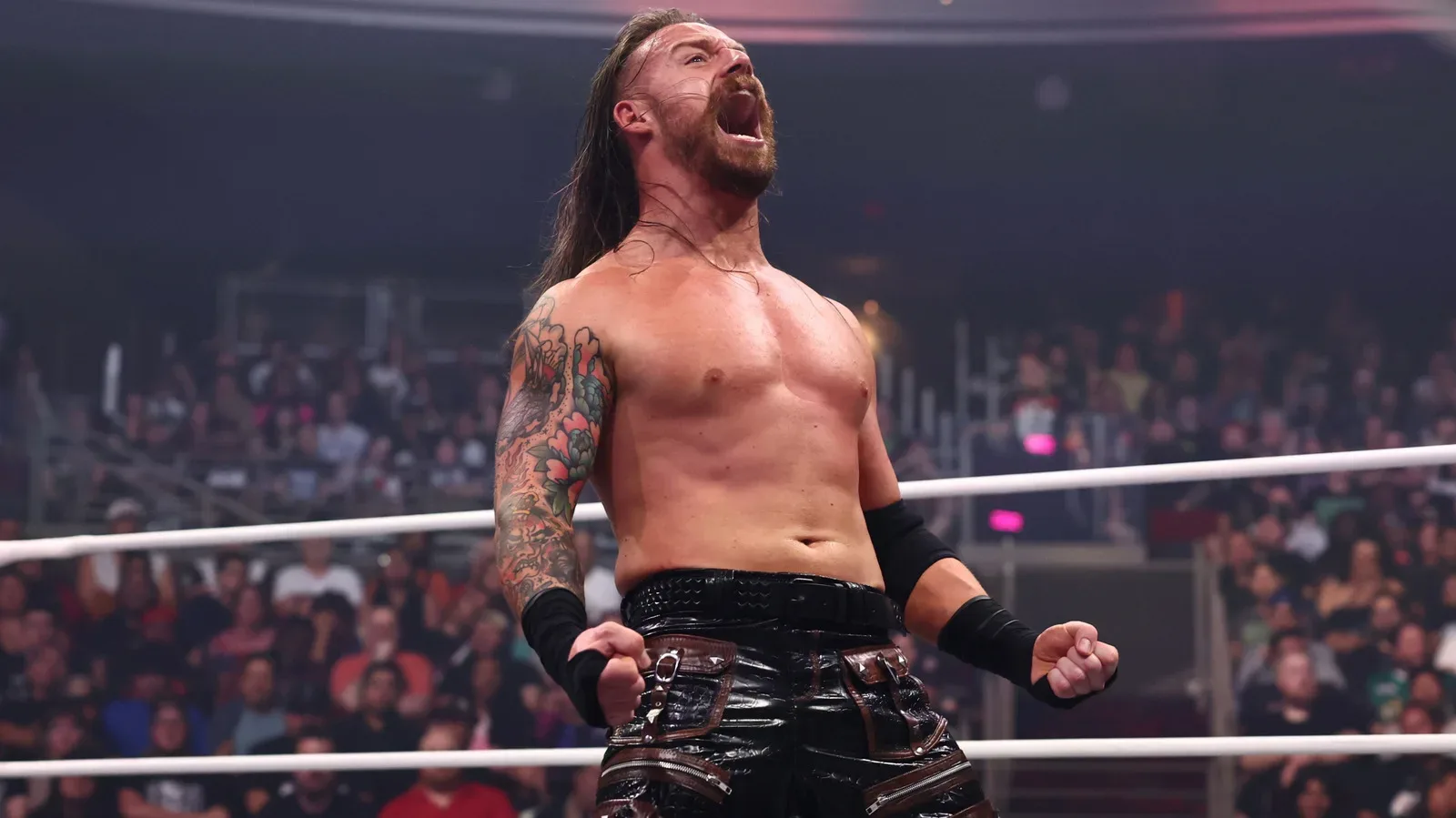
David Finlay arrived in AEW with the kind of experience few new additions can match. After spending more than a decade in New Japan Pro-Wrestling, including two reigns as IWGP Global Heavyweight Champion, Finlay was already accustomed to major matches, demanding tours and the expectations that come with carrying a prominent role for an internationally recognized promotion.
Yet experience has not eliminated the learning curve.
Finlay has discussed the professional adjustments he is continuing to make following his move to AEW earlier this year, identifying several clear differences between his former home and his new environment. The in-ring style, the production approach and the discipline required by specific television time allocations have all required adaptation, even for a wrestler with his résumé.
Speaking on Talk Is Jericho, Finlay said the wrestling side of the transition remains an ongoing process rather than something he believes he has completely solved.
For more background on this topic, read Anthony Bowens Explains Planned AEW Heel Turn After Singles Storyline Stalled.
“I feel like work-wise, I'm still trying to figure it out because it's just a completely different style,” Finlay said.
That distinction is important for understanding Finlay’s early AEW run. A move between major promotions is not simply a matter of appearing in a new ring or working in front of a different crowd. Every company has its own rhythms: how matches are built, how television is paced, where performers are expected to be positioned, and what a wrestler needs to accomplish in a finite amount of time.
Finlay’s time in NJPW gave him extensive experience in a system known for its tour structure and major singles tournaments. He pointed to the contrast in scheduling, particularly when discussing the G1 Climax. While a shorter New Japan tour could last around 10 days, the G1 represented a much more strenuous commitment.
“But the schedule is so much nicer,” Finlay said of AEW. “I went from, like, a short tour would be like 10 days, which is easy, but then we'd have the G1, which is 6 weeks long, and it's the G1, it's the toughest tournament in the world.”
The G1 Climax is one of the most physically and mentally demanding events on the wrestling calendar. Its format places competitors in repeated high-level singles matches over an extended period, making durability as valuable as any individual result. Finlay’s comments do not diminish the demands of AEW’s schedule; rather, they underline how substantial the change has been after years spent working New Japan’s touring model.
For Finlay, the AEW schedule has offered a different balance. That may provide welcome relief from the prolonged grind associated with tournaments such as the G1, but it also comes with a new set of requirements. AEW’s television-focused presentation puts added emphasis on precision, especially when it comes to production timing and the need to execute matches and segments within established windows.
Learning the Television Production Language
One of the biggest practical changes Finlay has encountered involves the cameras. New Japan’s presentation and AEW’s television production are distinct, and performers must understand how that affects their movement, timing and positioning in the ring.
Finlay said he had some limited previous experience working for companies in the United States, meaning the environment was not entirely unfamiliar. Still, he acknowledged that adapting to AEW’s camera setup remains part of his development in the company.
“Yeah, I'm still adjusting [to the cameras],” Finlay said. “I had a little bit of experience working for companies in the States, like just a tiny bit, so it wasn't completely foreign to me. But, like, in New Japan, it's like, do the match and they'll catch you.”
That description captures a meaningful difference in approach. In a production where wrestlers are largely trusted to perform their match and the cameras follow the action, the emphasis can remain squarely on the flow inside the ring. A television environment with more defined production demands asks performers to maintain that same in-ring focus while also being conscious of where moments are being presented.
Finlay did not frame the adjustment as a complaint. Instead, his remarks presented it as a new professional skill to develop. For a wrestler who had established himself over many years in New Japan, that willingness to keep learning is central to making a successful long-term transition.
The contrast becomes even clearer when Finlay discusses match length. In New Japan, particularly in a main-event setting, performers could be afforded considerable freedom. He noted that when a time guideline was given, it could be communicated as a broad range rather than a strict target.
“Also, if you're in the main event in New Japan, it's like, yeah, however long you want to go,” Finlay said. “If you get told time, it's usually, like, a range, like from here to here, whatever.”
That flexibility is very different from a weekly television structure in which multiple matches, interviews, entrances, commercial considerations and storyline developments all need to fit into a defined broadcast format. In AEW, a wrestler’s ability to adjust a match on the fly can become essential when the planned window changes or when a segment has to reach a precise conclusion.
Why Strict Timing Appeals to Finlay
Finlay explained that AEW has tighter parameters for matches and segments. He sees operating within those restrictions as a genuine skill, one that demands awareness and adaptability from everyone involved.
Rather than presenting stricter timing as a limitation on creativity, Finlay indicated that he enjoys the challenge. The need to constantly make adjustments during a match creates a different kind of pressure from the long-form freedom he experienced in New Japan. It asks wrestlers to determine not only what they want to do, but what they can accomplish effectively in the time remaining.
That is a valuable mindset for a performer entering a new promotion. AEW does not require Finlay to erase the instincts developed during his New Japan tenure. His major-match experience, his familiarity with high-pressure competition and his ability to work different opponents remain important assets. But success in a new setting also means recognizing which instincts need refining.
Finlay’s assessment suggests he is treating that process seriously. He has identified the specific areas that remain unfamiliar, from camera awareness to timing, while also highlighting the aspects of the new schedule that he appreciates. Such candor offers a grounded look at what a major wrestling career change can involve after more than a decade spent in one system.
Former NJPW Names Form a New AEW Unit
Finlay has not entered AEW alone. Since making his debut, he has aligned himself with fellow former NJPW talents Clark Connors and Gabe Kidd. The association has immediately given Finlay a familiar foundation inside the AEW roster, bringing together three wrestlers whose histories are closely connected to New Japan.
The trio quickly achieved championship success, winning the AEW World Trios Championship. Their reign, however, lasted only a few days. The brief title run established that the group could make an immediate impact while also leaving an obvious question over what comes next for Finlay, Connors and Kidd after losing the championships so quickly.
For Finlay personally, the alliance may offer a useful bridge between the environment he knew and the company he is still learning. Familiar partners can help create continuity, but AEW’s style and presentation will still demand that each member adapt to the promotion’s own expectations.
Finlay’s comments make clear that his transition is not a finished story. He is a veteran wrestler, a former two-time IWGP Global Heavyweight Champion and a member of a new AEW trio that has already held gold. At the same time, he remains open about the areas where he is still developing.
That combination should make Finlay’s continued AEW tenure worth watching. The experience is already there. The championship credentials are already there. What remains is the ongoing process of translating those strengths into a different wrestling system, with different television demands, different timing and a production language he is still mastering.
In pictures

Darryl Polo
Darryl Polo is a passionate wrestling fan covering WWE, AEW, TNA and beyond. He loves great rivalries, breakout stars and the moments that keep fans talking long after the bell. How we work.