
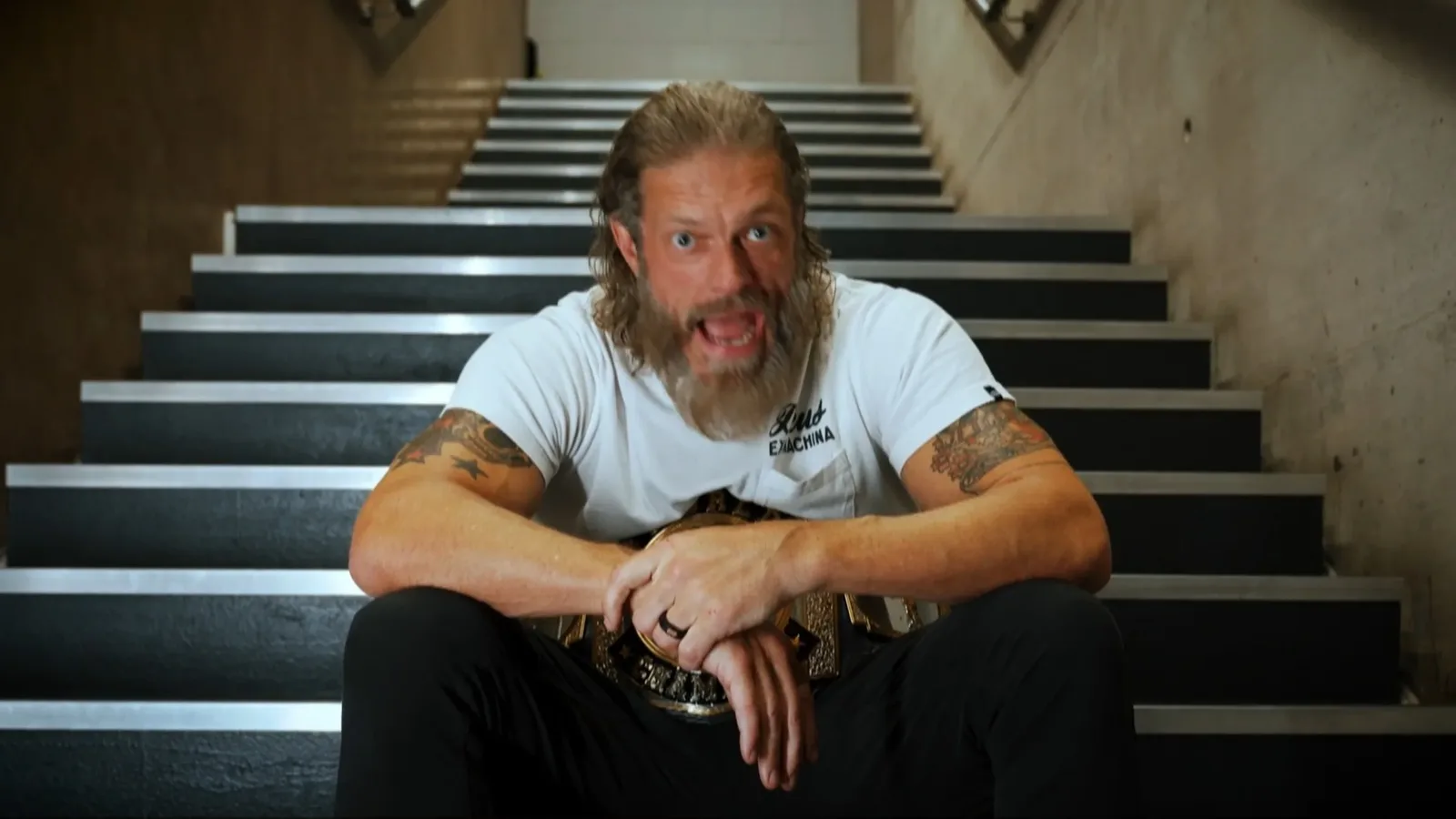
Adam Copeland has wrestled in some of professional wrestling’s biggest settings, but Maple Leaf Gardens stood above every other building on his personal list.
Copeland competed at Maple Leaf Wrestling’s Northern Rising event on October 3, facing Steve Maclin inside the storied Toronto venue. He defeated Maclin in the match, checking off a goal that had remained out of reach through retirement, a return to the ring, and a changing wrestling landscape.
Speaking in a Maple Leaf Wrestling documentary, Copeland made clear that the significance of the occasion was not simply about adding another notable arena to his resume. For him, Maple Leaf Gardens was the venue. He said it meant more than the other major locations where he has performed, including Wembley Stadium.
“This was easily the most important venue for me to wrestle in, over any other, over Wembley Stadium, over any of them,” Copeland said. “Maple Leaf Gardens has always been my one place that I wanted to get to. Here we are today.”
For more background on this topic, read Nick Jackson Shares Vivid PAC Dream and Emotional WrestleDream Reflection.
That is a revealing statement from a performer whose career has included championship matches, stadium events, major television programs, and a long list of high-profile opponents. Copeland’s connection to Toronto is inseparable from his wrestling identity, and the chance to work at Maple Leaf Gardens carried a meaning that extended beyond the result against Maclin.
The October 3 appearance was particularly notable because Copeland once did not see a realistic route to making it happen. He explained that he never expected to wrestle in the building, first because of the nine years he spent retired from active competition and then because the circumstances of the industry did not appear to provide an opening after he resumed his career.
“No, I never thought I’d wrestle in Maple Leaf Gardens,” Copeland said. “Between the fact that I had retired for nine years, and then even once I got my career back, just with the landscape of what wrestling is and where I was working, Maple Leaf Gardens was a pipe dream.”
Copeland’s remarks underline how unusual the Northern Rising event was. Wrestlers often speak about dream opponents, championships, and headline slots. A particular venue can be just as meaningful, especially when its history and location are tied to a wrestler’s earliest memories of the business. In Copeland’s case, the building had been a destination rather than merely a place to work.
His road back to the ring had already changed the expectations around his career. After being away from active competition for nine years, Copeland returned to wrestling and eventually joined AEW. Yet even with that return, Maple Leaf Gardens remained something he viewed as beyond reach. The possibility only began to take shape through discussions with Scott D’Amore.
“I thought if I were going to ever wrestle there, I’d have to run my own show, and then Scott D’Amore and I, we started talking and realized, ‘wait, this is now a possibility now that I’m with AEW, we could actually do this,’” Copeland said.
That conversation turned an idea into a real event and gave Copeland the opportunity he had long wanted. Rather than having to build and promote an entirely separate card himself simply to secure the building, he was able to take part in Maple Leaf Wrestling’s Northern Rising show and wrestle Steve Maclin there.
Copeland’s victory over Maclin is the official in-ring result, but the larger takeaway from the night is the fulfillment of a career wish that had seemed unlikely. The match was an opportunity for him to perform in a location he described as more important than any other venue he had worked.
A Toronto milestone beyond the scoreboard
Maple Leaf Gardens holds a special place in Canadian sports and wrestling culture, and that weight was evident in Copeland’s reaction. For a wrestler with deep roots in the Toronto area, entering the building as an active competitor was clearly about closing a circle that had remained incomplete.
Copeland did not present the occasion as a routine independent appearance or a novelty booking. His comments instead framed it as a bucket-list achievement that had survived multiple major changes in his life and profession. Retirement created one barrier. The realities of where he was working after his comeback created another. The eventual solution required the right timing, the right venue availability, and the involvement of D’Amore and Maple Leaf Wrestling.
That context makes the Northern Rising match more than a standalone encounter with Maclin. Copeland’s win gave the night a clear competitive conclusion, but his comments show why merely wrestling on the card mattered so much. The goal was to stand inside Maple Leaf Gardens as a wrestler, something he had once considered a pipe dream.
It also demonstrates the value of wrestling’s broader ecosystem. Copeland is signed with AEW, while Northern Rising was a Maple Leaf Wrestling event. The ability to make the appearance happen gave Copeland a professional opportunity that was personally significant, and it allowed the event to feature one of Canada’s most recognizable wrestling figures in a building that mattered profoundly to him.
For fans, venue milestones can be easy to overlook when compared with title changes or major rivalry developments. But performers often measure their careers through memories that do not fit neatly into championship statistics. A dream building, a hometown setting, or a chance to perform where they once watched wrestling can carry a different kind of importance. Copeland’s description of Maple Leaf Gardens leaves little doubt that this was one of those moments.
Copeland’s remaining in-ring wish list
The Maple Leaf Gardens appearance arrives as Copeland continues to add meaningful moments to the latter portion of his career. While he has now achieved his personal venue goal, another potential landmark match has recently been raised by Will Ospreay.
Ospreay has said that he wants Copeland to save a date for a match before Copeland retires in 2027. That proposed meeting has not been announced, and there is no confirmed date or event attached to it. Still, the public interest is understandable. Both men are associated with different eras of major wrestling success, and a first-time encounter would carry obvious appeal.
For now, the confirmed accomplishment is Copeland’s October 3 victory over Maclin at Northern Rising. The match gave him the chance to finally work at Maple Leaf Gardens, a place he had spent years viewing as unattainable.
Copeland’s words also offer a reminder that even established stars can continue to hold onto ambitions that audiences may never know about. His career had already reached extraordinary heights, yet one building remained at the top of his list. He had imagined that the only way to get there might be to run his own show. Instead, discussions with D’Amore and the circumstances created by his place in AEW helped make the opportunity real.
In the end, Copeland did not just visit a meaningful building. He wrestled there, defeated Steve Maclin there, and turned a longstanding personal dream into a completed chapter of his career.

Darryl Polo
Darryl Polo is a passionate wrestling fan covering WWE, AEW, TNA and beyond. He loves great rivalries, breakout stars and the moments that keep fans talking long after the bell. How we work.