
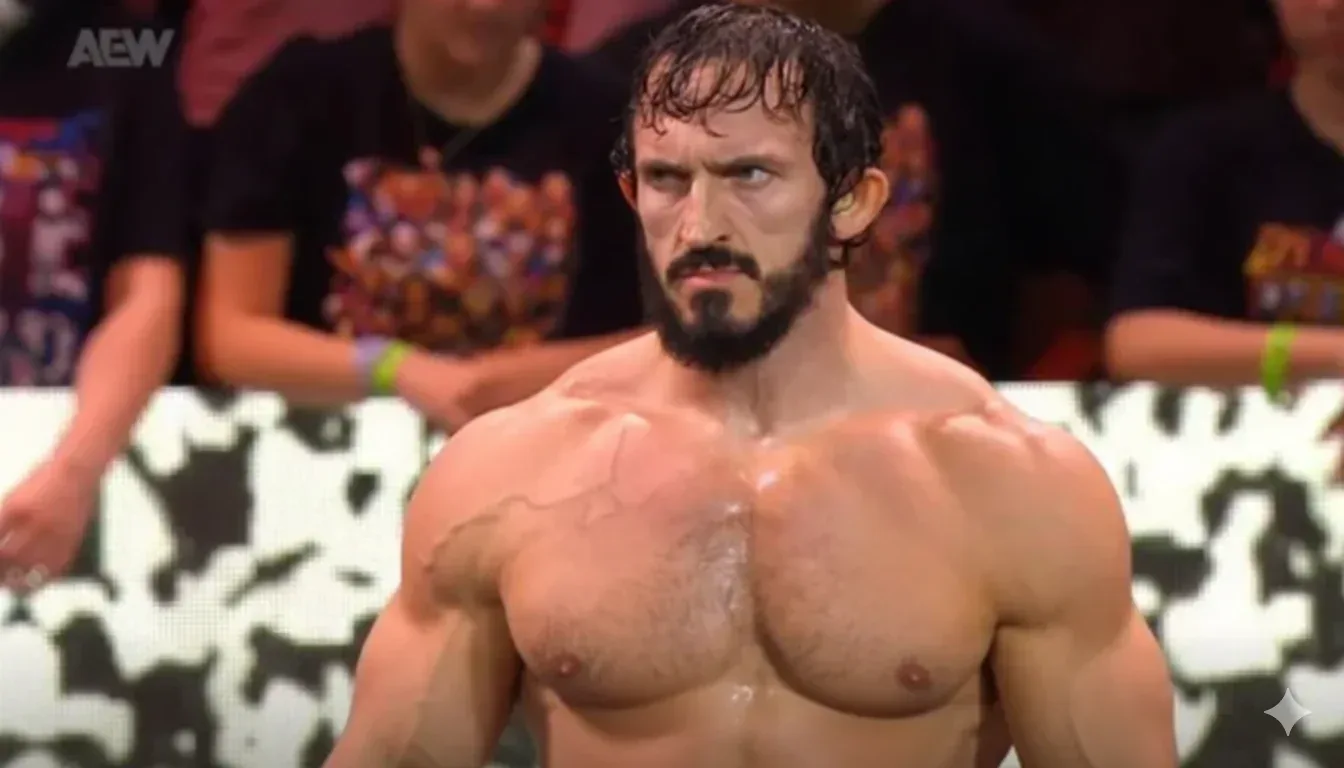
Nick Jackson has shared an emotional recollection of a vivid dream he had about PAC in the lead-up to AEW WrestleDream, later explaining that he felt PAC’s presence after his match at the event.
PAC’s death, which came the day after AEW All Out, cast a profound shadow over the professional wrestling community and the AEW locker room. Tributes to the former AEW star have taken many forms in the weeks since, from public messages to more personal reflections from the people who worked alongside him. Jackson’s comments offered another deeply personal glimpse into the impact PAC had on those around him.
Speaking during a recent episode of Being The Elite, Jackson described a dream in which he and PAC had been suddenly assigned a singles match on an episode of AEW Dynamite. What stood out most to Jackson was not simply the situation in the dream, but the specificity with which he remembered PAC’s voice, mannerisms, and apparent anxiety over having to put together a match with little notice.
“This was a Dynamite. We were told last minute that we have to have a singles match, and PAC, he would always panic. ‘Oh, what? Oh, mate, come on, mate. I’m not good enough to do this last minute, mate. No, I can’t do it, mate,’ and it just felt so real.”
For more background on this topic, read Kairi Remains Unsigned as AEW Visa Speculation Is Clarified.
Jackson said the dream continued with the two wrestlers planning their match together. Despite PAC’s repeated objections in the dream, Jackson said they ultimately had their ideas in place before their entrance music played. The details, including PAC’s familiar way of speaking, made the experience linger with Jackson after he woke up.
“We were going over spots in the match, and we had it all figured out. He’s like, ‘oh, this is going to suck, mate,’ and then our music hit. But the dream ended, and I was like, damn. I woke up, I go, my gosh, that was so weird, so real. Man, it was so vivid, I could feel him breathing on me. Man, life is weird.”
For Jackson, the experience took on added meaning at WrestleDream. He said that, once his match had ended, he felt compelled to look upward and acknowledge PAC.
“At the end of the match, for some reason, I felt his presence and I just looked up to the skies and said, ‘man, thanks, PAC.’”
A Personal Memory of PAC
Jackson’s story was rooted in the kind of behind-the-scenes interaction that fans rarely see: the rushed conversations that can take place when performers are informed of a match late in the day, the uncertainty before an entrance, and the trust required to construct something meaningful in front of a live audience. In Jackson’s telling, PAC’s reaction was both humorous and affectionate. It reflected a version of PAC that Jackson knew personally, rather than merely the intense, uncompromising competitor viewers saw on AEW programming.
That contrast was central to PAC’s appeal. In the ring, he carried himself with extraordinary confidence and aggression, whether he was wrestling as a singles star, competing in the trios division, or working alongside the Blackpool Combat Club. His physical style and relentless body language made him one of AEW’s most distinctive performers. Yet Jackson’s recollection focused on nervous energy and self-deprecating remarks, presenting a much more intimate image of a colleague preparing for a challenge.
The dream also centered on a situation familiar to wrestlers at every level of the industry. A last-minute match can require performers to make immediate decisions about pacing, key sequences, finishes, and how to engage an audience. Jackson’s memory of PAC protesting that he was not ready before still going through the process of planning reflects the pressure that can exist behind the curtain even for veteran talents.
Of course, the account was not framed as a report of an actual planned match. Jackson was very clear that it had been a dream. But its realism left an impression on him, particularly because it brought back a recognizable version of PAC’s personality and the rhythm of their working relationship.
AEW Continues to Mourn Following All Out Weekend
PAC passed away on the day following AEW All Out, turning what should have been a major pay-per-view weekend into a period of mourning for the company and the broader wrestling world. The response from his peers has underscored how widely he was respected as both a performer and a person.
Within AEW, PAC had been an important figure since the company’s earliest era. He was part of the promotion’s first wave of major international talent and rapidly established himself as one of its elite in-ring wrestlers. His work combined speed, power, aerial precision, and a willingness to make every encounter feel like a fight. His presence helped set a high standard for the promotion’s competitive identity.
His legacy also extended across a variety of match environments. PAC could thrive in a high-pressure singles bout, bring a different intensity to a tag team contest, and stand out in the increasingly crowded landscape of multi-person championship matches. That versatility made him a valuable part of AEW’s roster and a frequent opponent or ally for many of the company’s leading names.
The Young Bucks have long occupied a similarly influential place in AEW. As performers who have worked across tag team, trios, and major-event settings, Matt and Nick Jackson shared the same demanding environment as PAC. Nick’s remarks therefore carried the weight of someone remembering a peer not as a distant figure, but as a fellow wrestler with whom he shared the practical, unpredictable realities of television wrestling.
The Meaning of the WrestleDream Moment
There is no single way for a wrestling locker room to process loss. Some tributes are visible to the audience, while others happen privately between performers, production staff, friends, and families. Jackson’s decision to recount the dream and his reaction at WrestleDream fell into the latter category, even though he chose to share it publicly afterward.
His final message to PAC was brief, but that simplicity was what made it powerful. Rather than trying to explain why he felt PAC’s presence or assign a larger meaning to the moment, Jackson described what happened to him and the gratitude he felt. The statement was a personal farewell from one wrestler to another.
For fans, the recollection provides a reminder that wrestlers’ connections are shaped by far more than the matches seen on television. They are built through travel, training, creative discussions, last-minute adjustments, shared nerves, and the countless small interactions that take place away from the cameras. Jackson’s dream drew on precisely those kinds of details: a sudden assignment, a worried reaction, a plan taking shape, and the music finally hitting.
Those details made the dream feel real to him, and they made the memory of PAC feel close again during WrestleDream. In speaking about it, Jackson did not attempt to turn grief into a storyline or a spectacle. He simply remembered his colleague in a voice that felt familiar, then offered a quiet thank-you after his own match had ended.
As AEW and the wrestling community continue to honor PAC’s memory, Jackson’s account stands as a heartfelt reflection on friendship, shared work, and the lasting presence someone can have in the lives of the people who knew them.

Darryl Polo
Darryl Polo is a passionate wrestling fan covering WWE, AEW, TNA and beyond. He loves great rivalries, breakout stars and the moments that keep fans talking long after the bell. How we work.