
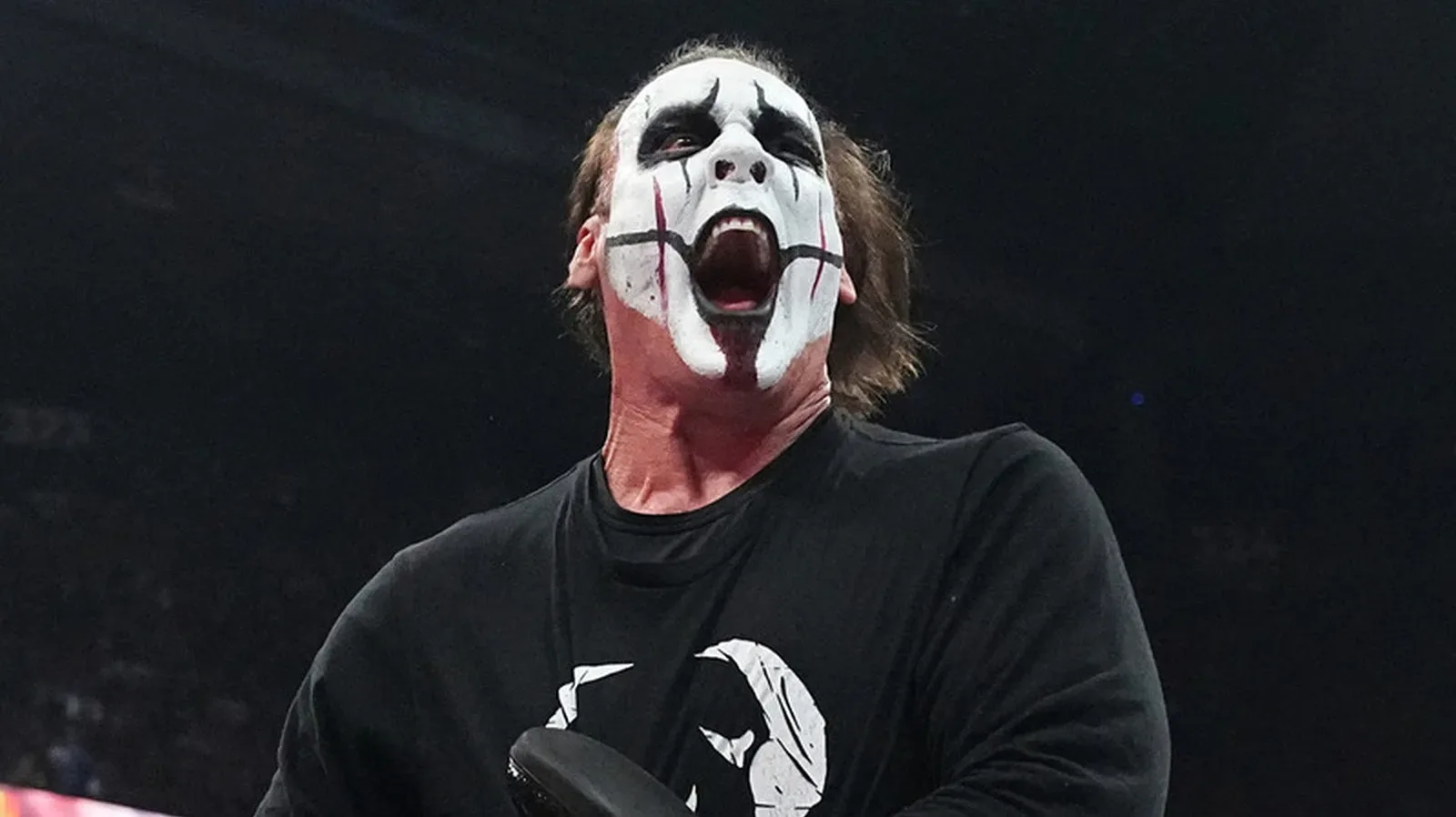
Sting arrived in AEW with an unmatched legacy, a carefully protected aura and little left to establish in professional wrestling. By the time he joined the company, The Icon had already spent decades as one of the industry’s most recognizable figures, and his in-ring future had appeared to be closed following an injury in his final WWE bout at Night of Champions 2015.
Instead, Sting found a final run that became one of the defining stories of AEW’s early years. His partnership with Darby Allin evolved from a striking on-screen pairing into a genuine friendship, while Sting’s eventual return to live matches gave him the opportunity to perform before crowds again and finish his career on terms that felt right to him.
Allin and Sting’s son, Steven Borden, recently reflected on that period in an interview with Q101. Both men emphasized that Sting’s AEW experience appeared to bring him an exceptional amount of happiness, both in and out of the ring.
“I think he had more fun in AEW than he had anywhere else,” Borden said.
For more background on this topic, read Samoa Joe Says Today’s Wrestlers Bring Greater Technicality, Adaptability and Coordination.
Borden connected that enjoyment to Sting’s relationships within the company, including his rapport with AEW President Tony Khan and the wrestlers around him. In Borden’s view, his father felt valued throughout his time with AEW.
“That’s the happiest that I’ve seen him with whoever it is that’s managing a company,” Borden said. “His relationship was so good, and yes, of course, I think he felt extremely respected.”
A final chapter built around Sting’s terms
The importance of respect cannot be separated from the circumstances of Sting’s return. His last WWE match came at Night of Champions in 2015, when he was injured after taking a Buckle Bomb from Seth Rollins. That injury forced him away from competition and appeared to bring his in-ring career to an end.
When Sting later entered AEW, the initial plan was not necessarily a conventional return to the ring in front of live audiences. Allin recalled that the original expectation was for Sting to work cinematic matches. That approach would have allowed the company to utilize Sting’s presentation and history while limiting the physical risks associated with a full-scale return.
Allin, however, saw more possibility. After spending time with Sting and seeing how he moved while they trained and wrestled around together, Allin believed The Icon still had the ability to perform live. He said Sting did not require extensive persuasion once he began taking a few bumps and realized he felt good physically.
“It wasn’t a lot of convincing,” Allin said. “I felt like he, the moment we were rolling around and he took a couple of bumps, he’s like, ‘I feel pretty good.’”
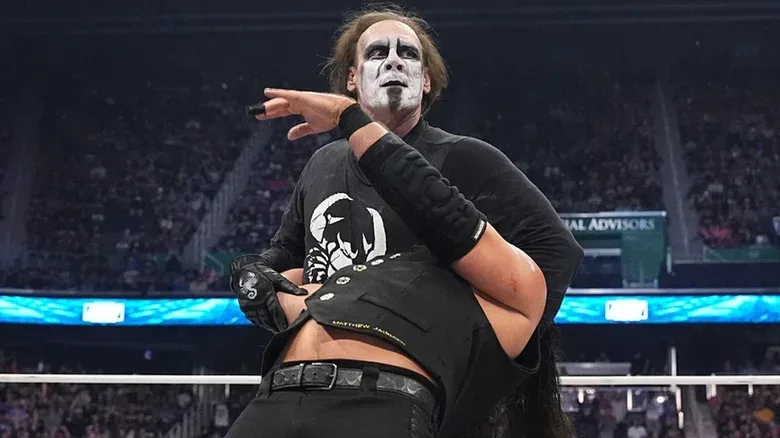
That response helped shape what became a far more active late-career run than many fans initially expected. Sting did not simply make occasional ceremonial appearances. His AEW tenure ultimately included a sustained alliance with Allin, physical confrontations, tag team matches and the kind of dramatic entrances that had long been central to his mystique.
For Allin, the key was ensuring Sting could have a final stretch that did not feel dictated by the way his WWE career ended. Rather than remaining defined by an injury and an abrupt retirement, Sting was able to return to the environment of a live crowd and participate in matches that added another chapter to his career.
“Originally he was brought in for cinematic matches, but then I convinced him to go back live in front of a crowd and do it, because I was like, ‘Dude, there’s so much left in the tank here,’” Allin said.
From an unexpected debut to a close partnership
Allin also remembered the uncertainty surrounding Sting’s arrival. At one point, he was instructed to sit in the rafters, an instruction that naturally evoked Sting’s famous presentation. Allin said he did not initially place much significance on it, even after being told Sting was coming into AEW. His first thought was that there might not be much for a wrestler with Sting’s stature to do in the company.
That assumption changed once they began working together. Their visual similarities were obvious from the beginning: both figures were associated with dark imagery, face paint and a willingness to take risks. Yet the relationship became more meaningful than a thematic on-screen connection. Allin described how their professional association became a real friendship, one in which he felt comfortable encouraging Sting to pursue a return to live competition.
Their connection began during the pandemic era, when crowd restrictions and unusual production conditions altered the entire wrestling landscape. For Allin, Sting’s willingness to enter a company under those circumstances said something about his humility.
“The fact that he came into the company during the Pandemic, because a lot of people, with their egos,” Allin said, “they’d be like, ‘Well, if I’m going to debut, I’m gonna have to come in when it’s a sold-out, packed house.’”
That perspective speaks to why Sting’s AEW run resonated. The circumstances were not built around a nostalgic victory lap in front of an enormous crowd at the moment of his debut. He arrived at a complicated time for the industry and gradually built toward bigger moments. The pairing with Allin gave the company an intergenerational story without presenting Sting as detached from the modern roster.
It also gave Allin a unique creative and personal opportunity. Few wrestlers have had the chance to build a prolonged program alongside a figure as influential as Sting, particularly at a stage when that legend was still willing to participate physically and evolve his presentation for a new audience.
Allin praises AEW’s environment
Beyond Sting’s individual experience, Allin used the conversation to explain why he believes AEW has been so meaningful to his own life. He called it the “greatest thing” that had happened to him and pointed to the freedom he feels wrestlers are given both inside and outside the ring.
“Without a doubt, and I think a lot of it has to deal with Tony actually letting the wrestlers outside of the ring — and inside of the ring — live their best lives,” Allin said.
Allin’s comments centered on the pressures wrestlers face throughout their careers. Professional wrestling can demand constant relevance, physical sacrifice and a difficult balance between professional ambition and life away from the ring. He argued that performers can be consumed by that cycle, only to find themselves struggling once the industry moves on.
In Allin’s assessment, Khan recognizes those challenges and encourages wrestlers to maintain a focus on their personal lives as well as their work. That outlook, he suggested, helped create an environment where someone like Sting could enjoy his final run rather than feeling compelled to prove something he had already proven many times over.
For Borden, the evidence was in his father’s demeanor. Sting’s relationship with AEW management and talent appeared to be strong, and the experience left the impression that The Icon was genuinely enjoying a career stage that could easily have been treated as a brief nostalgia attraction.
Why Sting’s AEW run carries lasting weight
Sting’s legacy was secure long before AEW existed. His place in wrestling history did not depend on another match, another entrance or another championship pursuit. That reality may be exactly why the final portion of his career connected so strongly with fans and the people around him. He was not returning because he needed validation. He was returning because he felt capable, supported and excited by the opportunity.
Allin’s recollections make clear that the live-audience aspect mattered. Returning to a ring after a serious injury, particularly after years away from regular competition, was a significant decision. But Sting apparently felt the physical confidence to do it, while Allin saw the remaining potential in a performer whose connection with audiences had never disappeared.
The result was a run in which Sting could enjoy the spectacle, forge a meaningful partnership with Allin and continue performing in a setting where, as Borden described it, he felt respected. For a wrestler who had already experienced virtually every kind of major moment the industry can offer, that sense of happiness may be the most revealing measure of what AEW represented in the final chapter of Sting’s career.
In pictures

Darryl Polo
Darryl Polo is a passionate wrestling fan covering WWE, AEW, TNA and beyond. He loves great rivalries, breakout stars and the moments that keep fans talking long after the bell. How we work.