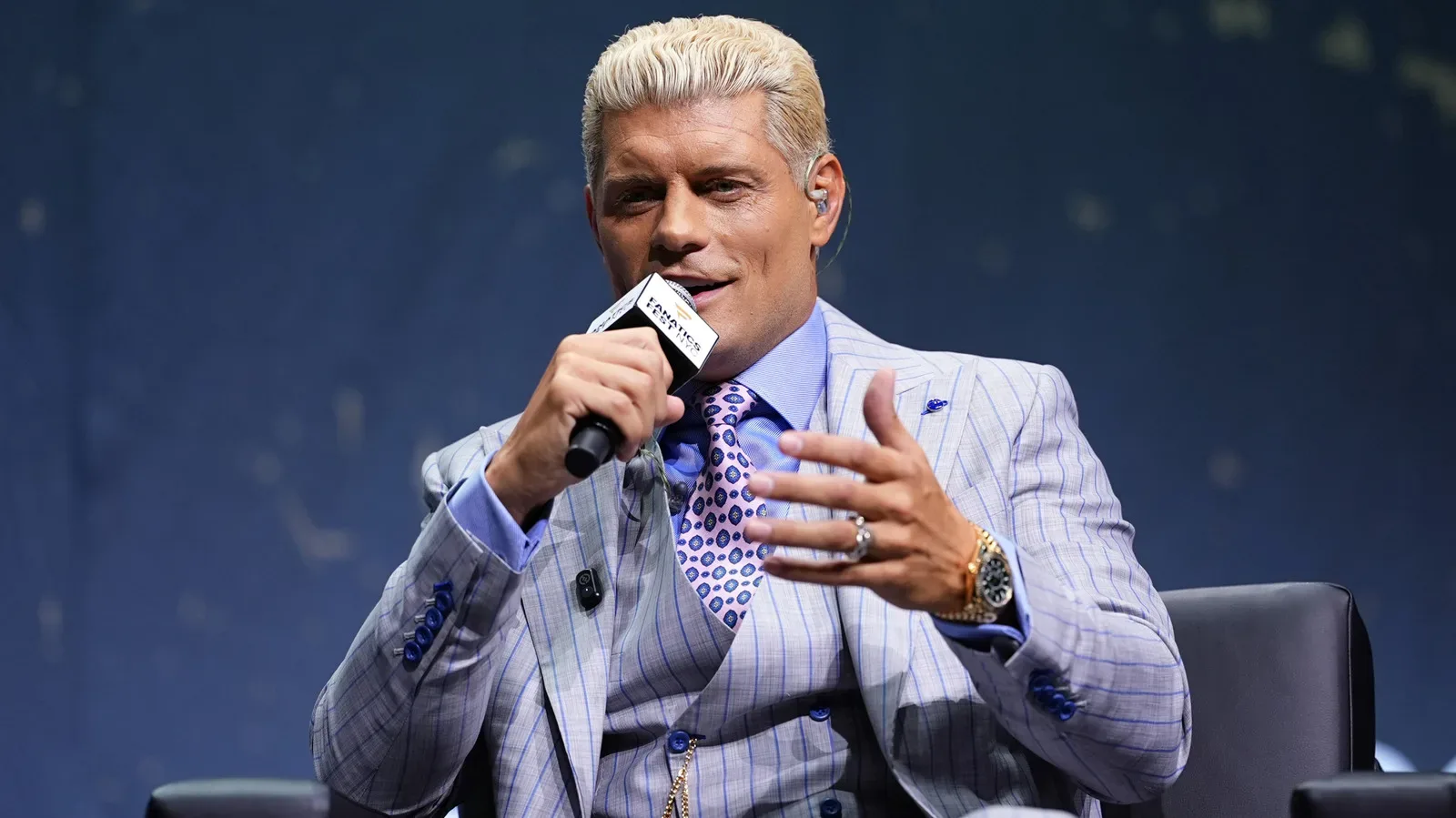
Cody Rhodes’ televised sit-down interview with Michael Cole on WWE SmackDown was already a clear statement of intent following his painful loss to Randy Orton at Sunday Night’s Main Event. But footage released after the program ended offered an even more direct look at Rhodes’ mindset.
WWE Chief Content Officer Triple H posted the unaired final moments of Rhodes’ interview on X. The clip begins with a calm and seemingly respectful exchange between Rhodes and Cole after their on-camera discussion had concluded. The two men shook hands and embraced, while Cole thanked Rhodes and said he believed their one-on-one conversation had gone well.
Rhodes did not carry that polite tone into his response. Speaking quietly but with unmistakable intensity, Rhodes told Cole, “When it happens again, I’m going to kick his f**king head off.”
View the referenced post on X
The remark was not delivered as a broad declaration to the WWE locker room. It was an apparent message for Orton, the man who outmaneuvered Rhodes during their recent match and handed “The American Nightmare” a devastating defeat. Rhodes had already made it clear on SmackDown that he sees a decisive error in how he handled Orton. The extra footage showed that the frustration over that error has not faded once the cameras stopped rolling.
For more background on this topic, read Nick Khan Says WWE Will Not Let Social Media Dictate Its Direction, Calls Triple H Wrestling’s Best Booker.
Rhodes Reflects on a Costly Decision
Earlier in the episode, Rhodes addressed his future for the first time since losing to Orton at Sunday Night’s Main Event. The former three-time Undisputed Champion spoke about his standing in WWE and the road that brought him to this point. He pointed to the fact that he had taken the torch from major names including Brock Lesnar, Roman Reigns, and John Cena.
That history was important to Rhodes’ message. He did not present the loss to Orton as the end of his ascent, nor did he suggest that one setback would cause him to retreat. Instead, Rhodes insisted that he would not fall and that he would not repeat the mistake that cost him against Orton.
The mistake was a moment of hesitation when Rhodes had a major opening. Two weeks earlier, Rhodes had Orton in position and was prepared to punt him. Before Rhodes could follow through, Orton pleaded with him to reconsider. Orton’s reaction was a ruse. He played possum, waited for Rhodes to second-guess himself, and then struck Rhodes where it mattered most before scoring the pinfall victory.
For Rhodes, the issue is not simply that Orton won a match. It is that Orton convinced him to abandon a ruthless decision, then capitalized immediately. The result gave Orton the win, but it also left Rhodes questioning the mercy he showed in the moment.
An Uneasy Side of “The American Nightmare”
Rhodes has long balanced confidence with an emotional connection to WWE audiences, often framing his career around perseverance, family legacy, and the determination to complete his story at the highest level. His SmackDown comments still carried that sense of purpose. He looked back at the opponents he overcame and reiterated that he would keep moving forward.
However, the off-air statement to Cole revealed a harsher edge. Rhodes’ warning was short, specific, and focused on the punt he did not deliver. It suggested that he no longer views restraint as a virtue where Orton is concerned.
That does not mean Rhodes has abandoned his broader principles, but it does underscore the personal nature of this rivalry. Orton did not just beat Rhodes through physical force. He exploited Rhodes’ hesitation and used Rhodes’ own decision against him. For a competitor as accomplished as Rhodes, that sort of defeat can linger more than a straightforward loss.
The footage also gave the exchange a notable sense of contrast. Just seconds earlier, Rhodes and Cole shared a professional moment after a difficult interview. Cole’s comments were complimentary, and the embrace appeared to close the segment on a cordial note. Rhodes’ stage-whispered response immediately changed the atmosphere. What had seemed like a routine off-air conclusion became a warning that Rhodes is still thinking about Orton and still replaying the opening he allowed to disappear.
Orton’s Tactics Continue to Pay Off
Orton’s victory was built on manipulation as much as execution. He recognized that Rhodes was prepared to use the punt, then appealed to his opponent’s instincts before turning the situation around. It was a calculated tactic from a former 14-time World Champion who has spent years finding ways to create opportunities inside the ring.
Rhodes’ own description of the situation makes the dynamic especially clear: he had the chance to act and chose not to do so. Orton’s pleading convinced Rhodes to pause, and that pause was all Orton needed. The pinfall left Rhodes with a defeat at Sunday Night’s Main Event and an obvious desire to correct the outcome.
There is no ambiguity in Rhodes’ belief that he should have taken the shot. His televised comments centered on refusing to make the same mistake twice, while the footage posted by Triple H made clear exactly what Rhodes believes the correction will be. If the opportunity returns, Rhodes intends to be far less forgiving.
That puts Orton in a potentially dangerous position. The strategy that worked once may not work again if Rhodes is no longer willing to entertain another plea for mercy. Orton’s experience and ability to deceive opponents remain central strengths, but Rhodes now knows firsthand how costly it can be to hesitate against him.
The Stakes of a Possible Rematch
Rhodes’ remarks leave the rivalry with a simple but volatile question: what happens when he and Orton meet again? Rhodes has not promised a measured response or a gradual path toward revenge. He has identified the exact moment that changed the match, the exact move he regrets not using, and the exact opponent he holds responsible.
In WWE, rivalries often change once one competitor believes they were beaten because they showed too much restraint. Rhodes’ warning indicates that Orton may now face a version of “The American Nightmare” who remains focused and determined, but who is also prepared to make a harsher choice when an opening appears.
At the same time, Rhodes’ comments do not erase the reality of Orton’s win. Orton proved that he can still outthink one of WWE’s most prominent stars under pressure. Rhodes can promise not to hesitate again, but Orton’s career has been defined by his ability to adapt, exploit emotion, and turn a single lapse in judgment into a decisive result.
For now, Rhodes has made his position known. He sees the loss as a lesson, not a stopping point. He believes he has already taken the torch from some of WWE’s defining names, and he has no intention of allowing Orton’s recent victory to alter his path. But the additional SmackDown footage made the emotional cost of that defeat impossible to miss.
Rhodes’ next confrontation with Orton, whenever it arrives, will carry the weight of that missed punt. Orton may have persuaded Rhodes to stop once. Rhodes’ message after SmackDown suggests he does not plan to be persuaded again.
In pictures
Darryl Polo
Darryl Polo is a passionate wrestling fan covering WWE, AEW, TNA and beyond. He loves great rivalries, breakout stars and the moments that keep fans talking long after the bell. How we work.