
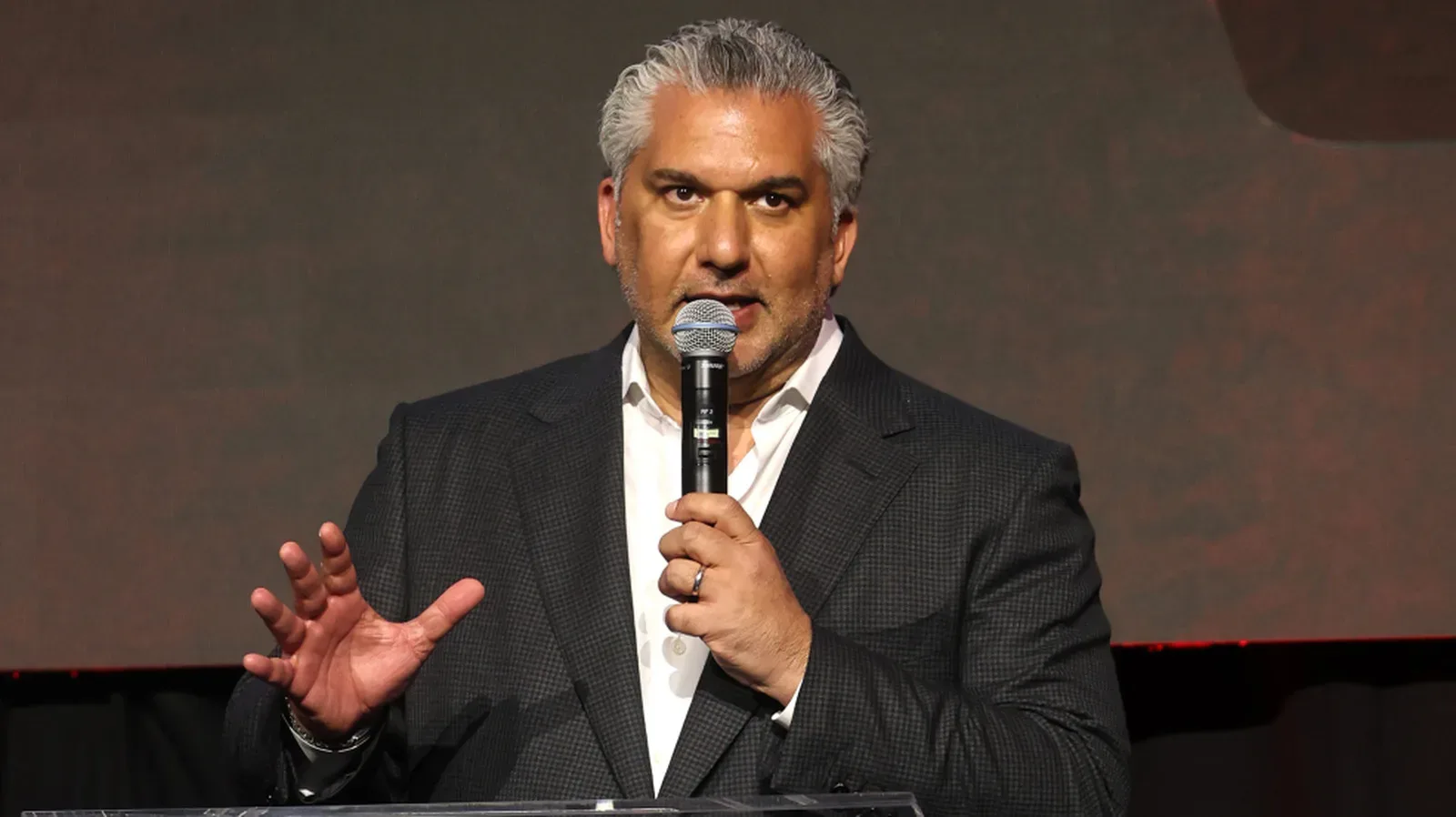
WWE President Nick Khan has addressed the persistent criticism directed toward the company on social media, making clear that WWE does pay attention to audience reaction but will not build its business strategy or creative direction around every negative online response.
In recent months, WWE has faced significant fan discussion around several highly visible changes and developments. Among the most common complaints have been rising ticket prices, the growing presence of sponsorships on WWE programming and ring mats, and disagreement over the creative presentation of certain major stars. Those conversations have intensified during a period in which WWE has expanded its reach through its relationship with TKO Group Holdings and its Netflix partnership.
Khan’s position is that audience feedback can be useful, but that reacting too aggressively to social-media sentiment can lead companies away from sound decision-making. He said that WWE’s leadership must distinguish between criticism that identifies an issue worth considering and the broader churn of online commentary that does not necessarily represent the full audience.
“Those complaints, some of them we look at and we say, hey, there’s some truth to this. Let’s make a little adjustment here, this or that. But you cannot cater.”
For more background on this topic, read AJ Styles Recalls WrestleMania 35 Crowd Issue During Randy Orton Match.
The WWE President compared the challenge of interpreting social-media reaction to the wider difficulty of using online discussion as a reliable predictor of outcomes. His argument was not that criticism should be dismissed entirely. Rather, Khan emphasized that companies can make mistakes if they treat the loudest digital reactions as a complete reflection of their customer base.
“You’ve seen this in politics. If you believe what social media says, you will incorrectly predict so many outcomes.”
That approach has become increasingly relevant for WWE as the company operates on a larger commercial scale. WWE’s major premium live events, television rights arrangements, international expansion, consumer-products business and live-event strategy all create decisions that extend beyond the immediate reaction to a match, a storyline, a sponsorship placement or a ticket listing.
For fans, however, those areas are often inseparable from the viewing experience. Ticket cost affects who can attend a show in person. Sponsorship placements can change the look of the ring and broadcast presentation. Creative decisions determine which wrestlers receive momentum, how championships are positioned and which stories are given time to develop. Social media gives viewers an immediate forum to voice opinions on all of those subjects, often while a show is still taking place.
Khan acknowledged that there are occasions when criticism points WWE toward an adjustment. That distinction is central to his comments. WWE is not presenting itself as indifferent to consumer response, but its leadership does not intend to use online negativity as an automatic instruction to reverse course.
“So for companies that read it and believe it and react to it, it never ever works,” Khan said.
Confidence in Triple H’s Creative Leadership
At the center of Khan’s response was his confidence in Paul “Triple H” Levesque, WWE’s top creative executive. Khan described Triple H as the strongest creative mind in professional wrestling, an endorsement that reflects WWE’s commitment to its current leadership structure even as individual angles and performers continue to draw varying levels of fan support online.
“You have to rely on your team to know we have the best creative in terms of all of wrestling in Triple H. Real name Paul Levesque.”
Triple H’s role has placed him at the heart of nearly every major discussion involving WWE programming. Creative criticism is a permanent part of wrestling fandom, particularly in an environment where viewers can react instantly to pushes, title changes, match outcomes, character shifts and the amount of television time given to particular acts.
Some fans want WWE to pivot quickly when a storyline receives backlash. Others argue that long-term stories require patience and that abrupt changes can weaken the larger narrative. Khan’s comments align WWE firmly with the latter philosophy: leadership should evaluate feedback, but it must retain confidence in the people responsible for building the product and making decisions over time.
That does not mean every WWE decision will be universally embraced. Wrestling audiences have always been vocal, and the modern social-media environment gives that voice a scale and speed that previous generations did not have. A creative choice can receive approval, criticism, memes and extensive debate within minutes. The presence of that debate, though, does not automatically establish a consensus among WWE’s entire audience.
Khan’s statement also frames creative as one component of a broader team effort. He praised WWE’s live events and merchandise operations alongside the creative department, arguing that the company’s ability to navigate criticism depends on experienced people making decisions in their respective areas.
“We have the best live events team in my opinion. We have the best merchandise consumer products team,” Khan said.
Business Growth and the Changing WWE Presentation
WWE’s evolving presentation has been a major subject of conversation as the company continues to pursue new revenue opportunities. Sponsorship integration has become more visible, including branding on the ring mat, and that visibility has prompted a mixed response from fans who prefer a more traditional aesthetic. At the same time, such partnerships are part of the broader commercial model that supports a global sports-entertainment company.
The debate over ticket prices carries similar tension. Live WWE events remain a core part of the company’s identity, but higher demand and premium-event positioning can place pressure on the cost of attending. Fans have voiced frustration when seats become inaccessible or when the total expense of a live show rises beyond what they consider reasonable. Khan did not specifically announce a change to pricing or sponsorship practices. Instead, his comments addressed the company’s general philosophy for handling the criticism surrounding those issues.
WWE’s Netflix relationship has also placed additional attention on how the company presents itself to a broad audience. With larger distribution opportunities comes increased scrutiny, both from longtime viewers who remember earlier eras and from newer viewers encountering WWE through a different platform. Decisions that might once have been primarily internal wrestling matters now become part of a bigger conversation involving media rights, brand identity and international growth.
Khan pointed to the growth of companies throughout the TKO umbrella, including On Location, IMG and PBR, as a reason for confidence in the organization’s direction. His comments positioned WWE within a larger corporate environment that requires a long-range view rather than a series of rapid responses to each social-media cycle.
Listening Without Overreacting
The balance Khan described is a difficult one for any major entertainment company. Ignoring customers entirely can create blind spots. Overcorrecting at every sign of online displeasure can produce inconsistency and make a company appear uncertain about its own vision. WWE’s stated goal is to take useful criticism seriously while allowing its internal leadership to determine whether a change is necessary.
That distinction will continue to be tested. Fans will keep discussing ticket prices, advertising, storylines, stars and event presentation. WWE will also continue to make business and creative decisions that generate debate, especially as its audience grows across platforms and markets.
Khan’s message was ultimately one of faith in WWE’s current team. He said the company must keep improving and adjusting where appropriate, but he rejected the idea that success comes from chasing every online reaction.
“It’s not easy, but it’s not supposed to be easy. So you got to continue to develop and redevelop what you do.”
For WWE, that means continuing to assess fan sentiment without handing control of the company’s direction to the loudest voices online. Khan’s defense of Triple H and the rest of WWE’s leadership makes it clear that the company believes its established decision-makers are best equipped to determine when criticism calls for change and when it is simply part of operating at the center of the wrestling conversation.
In pictures
Darryl Polo
Darryl Polo is a passionate wrestling fan covering WWE, AEW, TNA and beyond. He loves great rivalries, breakout stars and the moments that keep fans talking long after the bell. How we work.