
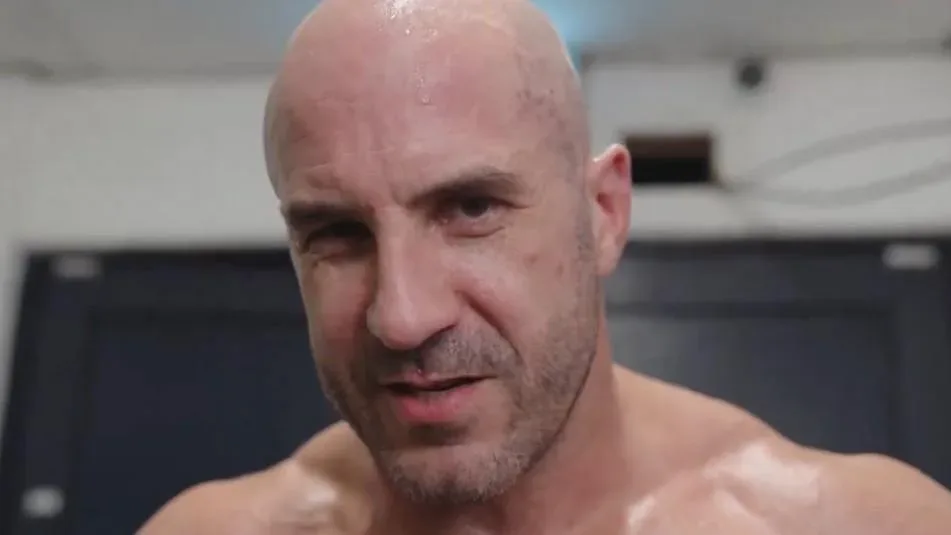
Claudio Castagnoli believes professional wrestling and competitive League of Legends have more in common than some fans may initially expect.
The AEW wrestler recently discussed his connection to the game and its community, explaining that both wrestling and League of Legends can draw people in quickly once they get a sense of the competition, personalities and larger world around them. In Castagnoli’s view, the similarity is rooted above all in the intensity of the respective fan bases and their eagerness to welcome newcomers into something they love.
“I feel like for League fans that don’t really know much about wrestling, or wrestling fans who don’t know much about League, I feel like it’s very similar in the community, as in, once you’re in, you’re in, and once people just say, just see a match or understand a little bit and they want to know more. There’s plenty of people that will just tell you all about it because they’re so passionate about it.”
Castagnoli’s point speaks to the way both forms of entertainment reward investment. A viewer can encounter a wrestling match or an esports contest with little context and still respond to the immediate stakes, athletic execution and crowd atmosphere. From there, however, both worlds offer considerably more to explore. Fans can learn the histories of performers or players, follow team and faction rivalries, revisit major moments and debate strategy, results and future possibilities.
For more background on this topic, read Claudio Castagnoli Reveals He Made His Own Ring Gear Early In His Career.
That depth can be intimidating from the outside, but it is also a major reason communities form around wrestling and competitive gaming. Fans who have spent years following a product or scene often become the people introducing it to new viewers. Castagnoli said the shared enthusiasm of those audiences is one of the clearest links between League of Legends and wrestling.
“It’s two very, very passionate fan bases and we were joking it’s very similar, like the teams walk out or like we walk out and there’s somebody announcing and people cheering and there’s the screen and people it’s very similar and it’s really cool to see the people that still follow and still remember that I played the match once and it’s really cool and I’m very grateful for that.”
Presentation Creates a Familiar Feeling
Castagnoli specifically pointed to the presentation of major League of Legends competition. The walkouts, introductions, large screens and crowd reactions can resemble the environment surrounding a major wrestling entrance. In each setting, the arrival of the competitors is part of the event rather than merely a transition before the action begins.
Professional wrestling has long treated entrances as an essential part of a wrestler’s identity. Music, lighting, video displays and audience participation establish a reaction before the opening bell. An entrance can reinforce a competitor’s confidence, signal an important change in character or give fans a chance to express support for a favorite wrestler. The audience’s response becomes part of the live experience.
Competitive League of Legends uses a different competitive structure and is built around a video game rather than a wrestling ring, but the spectacle surrounding top-level matches can create a comparable sense of anticipation. Teams are introduced to a live audience, their names and images appear on screens, and the crowd has the opportunity to rally behind the competitors. Those details help turn a match into a shared event with its own rituals and emotional highs.
Castagnoli’s comparison does not suggest that wrestling and esports are the same form of competition. Wrestling is a performance-based sport and entertainment medium, while League of Legends competition centers on teams competing within the game. His comments instead underline how similarly their communities can experience the buildup to an event: the anticipation before the contest, the immediate reaction to a familiar name or entrance, and the feeling of being among others who understand why the moment matters.
“Once You’re In, You’re In”
The phrase Castagnoli used to describe both communities was simple: once someone is in, they are in. It is an observation that will be familiar to many wrestling viewers. A person may initially tune in for a single match, a particular performer or a major event. They may soon find themselves learning about past rivalries, title histories, different promotions and the distinct styles that shape wrestling across the world.
League of Legends can foster that same curiosity. Someone who watches one match may become interested in the players, teams, competitive formats and the strategic decisions that inform what happens on screen. The more a viewer understands, the more they may want to see. That process turns casual interest into a hobby and, for many fans, into a community.
Castagnoli highlighted the role passionate fans play in that process. In both spaces, there are people ready to explain the details to anyone who wants to know more. Wrestling fans can offer years of context around a move, a rivalry or a reaction. League fans can break down game knowledge, player decisions or team dynamics. That willingness to share knowledge can be one of the most inviting aspects of any fandom, even if the amount of information can appear overwhelming at first glance.
It also reflects the communal nature of both experiences. The enjoyment is not limited to watching the contest itself. It includes conversations before and after it, reactions in the crowd or online, and the collective memory built around standout moments. Fans do not simply consume the product in isolation; they participate in the atmosphere surrounding it.
Castagnoli Appreciates Ongoing Support
For Castagnoli, the connection has a personal dimension as well. He said he remains grateful for people who continue to follow and remember that he played a League of Legends match. His appreciation suggests that the crossover between his wrestling career and his gaming interest has remained meaningful to people who encountered him through either community.
Castagnoli is known to wrestling audiences for his highly technical and physical in-ring approach, as well as a career that has taken him through prominent promotions and major championship settings. His comments on League of Legends offer a look at another interest outside the ring, but they also fit the broader image of a performer who values dedicated audiences and the culture around competition.
Wrestling audiences frequently celebrate performers for the interests and skills they bring beyond their televised matches. Those interests can provide fans with another avenue to relate to a wrestler, particularly when the wrestler speaks with clear enthusiasm rather than treating the subject as a promotional obligation. Castagnoli’s remarks focused less on his own participation and more on the people who make both communities thrive.
That distinction is important. His comparison was not centered on claiming that one fandom should replace the other or that viewers must understand both. Instead, he described a potential point of connection for people who may already be invested in one world but have not yet explored the other. A League fan unfamiliar with wrestling may recognize the energy of a dramatic entrance and a loud crowd. A wrestling fan unfamiliar with League may recognize the devotion supporters bring to teams, players and high-pressure competition.
A Natural Crossover for Modern Entertainment
Competitive gaming continues to occupy a growing place in modern entertainment, while professional wrestling remains driven by live-event spectacle, devoted fan communities and larger-than-life presentation. There are obvious differences between the two, but Castagnoli’s comments identify why crossovers in audience interest can feel natural.
Both can offer immediate action while encouraging deeper engagement. Both put competitors in front of highly invested audiences. Both create memorable moments that are replayed, discussed and placed into larger narratives by fans. And both can produce a powerful feeling of belonging once a viewer finds the performers, players or teams they want to support.
Castagnoli’s perspective is ultimately one of appreciation. He sees passionate communities on both sides, recognizes the similarities in the live experience, and values the fans who remember his involvement with League of Legends. For viewers who have only experienced one of those worlds, his comments may be a reminder that the path into a new fandom can begin with a single match—and with someone eager to explain why it matters.

Darryl Polo
Darryl Polo is a passionate wrestling fan covering WWE, AEW, TNA and beyond. He loves great rivalries, breakout stars and the moments that keep fans talking long after the bell. How we work.