
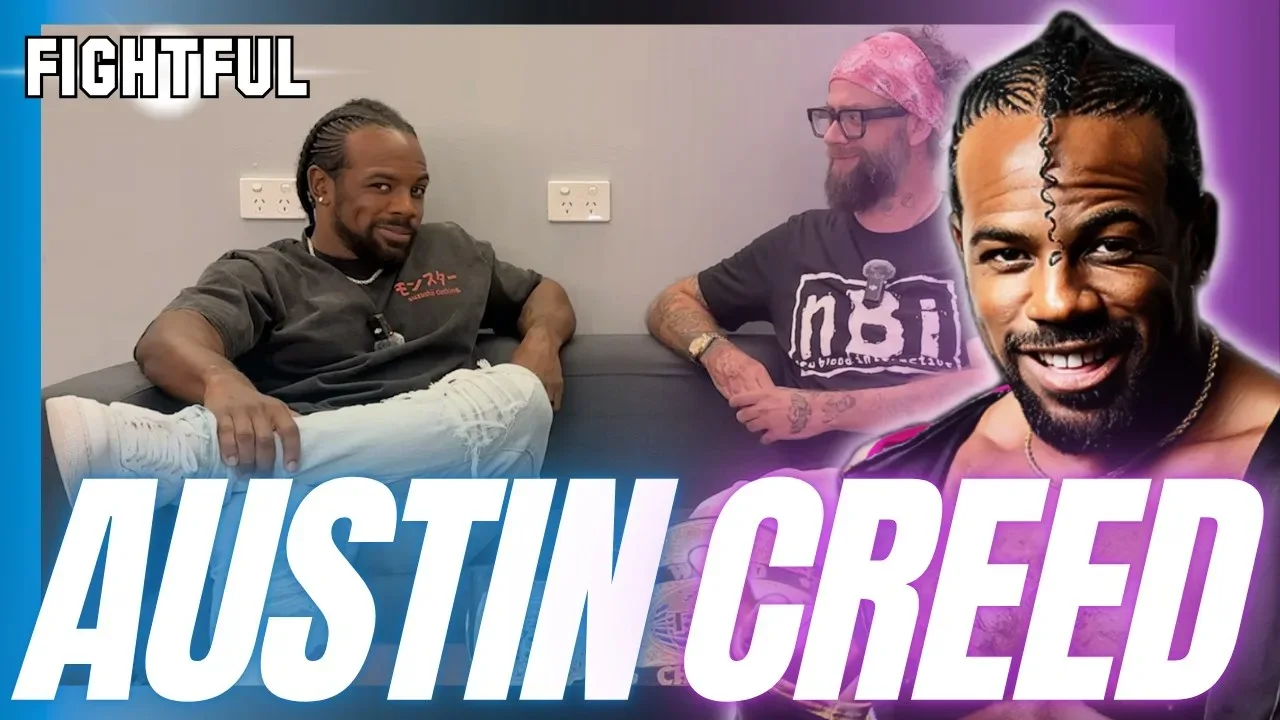
Austin Creed has opened up about the importance of the time he spent away from the ring before beginning the next major chapter of his career in All Elite Wrestling.
Creed and Kofi Kingston spent nearly two decades with WWE before choosing to depart the company. Their eventual AEW arrival came at All In 2026, where they debuted alongside Swerve Strickland as The New Level. The group quickly made an impact, capturing the AEW World Trios Championship and subsequently recording four successful title defenses.
While the on-screen debut marked a significant moment for Creed, Kingston, Strickland, and AEW’s trios division, Creed has made clear that the stretch between the end of his WWE run and the start of his AEW tenure was equally meaningful. Rather than treating that period simply as time away from a major wrestling promotion, he viewed it as a needed opportunity to recover from a demanding schedule and evaluate how he wanted to structure his life moving forward.
Creed described the break as “great” and “amazing,” particularly because it allowed him to experience something he said he had not had during more than two decades in wrestling: a summer at home.
For more background on this topic, read Claudio Castagnoli Sees Strong Parallels Between League of Legends and Pro Wrestling Fans.
“I’ve never been home for the summer,” Creed said. “I’ve been wrestling 23 years and I’ve been wrestling 23 summers.”
That statement illustrates the pace that has defined much of Creed’s life in professional wrestling. A performer’s schedule is not limited to televised matches or premium live events. It can include travel, training, promotional appearances, media responsibilities, fan conventions, content creation, brand partnerships, and the ongoing physical preparation required to remain ready for a demanding in-ring career. For a wrestler who has worked continuously across 23 summers, a sustained break can offer a major change of rhythm.
For Creed, the personal value of that change centered on his family. He said the time at home allowed him to be present with his children in a way that his previous schedule had often prevented.
“For me, this was the first time that I got to be home for the summer with my kids,” Creed said. “So I got to actually be there and be dad, which was really cool.”
Creed’s comments put the human side of a high-profile wrestling career into focus. The move from WWE to AEW was a major professional development, especially given the lengthy history he and Kingston built before their exit. Yet Creed did not frame the transition solely around a new destination, a new creative environment, or championship success. He emphasized the value of having time with his family and the ability to step outside the routine he had followed for much of his adult life.
The break also helped him address burnout. Creed said he had become “very burnt out” amid the accumulation of responsibilities that came with working consistently in wrestling while also maintaining projects beyond the ring. He specifically pointed to the constant nature of wrestling, his YouTube channel, and appearances as elements that had contributed to that feeling.
Creed has long been recognized as a performer whose interests extend beyond wrestling alone. Maintaining outside endeavors can create opportunities and help establish a foundation for life after active competition, but it also adds demands to an already crowded calendar. Creed acknowledged that the drive to keep building is important to him. At the same time, his remarks show that he came to recognize the cost of trying to be everywhere at once.
“Wrestling constantly, doing the YouTube channel constantly. Doing appearances constantly everywhere,” Creed said while explaining the exhaustion he had been experiencing.
He also explained the mindset behind his willingness to take on that volume of work. Creed wants to maximize the opportunities available to him while he is physically able to do so, rather than reaching a point where his body no longer wants to continue and feeling forced to keep working. That ambition remains part of how he approaches his career, but the time away gave him a chance to decide where the appropriate limits should be.
In Creed’s view, the sacrifice involved in pursuing so many opportunities was real. The summer break gave him the space to determine what he wanted his life to look like and, just as importantly, what he was no longer willing to accept as part of his routine. He said the experience helped him identify what he would say yes to, what he would turn down, and what was worth leaving home for.
That distinction may be especially important now that Creed is back in a full-time wrestling environment with AEW. The New Level’s introduction at All In 2026 immediately placed Creed, Kingston, and Strickland in a central competitive role. Winning the AEW World Trios Championship established the trio as a force, and four successful defenses demonstrated that their title reign was more than a one-night statement.
However, Creed’s remarks suggest that the renewed momentum in his career has been approached from a different perspective. He is not describing a departure from the hustle that characterized his earlier years. Instead, he is describing a recalibration. The goal is to work, create, wrestle, and build, but with clearer boundaries and a more intentional understanding of what those commitments mean for his health and family life.
That approach can be significant for a veteran wrestler. The industry’s history includes many performers who have worked through extensive travel, mounting physical wear, and the pressure to remain visible across multiple platforms. The ability to pause and reassess is not always available, particularly when a performer is committed to a regular television schedule. Creed’s time between WWE and AEW gave him a rare window to do precisely that.
His reflection also adds context to the timing of The New Level’s AEW launch. Rather than arriving immediately after the end of his WWE tenure, Creed had the chance to reconnect with life outside the wrestling business before stepping back into a prominent role. The eventual debut with Kingston and Strickland meant that his comeback was attached to a major act and championship success, but it followed a period in which he had worked to find a more sustainable personal center.
Creed said that having that mindset has given him “a new center.” The phrase captures the broader point behind his comments: the break was not merely about rest. It was about establishing priorities and building a healthier work-life balance than he had previously maintained.
For fans, the AEW World Trios Champions’ run has been defined by the in-ring accomplishments of The New Level, including their four successful defenses. For Creed himself, though, the story behind the AEW arrival includes a summer of family time, reflection, and recovery from a level of burnout he no longer wants to ignore.
As Creed continues his AEW career alongside Kingston and Strickland, his comments indicate that the lessons of that time away will remain part of his approach. He still values the ability to hustle and build for the future. But after 23 summers spent in wrestling, he now has a clearer picture of the balance he wants between professional ambition and being present at home.

Darryl Polo
Darryl Polo is a passionate wrestling fan covering WWE, AEW, TNA and beyond. He loves great rivalries, breakout stars and the moments that keep fans talking long after the bell. How we work.