
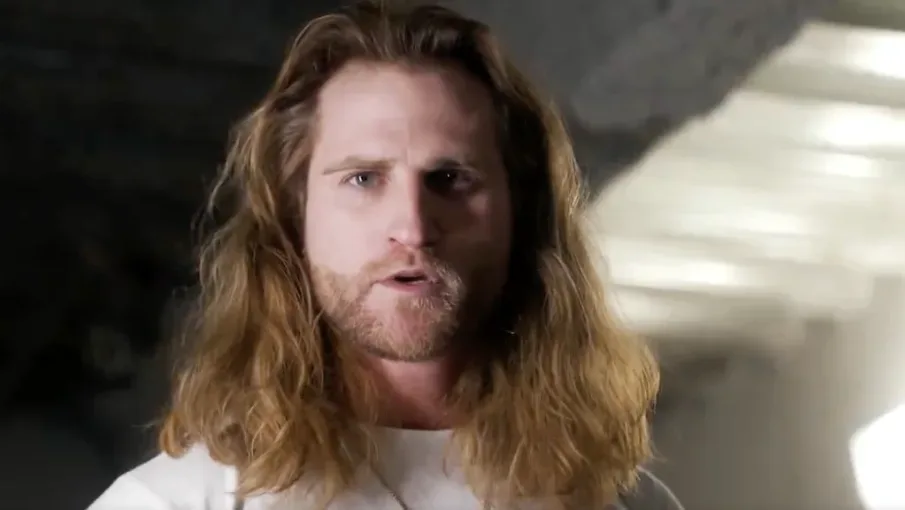
Clark Connors has heard the comparisons to Adam Page, but he does not see them as especially deep.
Both men are part of the AEW roster, and fans have periodically pointed to a perceived overlap in their presentation. There is an outwardly rugged quality to each wrestler, a confidence in the way they carry themselves, and a willingness to embrace a hard-living image. But when Connors was asked about the idea that he has a “similar aura” to Page, he answered in a way that was equal parts dismissive, complimentary, and sharply humorous.
Connors first took issue with the language of the question before getting to the actual comparison. In his view, the word “aura” has become too casually attached to wrestling discussions.
“Well, anybody uses the word aura in the first place, I probably shouldn’t be talking to them because they’re under 18 years old. So I’m going to leave that.”
For more background on this topic, read AEW Full Gear 2026: Will Ospreay vs. Kyle Fletcher Set to Headline Phoenix Card.
That opening set the tone for Connors’ response. He did not present the Page comparison as an insult, and he made a point of recognizing Page as a legitimate top-level talent. At the same time, Connors argued that the personality contrast between them is much more significant than any resemblance fans may see on the surface.
“But if someone were to say that to me, I would say that, ‘Hey man, Adam Page’—they maybe haven’t met him cause he’s a real bad-ass wrestler and everything, but he seems kind of sad all the time. He’s walking around and gets really angry easily. I might look like I’m a little bit more similar, but realistically that’s where it kind of ends, man. I’m cool as hell…He drinks because he’s sad, and I drink because it’s fucking bad.”
Connors Praises Page While Rejecting the Comparison
The most notable part of Connors’ answer is that he does not diminish Page’s ability. Calling Page a “real bad-ass wrestler” makes clear that Connors recognizes why the former world champion has such a strong connection with audiences. Page’s reputation has been built around intensity, physicality, and emotional volatility, all traits that can make him an easy point of reference when fans look at another wrestler with a similarly defiant edge.
But Connors’ central point is that outward presentation does not tell the whole story. He may understand why viewers draw a visual or stylistic comparison, yet he sees Page as a far more melancholy and temperamental figure. Connors instead cast himself as someone with a more carefree disposition, punctuating the distinction with the blunt claim that he is “cool as hell.”
It is a memorable answer because it frames the supposed similarity as mostly cosmetic. Connors does not deny that people can spot familiar traits, but he believes their motivations and emotional energy are entirely different. Page, in Connors’ description, carries visible frustration and sadness. Connors’ self-portrait is built on being loose, self-assured, and willing to make the moment entertaining.
The closing line about drinking is also in keeping with that approach. Rather than offering a measured wrestling-media response, Connors used a deliberately outrageous joke to underline his argument. It is not merely that he considers himself different from Page; he wants that difference to be impossible to miss.
Why Fans Have Made the Connection
Comparisons between wrestlers are inevitable, particularly within the same company. Fans often use familiar stars as shorthand while trying to describe the appeal of a newer or less frequently featured talent. A comparison can emerge from appearance, gear, entrance presence, ring style, attitude, or even a single facial expression. It does not necessarily mean audiences believe two wrestlers are identical.
In the case of Connors and Page, the connection has apparently been strong enough online for the question to reach Connors directly. His reaction suggests he understands the broad premise without agreeing with the conclusion. There may be a shared toughness or a similar rebellious look, but Connors does not believe that should obscure their individual identities.
That is an important distinction for any wrestler establishing himself in a major roster environment. Being compared to a recognizable name can draw attention, but it can also become limiting if the comparison becomes the main lens through which a performer is viewed. Connors’ response works as a declaration that he does not intend to be treated as a variation on another AEW personality.
His comments also highlight the fact that wrestler personas can be interpreted differently depending on the audience. A fan may see two performers as sharing confidence and edge. The wrestlers themselves may see a fundamental difference in temperament, priorities, and the way they present themselves. Connors clearly falls into the latter camp with Page.
A Character-Driven Response
Connors’ remarks were not delivered like a conventional criticism of a colleague. There was no suggestion that Page lacks credibility or that he is undeserving of his standing. Instead, Connors leaned into a contrast that is suited to professional wrestling: one man is portrayed as brooding and quick to anger, while the other insists he is simply having a good time.
That kind of contrast can be more effective than a straightforward denial. Saying “we are not alike” is simple. Explaining that one wrestler drinks out of sadness while the other does it because it is “bad” gives the audience a sharper image of the distinction Connors wants to make. The line is confrontational, but it is also designed to be funny, which fits the swaggering tone that ran through the rest of his answer.
It is also notable that Connors did not try to sound overly diplomatic. Wrestling interviews frequently thrive on personality, and Connors gave an answer with a clear point of view. He questioned the terminology behind the comparison, gave Page credit as an in-ring performer, and then immediately established his own identity in much more irreverent terms.
Whether fans agree with his assessment is almost beside the point. The response accomplishes something valuable for Connors: it gives people a concise statement of how he wants to be perceived. He may share a roster with Page, and he may invite a few superficial comparisons, but he is not interested in being placed in the same emotional category.
Connors Reflects on His AEW Experience
Elsewhere in the discussion, Connors also addressed the difference between his first year in AEW and his first year in NJPW. That broader topic places his remarks about Page in a useful context. Connors is evaluating different stages of his career and different environments while continuing to define where he fits within AEW.
The contrast between AEW and NJPW is a meaningful subject for a wrestler whose career has included both promotions. A first year in any new company involves adaptation: adapting to a new locker room, a new audience, different expectations, and the opportunities available on television and at live events. Connors’ perspective on those experiences is part of a larger conversation about his development as a performer.
His Page comments similarly show an awareness of positioning. Connors knows what fans are saying and understands the comparison being made, but he is determined to explain himself on his own terms. The answer was playful, but the message beneath it was direct: he wants to be recognized as Clark Connors, not as a reflection of someone else.
What Comes Next
For now, the comparison remains a point of fan discussion rather than a sign of any stated conflict between Connors and Page. Connors’ words were pointed, but they included clear respect for Page’s wrestling ability. The response was more about drawing a personality line than launching an attack.
Still, memorable remarks have a way of keeping a conversation alive in wrestling. Connors has given supporters and critics alike plenty to react to, particularly with his description of Page as someone who seems sad and becomes angry easily. Page has not been quoted responding to Connors’ comments.
What is certain is that Connors is not embracing the label fans have offered him. He can acknowledge that there may be a resemblance at first glance, but he believes the overlap ends there. In Connors’ telling, Adam Page is an intense and formidable wrestler carrying a heavier emotional weight. Clark Connors, meanwhile, is making the case that he is the one having more fun.

Darryl Polo
Darryl Polo is a passionate wrestling fan covering WWE, AEW, TNA and beyond. He loves great rivalries, breakout stars and the moments that keep fans talking long after the bell. How we work.