
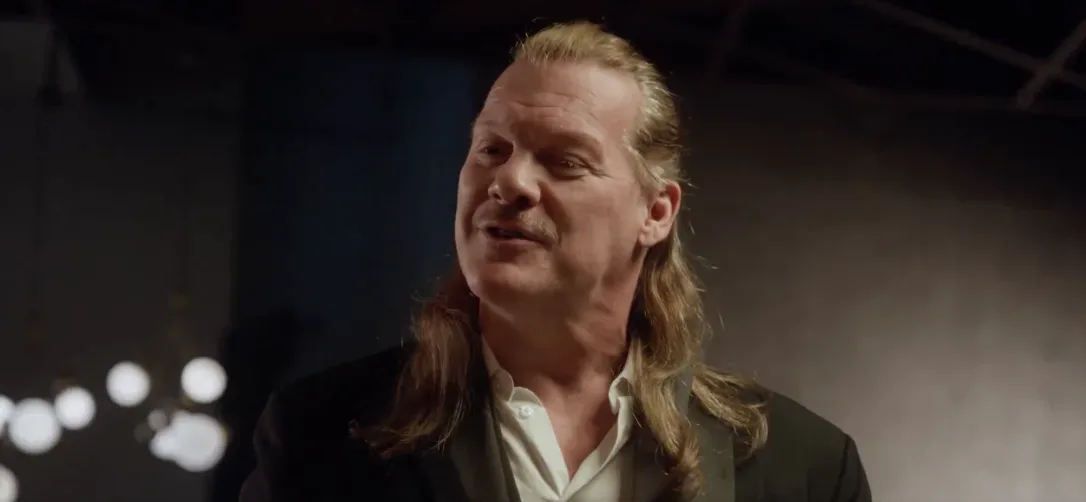
Chris Jericho has offered a candid explanation of how he believes wrestlers should approach creative disagreements with the people running a wrestling company. Speaking about his long career under a range of high-profile promoters and executives, the AEW veteran stressed that longevity does not come from reflexively rejecting an idea. In Jericho’s view, a performer’s responsibility is to work with the boss, offer constructive alternatives when necessary and ultimately help turn the requested direction into the strongest possible piece of business.
The comments are particularly notable given Jericho’s experience across multiple major wrestling environments. During his career, he has worked under leaders including Vince McMahon, Eric Bischoff and Tony Khan. Jericho framed each relationship differently, but his broad principle remained consistent: the person in charge has the final call, while the talent’s role is to bring as much value as possible to the material.
Jericho said that simply telling a boss “no” is usually not a productive way to handle a concern. Instead, he believes a wrestler should come prepared with a potential adjustment.
“To get longevity in this business, you learn that you don’t say no to your boss,” Jericho said. “You say, ‘Well, how about we try it this way?’, give an alternative answer. Nothing will infuriate your boss more than just saying no.”
For more background on this topic, read AEW Set To Bring Collision To Chris Jericho’s Rock N’ Wrestling Rager At Sea.
That approach does not mean that every creative request is automatically easy or immediately appealing. Jericho acknowledged that some assignments can be difficult. However, he pointed to the basic employer-performer relationship in wrestling: the promoter is paying talent to execute a vision, and performers are expected to make that vision work. Referencing McMahon, Jericho recalled a guiding phrase from his WWE tenure: “I just book the shit, you make it good.”
Jericho’s View Of Creative Collaboration
For Jericho, the key distinction is between shutting an idea down and engaging with it. A wrestler can have reservations, identify practical issues or believe there is a stronger route to the same goal. But rather than ending the conversation with resistance, Jericho believes the productive next step is to help shape a workable answer.
He described that process as collaboration, and he credited both Khan and McMahon as bosses with whom he could collaborate. Jericho’s comments did not suggest that the performer and promoter must always agree at the outset. Instead, he presented creative work as a process in which the company’s decision-maker communicates the desired outcome and the talent uses experience, instincts and planning to help deliver it effectively.
Jericho also contrasted that experience with his time in WCW under Bischoff. He said he did not have many opportunities to collaborate directly with Bischoff because he was lower on the company’s hierarchy at the time. By the point Jericho felt he had reached a level where those conversations could have happened more regularly, he said he was effectively on his way out.
That perspective reflects a major part of Jericho’s argument: communication can change as a talent’s position, experience and influence grow. Still, he made clear that influence is not the same as being the final authority. Even an established veteran can bring ideas, help troubleshoot and advocate for a particular choice without taking ownership of the company’s ultimate creative direction.
“Whoever was the boss, it’s my job to make him happy with the work that I’m doing,” Jericho said. “There’s no boss that’s easy to say no to, but every good boss you collaborate with.”
Jericho expanded that thought by saying that collaboration is central to strong leadership as well as strong performers. He described it as part of being “a good general” and “a good boss,” with the underlying point being that a successful wrestling presentation benefits when the people involved can communicate rather than operate in opposition.
The Samoa Joe Example
Jericho provided a specific AEW example involving Samoa Joe to illustrate how that process can function in practice. He recalled a time when he was working with Joe and Khan proposed something that neither wrestler initially felt was right. Rather than directly refusing the idea, Jericho said he and Joe responded by suggesting that it might need more thought.
Jericho said Khan clearly wanted the proposed direction to happen. Once Khan had left the room, Jericho and Joe began discussing the practical question that followed: how could they make the requested idea work while still putting it together in a way they believed would be effective?
According to Jericho, the two veterans reshuffled their plan. They moved elements around, removed some parts and added others. The resulting version was not what they had originally envisioned, but it gave Khan the kind of outcome he wanted while allowing Jericho and Joe to structure the material in a way they could support.
“The moment he left the room, Joe and I looked at each other like, ‘Alright, how are we going to make it work?’” Jericho recalled.
Jericho said they then took their revised proposal back to Khan, who responded positively. The story presents a straightforward example of Jericho’s wider philosophy. The disagreement was not erased; he and Joe did not initially like the concept. Yet the focus shifted away from whether they personally preferred the original pitch and toward finding the best execution for a direction their boss wanted.
That is an important distinction in a collaborative medium such as professional wrestling. Matches, angles and promos may feature individual performers, but they are usually designed to serve broader television, event and business plans. A talent may be considering match flow, character consistency or audience reaction, while the promoter may be thinking about a story’s long-term direction. Jericho’s account suggests that the most useful response is to combine those perspectives wherever possible.
“He’s The Boss”
Jericho was blunt about who has the final responsibility for AEW’s creative calls. He said the finished plan with Joe was “completely different” from what the wrestlers first wanted to do, but he emphasized that Khan is the boss and has the right to state what he wants from the talent.
“He’s the one who tells us what he wants and if you don’t like it, you go make eight billion dollars and start your own wrestling company,” Jericho said. “That’s what a pro does, that’s what you do. It’s not always the way you want it, but I’m not the boss.”
The remark was delivered in characteristically emphatic Jericho fashion, but the message was clear. He does not view professional conduct as unquestioning agreement in every conversation. His own Samoa Joe story shows that he believes performers should speak up and help refine an idea. What he rejects is the belief that a wrestler’s personal preference automatically overrides the creative direction established by the person financing and running the company.
Jericho’s assessment also highlights the balance veterans often have to strike. Experienced talent possess valuable knowledge of crowd psychology, pacing and in-ring storytelling. That expertise can help prevent problems and improve plans. At the same time, promoters are responsible for the larger picture, including the direction of programming and the goals of major events. Jericho’s preferred model calls for candid discussion followed by a united effort to make the final decision succeed.
Focus Turns To AEW Grand Slam France
Jericho’s comments arrive as he prepares for a match against Nick Wayne at AEW Grand Slam France. The bout places Jericho opposite one of AEW’s younger names, continuing a dynamic that has been a recurring part of his AEW run: an established, highly decorated veteran working within stories that involve emerging talent.
The match also gives added context to Jericho’s discussion of professionalism and adaptability. Across his career, he has repeatedly changed personas, adjusted to new locker rooms and worked under distinct creative systems. His latest remarks indicate that he considers adaptability behind the scenes just as essential as adapting on camera or in the ring.
Whether talent agrees with every creative direction is not the standard Jericho set for success. In his view, the standard is whether they can contribute to making the direction better. For a wrestler who has spent decades navigating different promotions and different bosses, the formula is simple: raise an alternative when one is needed, collaborate in good faith, and then do the work required to make the final plan deliver.

Darryl Polo
Darryl Polo is a passionate wrestling fan covering WWE, AEW, TNA and beyond. He loves great rivalries, breakout stars and the moments that keep fans talking long after the bell. How we work.