
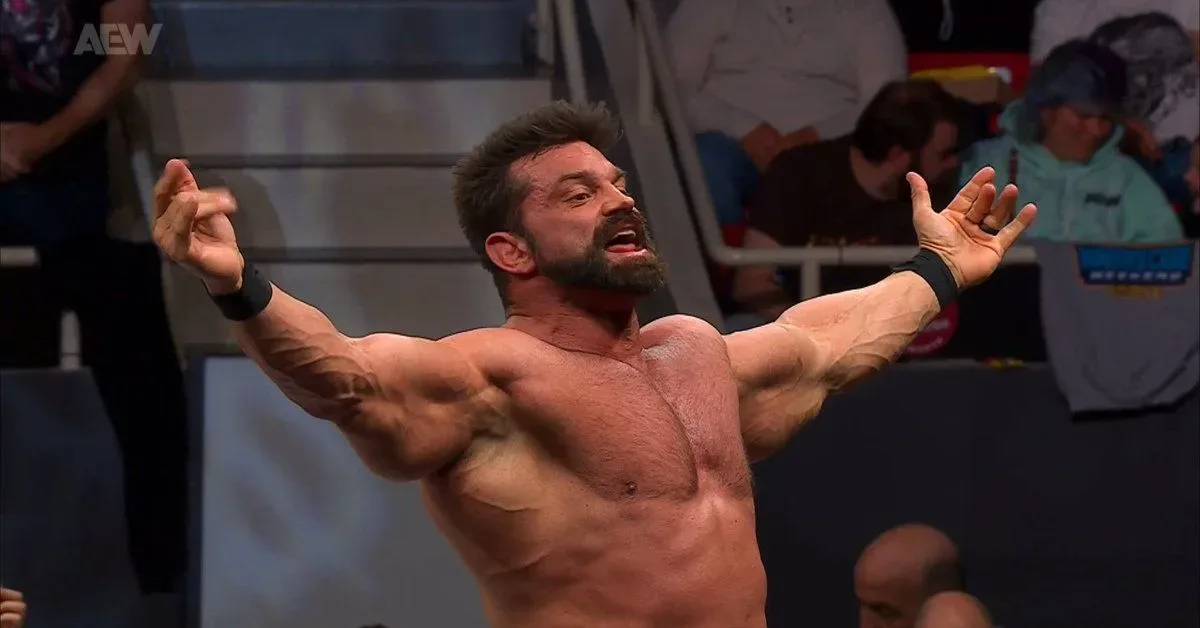
Brian Cage wants the people calling him injury-prone to name the injuries they’re talking about. The AEW wrestler challenged that description in a November 26 social media post, saying he has had two wrestling-related surgeries in more than 20 years. He also brought up a back issue from his time in TNA, saying it lasted four to five months because he continued to wrestle and work through it.
The response came three days after Cage, known as ‘The Machine,’ aired his frustrations with his creative direction in a lengthy November 23 video. The two posts addressed different things: the first dealt with how Cage feels about his booking, while the second took aim at a criticism he sees directed at him. Between those posts, Cage wrestled in an 18-man tag team match on Wednesday’s AEW Dynamite.
Brian Cage asks critics to name his injuries
Rather than simply reject the label, Cage asked for specific examples. He described being called injury-prone as the main negative comment he sees and offered two points of reference from his career: the number of surgeries he attributes to wrestling and the back problem he dealt with in TNA.
View the referenced post on X
For the love of God, someone please list me my injuries? The main negative I see is “I’m injury prone”. I’ve had 2 surgeries from wrestling in over 20 years, and had my back issue in TNA that lasted for 4-5 months because I kept wrestling and working through it.
For more background on this topic, read Swerve Strickland Wanted His AEW Feud With Hangman Page to Make Fans Uncomfortable.
Cage was specific about what he was counting. He said he had undergone two surgeries from wrestling, not that he had suffered only two injuries in his career. His post did not identify the procedures or say when they took place. The back issue was the only specific physical problem he discussed, and he described its duration without presenting that period as time he spent away from the ring.
That distinction is central to his account of the TNA episode. Cage didn’t dispute that his back was a problem for months. Instead, he said that continuing to perform was why it lingered. Four to five months dealing with an issue and four to five months unable to wrestle would describe two very different stretches of a career. Cage’s post described the former.
The injury discussion followed Cage’s comments about AEW creative
Cage’s November 23 video put his dissatisfaction with his creative direction in public view. The November 26 post narrowed the subject considerably. It wasn’t an update on what AEW plans to do with him, and Cage did not say in that post that anyone in the company had used his injury history to explain a booking decision. He was responding to a label he says he sees, not identifying it as AEW’s position.
It’s easy for the two subjects to get folded into the same debate. Once a wrestler speaks publicly about creative frustrations, conversation can shift from what he wants out of his role to why people think he hasn’t been given it. But the timing of Cage’s posts doesn’t establish a connection between the criticism and his booking. What he put on record was dissatisfaction with his creative direction on November 23 and a challenge to the injury-prone description on November 26.
Wednesday’s Dynamite appearance adds an on-screen fact to that timeline. Cage was part of an 18-man tag team match after raising his creative frustrations and before posting his response about injuries. That tells viewers where he appeared on the show and in what capacity. It doesn’t establish whether he was satisfied with that role or whether anything about his creative direction had changed. A wrestler can be booked to compete and still take issue with how he is being used.
What Cage’s surgery count does and doesn’t tell us
Cage’s challenge calls attention to how loosely the term ‘injury-prone’ can be used. Someone citing repeated injuries would need different examples from someone talking about how often a wrestler has missed matches. Surgery is another measure altogether: an injury can interrupt a wrestler’s schedule without requiring an operation, and a wrestler can continue appearing while dealing with a physical problem. Cage’s own description of his back issue illustrates that last distinction.
The two surgeries are a concrete figure Cage offered in his defense, and the more-than-20-year span is part of his argument. It’s not a full accounting of every injury, and his post doesn’t provide one. But he also isn’t asking readers to take his silence about other injuries as proof that there were none. His challenge is to the people making the broader claim: if they believe there is a pattern, he wants them to say what incidents they’re counting.
His account of the TNA problem is worth reading on its own terms for the same reason. It would be inaccurate to turn the four-to-five-month timeframe into an absence when Cage specifically said he kept working. It would also be inaccurate to treat the fact that he wrestled as evidence that the issue was minor. Cage gave a duration and his explanation for it, not a diagnosis or an assessment of its severity.
Cage’s creative concerns and injury rebuttal remain separate
The latest post answers the injury criticism with Cage’s own account of his career, but it leaves the creative question where his earlier video left it. He did not announce a new direction or offer any indication of what comes next for him in AEW. His appearance in the multi-man match is the most recent booking detail in this sequence, not an answer to the concerns he voiced.
What Cage did make clear is that he wants the discussion about his durability to be specific. He put his wrestling-related surgery count on the record, explained how he remembers working through the TNA back issue and asked critics to supply the examples behind their description. That is a narrower argument than the one about his place on AEW television, and Cage has now made both publicly.

Darryl Polo
Darryl Polo is a passionate wrestling fan covering WWE, AEW, TNA and beyond. He loves great rivalries, breakout stars and the moments that keep fans talking long after the bell. How we work.