
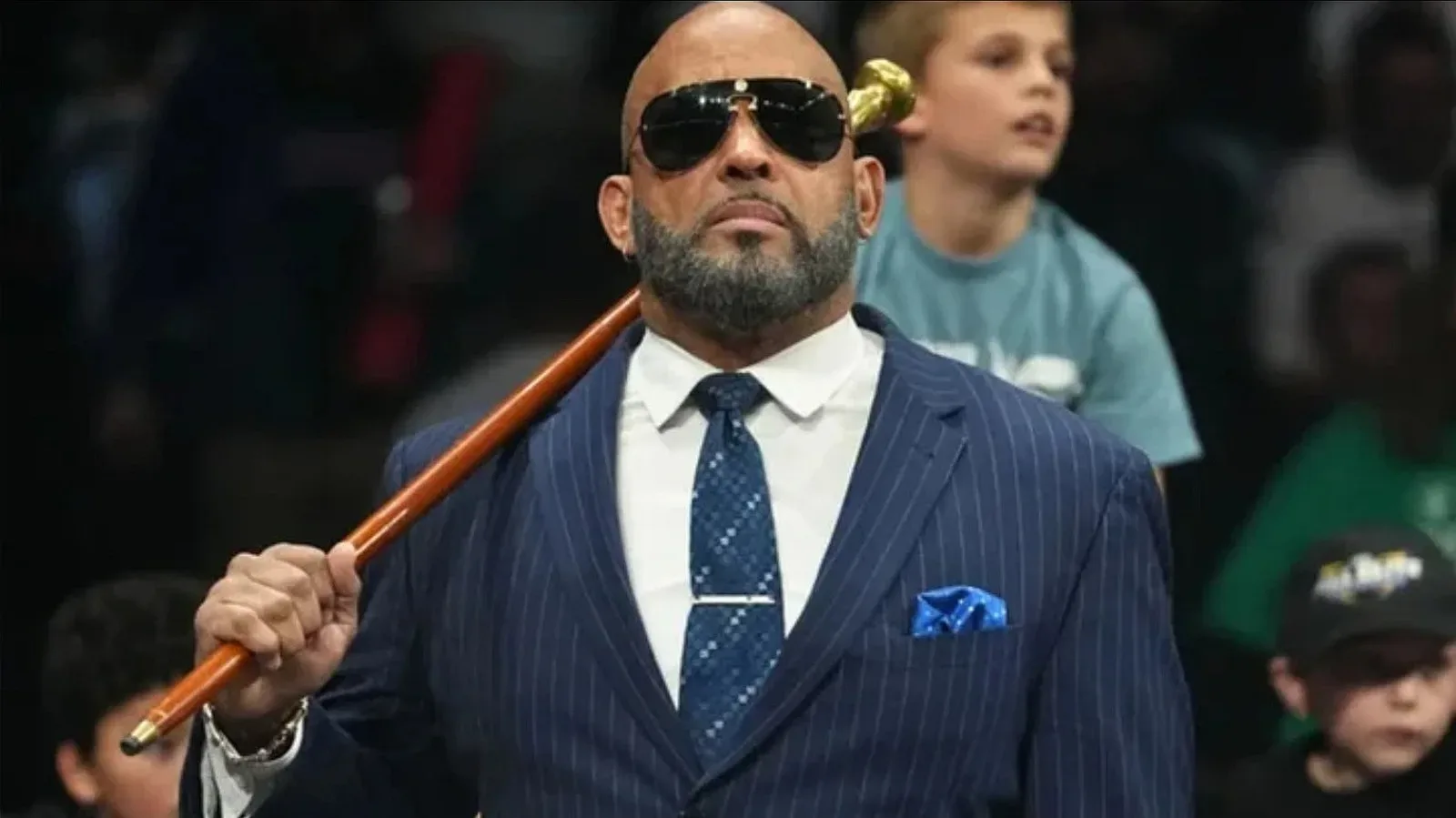
AEW’s MVP doesn’t think professional wrestling can offer bettors a fair market. Speaking on his Marking Out podcast, the veteran argued that the problem starts before a match begins: The people working it generally know how it will end. If there’s money riding on that result, someone with advance knowledge can pass it along to a friend or relative who can place the bet for them.
MVP pointed to two parts of the same problem. First, wrestlers typically have information that would give a bettor an advantage no amount of studying the show could match. Second, not everyone in wrestling is making enough money to shrug off the chance to earn a little extra. In his view, expanding legal wagering on wrestling in the United States would give people a financial reason to share a finish they already know. They wouldn’t have to change anything that happens in the ring.
MVP Recalls Being Asked About His Finishes in Japan
MVP’s concerns come in part from an experience he recalled during his time in Japan. He said he befriended a local who would occasionally show him and others around the city. The man told him people could bet on Japanese wrestling and, in MVP’s telling, said the operation was run by the Yakuza. After explaining how the betting worked, the acquaintance began asking MVP whether he knew if he was going over or under at an upcoming pay-per-view.
In wrestling parlance, going over means winning, and going under means losing. The acquaintance wasn’t asking MVP to handicap a match or offer a prediction about who looked stronger heading into the show. He wanted to know whether MVP already had the answer. MVP didn’t say that he supplied a finish. What stuck with him was that someone he knew socially could see an advantage in asking him directly.
For more background on this topic, read Alisha Edwards and Gail Kim Announce Benefit Auction for AEW’s Rebel.
The man also claimed he kept his wagers to the equivalent of $10 or $20. As MVP recalled it, the acquaintance thought he was being smart by keeping the amounts low enough to avoid attracting trouble from the Yakuza. That was the man’s explanation of his own betting, not a broader account of how wagering in Japan operated. For MVP’s argument, the significant detail was the modest size of the bets: Even someone who said he was putting down relatively little money was interested in getting a result in advance.
A Bettor Wouldn’t Need a Wrestler to Change the Finish
“One: wrestlers, when we go into the ring, we usually know what’s going to happen,” MVP said on Marking Out.
That knowledge is part of putting on a wrestling show. The promotion can build suspense over who will win a title match or settle a rivalry, and fans can reach different conclusions after watching the same promos and matches. None of that is a problem when the payoff is seeing whether a prediction comes true. It becomes a different proposition when one person is betting on a guess and another has heard how the match is supposed to end.
MVP illustrated the risk with a hypothetical about a wrestler telling a cousin that they were scheduled to tap out at the next pay-per-view. The detail matters because it goes beyond picking a winner. The tip could reveal how the match is planned to end as well as who is set to lose. And the wrestler in that example wouldn’t have to go against the promotion’s plans, ask an opponent for a favor or do anything unusual during the match. The finish could play out exactly as intended.
For MVP, that makes the issue harder to address than simply barring performers from betting on their own matches. His example puts the wager in someone else’s hands. It also makes the question of pay relevant to the debate. A wrestler doesn’t have to be a top star for information about their own match to be valuable, and what might look like a modest sum to a headliner could mean more to someone making considerably less. MVP raised that as a possible incentive, not as an accusation that any particular wrestler has leaked a result.
Why MVP Brought Up Betting in Other Sports
MVP and his co-host discussed the Pete Rose baseball betting scandal and brought up longstanding speculation involving Michael Jordan and betting on his own games. Those are not equivalent examples: Rose’s betting scandal is documented, while the suggestion about Jordan was raised as speculation, not established fact. The broader point of the comparison was that gambling can create concerns about the conduct of people involved in an event, even when the outcome is being decided through competition.
MVP sees wrestling as especially vulnerable because the information a bettor would want can exist before the bell rings. A baseball or basketball player may have reasons to feel confident going into a game, but that isn’t the same thing as knowing a planned result. A wrestler told that a match will end in a submission has a different kind of information. Passing that detail along could give a bettor an advantage without anyone having to influence what happens once the show is underway.
The discussion was about what MVP thinks could happen if legal betting on wrestling in the United States expands, not an allegation of misconduct in AEW or a claim that a specific match has been compromised. Limited wagering already exists, but he doesn’t see a convincing way to build a wider system around results that participants generally know beforehand. The more opportunities there are to bet on those results, the more often an innocent question about who’s going over could come with money attached.
Fans can keep making their picks before a pay-per-view, and a well-told story can make either outcome feel plausible. MVP isn’t arguing against that part of watching wrestling. He’s drawing a line between guessing what a promotion has planned and putting money on a result that someone else may already have been told. In his view, a betting system would have to account for that difference every time a match went on the board.
In pictures

Darryl Polo
Darryl Polo is a passionate wrestling fan covering WWE, AEW, TNA and beyond. He loves great rivalries, breakout stars and the moments that keep fans talking long after the bell. How we work.