
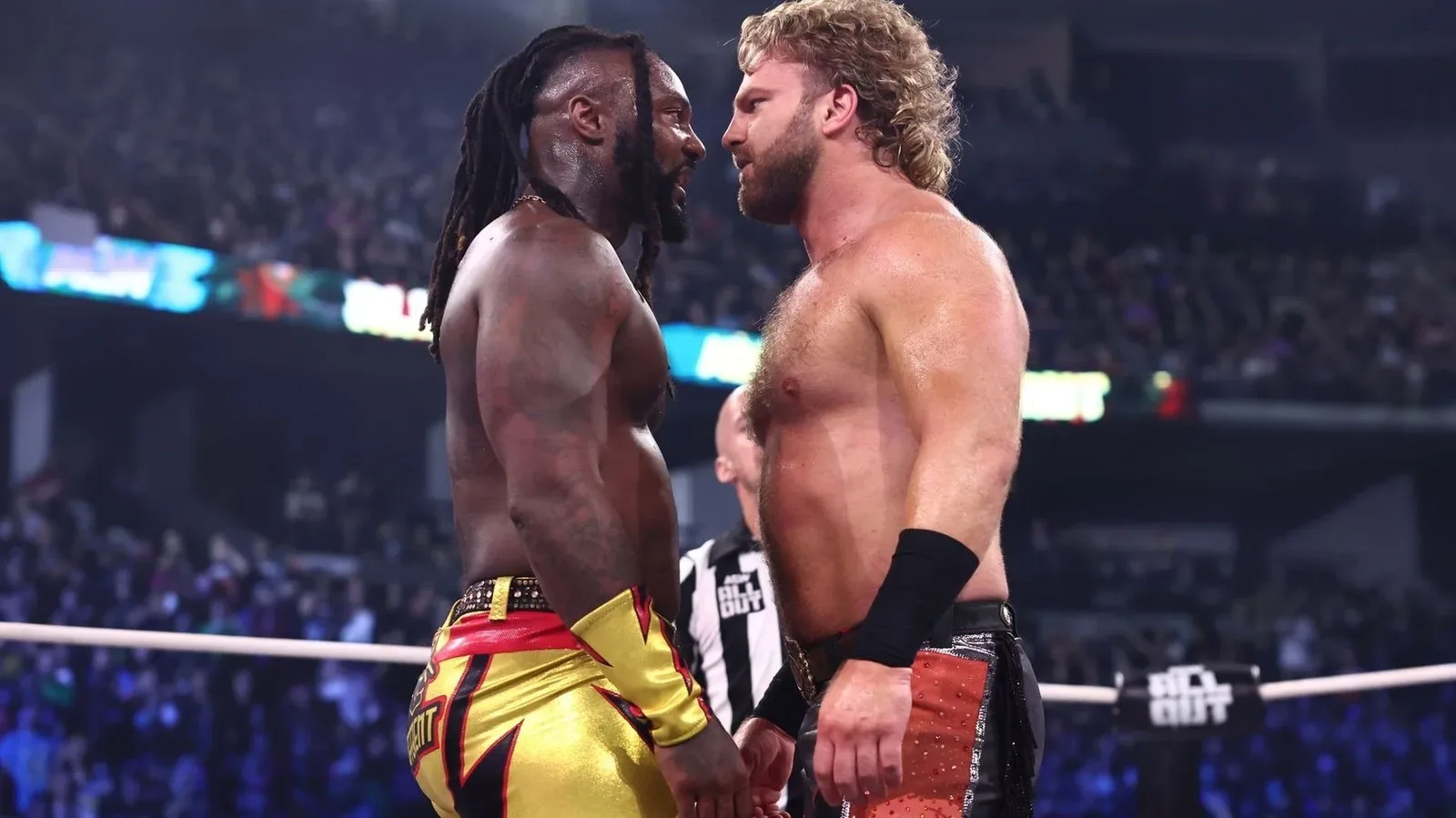
Swerve Strickland did not want AEW fans to watch his rivalry with Hangman Adam Page and simply wonder who would win. He wanted them to sit with the fact that both men seemed willing to go further than a wrestling match should require. In an interview with Extreme Channel, Strickland said his goal was to make viewers uncomfortable. The feud had plenty of ways to do that once the bell rang, but Strickland pointed to something that happened before either man reached for a weapon: they were willing to talk about what actually bothered them.
“And I just had the mindset of making people feel uncomfortable,” Strickland said. “Like putting a lot of realistic feelings and hatred into something.”
The AEW feud gave that approach an unmistakably violent outlet. Strickland and Page bloodied each other, brought staples and needles into their matches, and carried the story outside the ring through a home intrusion and an act of arson. Their respective trios partners eventually got involved, leading to the first Trios Texas Death Match. Yet when Strickland explained why the feud clicked, he spent more time on what the two men were prepared to say to each other than on what they were prepared to do.
Swerve Strickland wanted a grudge, not another match on the schedule
Strickland argued that wrestling has lost some of its sense of genuine hatred. He used a best-of series to explain the difference. In that format, a sixth match happens because the series calls for it. The audience has a clear reason to watch: the result could settle the series or force another match. But that does not necessarily make it feel like two people are so angry that they cannot leave each other alone.
For more background on this topic, read Will Ospreay vs. MJF Set for Title vs. Title Ladder Match at AEW Worlds End.
That distinction helps explain what Strickland was after with Page. A series gives viewers a scoreboard and a finish line. A grudge can keep going even when there is no competitive reason for another match, provided the audience believes neither wrestler is willing to let the last thing that happened stand. For Strickland, the question was less about how to top the previous match than why these two men would still want to get in the ring together after it.
That approach also gave their story room to leave the arena without losing sight of the rivalry. The intrusion and the arson were extreme developments, but they kept the focus on two men looking for ways to hurt each other that a win or loss could not match. Even when the feud expanded to include their partners, the draw remained the animosity between Strickland and Page. The first Trios Texas Death Match changed how many wrestlers were involved without changing who had made the conflict personal in the first place.
Page’s frustrations gave the rivalry something real to work with
Strickland credited both men with being willing to bring personal insecurities into the story. “We were vulnerable, we were open,” he said. “A lot of insecurities were spoken about.” In his telling, Page felt backed against the wall at the time and did not always feel that the system had his back. Strickland saw room to bring that feeling into the feud rather than rely on another generic threat about what would happen when they got in the ring.
Strickland also came at the story from a different angle. He saw Page as someone who had grown complacent and enjoyed advantages he could afford to take for granted. He pointed to Page’s association with The Elite and the group’s place in AEW’s identity to explain how he viewed Hangman’s position. That was Strickland’s assessment, not a claim that Page saw his own situation the same way.
In fact, those two readings of Page gave the rivalry a useful point of friction. Strickland could look at Hangman and see a wrestler with an established place in AEW. Page, as Strickland described him, could still feel that he had been left without support when he needed it. The story did not have to resolve which view was fair. It had more to work with because one man’s apparent security could be the very thing the other man felt was slipping away.
Why the violence wasn’t the starting point
Staples, needles and blood are the images most likely to stick with viewers who saw the matches. But Strickland did not describe the feud as a search for the most shocking thing AEW could put on screen. He said it needed to come from a genuine place before it got violent. That order matters: a disturbing spot can get a reaction on its own, but without a convincing reason for these particular wrestlers to cross that line, the reaction is likely to end when the spot does.
Discomfort is a different goal from surprise. A surprise is over once the audience sees what happened. The discomfort Strickland was talking about comes from recognizing what is driving the wrestlers and realizing that neither is particularly interested in backing down. There is a point at which fans can want to see the next match while no longer feeling entirely at ease about what they are asking to see. The rivalry kept finding that point, even as the matches grew more extreme.
That helps explain why adding more wrestlers did not require AEW to replace the original premise. A trios match offered a different format, but it still had the tension of Strickland and Page sharing a ring. The partners widened the scope of the conflict; the audience already knew why the two men at its center could not treat it as just another match. By then, the feud did not need a new stipulation to establish that they hated each other. The stipulation gave that hatred somewhere else to go.
Strickland’s comments ultimately put the emphasis on a part of the feud that is easier to miss than the bloodshed. The wrestlers had to give each other something specific to be angry about before any of the violence would carry the weight they wanted. Page’s frustrations and Strickland’s view of the advantages Hangman enjoyed gave them a disagreement that a pinfall could not settle. That was the basis for making viewers uncomfortable: not simply the possibility that the next match would be worse, but the sense that both men still had a reason to want it.
In pictures

Darryl Polo
Darryl Polo is a passionate wrestling fan covering WWE, AEW, TNA and beyond. He loves great rivalries, breakout stars and the moments that keep fans talking long after the bell. How we work.