
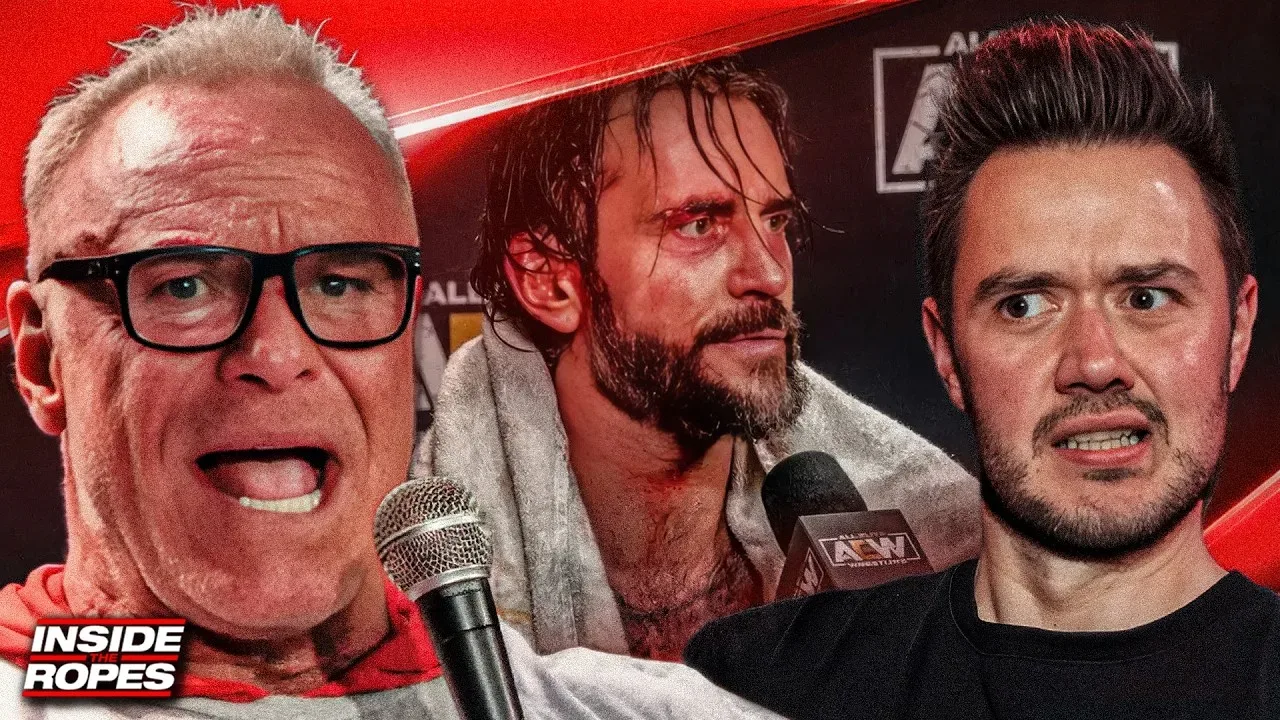
Billy Gunn has offered his perspective on the culture clash that can develop when experienced wrestlers and younger talent find themselves in a tense locker-room environment, reflecting on the infamous aftermath of AEW All Out 2022 and the way disputes were handled during his own long career.
The AEW coach was not present for the confrontation commonly referred to as Brawl Out, and he stressed that he does not know every detail of what happened. Still, Gunn believes there is a basic reality in wrestling locker rooms: veterans with strong personalities are not necessarily going to tolerate being challenged in certain ways.
“I wasn’t around for that. I knew the incident that happened, and it was what it was,” Gunn said in an interview with Kenny McIntosh. “They just have to realize that sometimes, there are certain veterans that aren’t going to put up with that shit, no matter what. If you’re a young buckaroo and you want to poke the bear, get ready to get bit. I think that’s what happened. I don’t know the whole details; that’s between them.”
Gunn’s comments arrive years after the backstage situation that became one of the most scrutinized incidents in AEW history. The 2022 All Out pay-per-view was supposed to be defined by CM Punk’s major win over Jon Moxley for the AEW World Championship in front of a Chicago crowd. Instead, much of the discussion shifted to Punk’s remarks during the post-show media scrum and the reported altercation that followed.
For more background on this topic, read Will Ospreay Says WWE Questions Come With the Job, But His Focus Remains on AEW.
The All Out 2022 Incident Changed AEW’s Conversation
During the media appearance after All Out, Punk publicly aired frustrations involving Hangman Page, Colt Cabana, and The Young Bucks. His comments set off an extraordinary chain of events behind the scenes. A reported fight followed involving Punk, Ace Steel, Matt Jackson, Nick Jackson, and Kenny Omega.
The situation had immediate professional consequences. AEW suspended Punk for his role in the incident, while The Elite were also kept away from television as the company addressed the matter. The episode became a lasting point of debate among fans because it involved some of the promotion’s most prominent names, including a top draw in Punk and the executive vice presidents who had been central to AEW from its beginning.
Gunn did not attempt to fill in the gaps or present his view as a definitive account. In fact, his emphasis was on the limits of what he knew. That distinction matters in revisiting an event surrounded by years of speculation, conflicting fan interpretations, and limited public detail from the people directly involved.
What Gunn did address was the broader principle of accountability and the potential consequences of escalating conflict with established wrestlers. As someone who has spent decades working in major promotions, first as an in-ring star and later as a mentor and coach, Gunn has seen generations of performers navigate personal disagreements while also trying to protect the business at hand.
Gunn Says Business Must Come Before Personal Friction
Gunn explained that he did not closely follow the surrounding media coverage of the incident. When asked about how comparable situations were addressed earlier in his career, he pointed to an approach centered on separating personal feelings from professional responsibilities.
“Vince had things under control really good. I don’t have to like you to work with you. I just have to do business,” Gunn said.
That outlook has long been a familiar one within professional wrestling. The nature of the industry puts performers in close quarters, sometimes with people they may not trust or particularly enjoy. Wrestlers travel together, train together, share locker rooms, and rely on one another to execute physically demanding matches safely. In that environment, a disagreement can have implications beyond ordinary workplace tension.
Gunn’s argument is not that conflict never happens. Rather, he said most wrestlers historically found a way to continue working despite those differences. “99.9% of the guys always do that,” he said.
It is a particularly relevant point for AEW, where the locker room includes a mix of industry veterans, homegrown names, independent-wrestling standouts, and wrestlers who came to the company from other major promotions. Those different experiences can create a creatively diverse roster, but they can also bring together competing philosophies about leadership, communication, promotion, and what constitutes acceptable behavior.
Gunn has been part of AEW since 2019, initially appearing alongside his son Austin Gunn before becoming a regular television presence with The Gunns and The Acclaimed. Beyond his on-screen role, he has worked as a coach, giving him a position that can place him close to both veteran talent and the promotion’s younger generation.
Private Resolution Was Gunn’s Preferred Standard
The former multi-time champion described a more direct way of dealing with locker-room friction. In his view, problems should be confronted behind closed doors rather than played out publicly in front of other wrestlers or through the media.
“There will be a spat every now and then where you just pull them into a room, shut the door, and you don’t do it in public or in front of the boys,” Gunn said. “If you have a problem, we fix it now, so that when you walk out the door, we don’t have a problem anymore. That’s how grown-ass people deal with shit. Nowadays, we don’t, and that’s sad.”
His description is a straightforward endorsement of private conflict resolution: identify the issue, allow the parties to speak, settle it directly, and return to the shared obligation of putting on a show. Gunn’s comments also reflect a veteran’s concern about the modern wrestling environment, where backstage disputes can quickly become public narratives and fuel ongoing discussion well beyond the people involved.
For wrestlers, the balance between honesty and professionalism can be difficult. Heated emotions are not uncommon in an industry built around competitive personalities, physical performance, and public storytelling. However, Gunn’s point is that personal friction does not have to become a permanent obstacle to productive working relationships.
That idea is especially significant when the people involved are central figures in a company’s creative direction and locker-room identity. The public nature of the All Out media scrum ensured that the disagreement would not remain an internal issue. The reported confrontation afterward only amplified the sense that AEW was facing a major test of its leadership and workplace dynamics.
Punk Returned, Then Departed AEW Following All In 2023
Punk eventually returned to AEW programming roughly a year after the All Out incident. His comeback was one of the company’s most closely watched developments, as he resumed competing amid questions over whether the tension connected to 2022 could truly be left behind.
That return did not mark the end of controversy. Punk was fired by AEW after another incident at All In 2023. His departure ended a complicated two-year stretch in the company, one that began with a blockbuster debut and included major championship moments, serious injury absences, public disputes, suspension, return, and ultimately his release.
Gunn did not seek to relitigate the individual events surrounding Punk’s AEW run. His remarks instead focused on a broader lesson about working in a shared environment. Respect may not mean friendship, and business relationships do not require everyone to get along personally. But, in Gunn’s view, performers have a responsibility to address issues in a mature way and avoid allowing those issues to consume the workplace.
AEW has continued to evolve since the turbulence of 2022 and 2023, with its roster and leadership structure moving forward after one of the most talked-about periods in the promotion’s history. Yet Brawl Out remains an unavoidable part of any discussion about AEW’s early growing pains, locker-room management, and the unique pressures placed on a young company with elite-level talent.
For Gunn, the takeaway is less about assigning blame for an incident he did not witness and more about the standards he believes should apply across wrestling. Conflict will happen. Strong personalities will clash. But the goal, he maintains, should be to handle those problems directly, privately, and with enough professionalism that the show and the locker room can move on.

Darryl Polo
Darryl Polo is a passionate wrestling fan covering WWE, AEW, TNA and beyond. He loves great rivalries, breakout stars and the moments that keep fans talking long after the bell. How we work.