
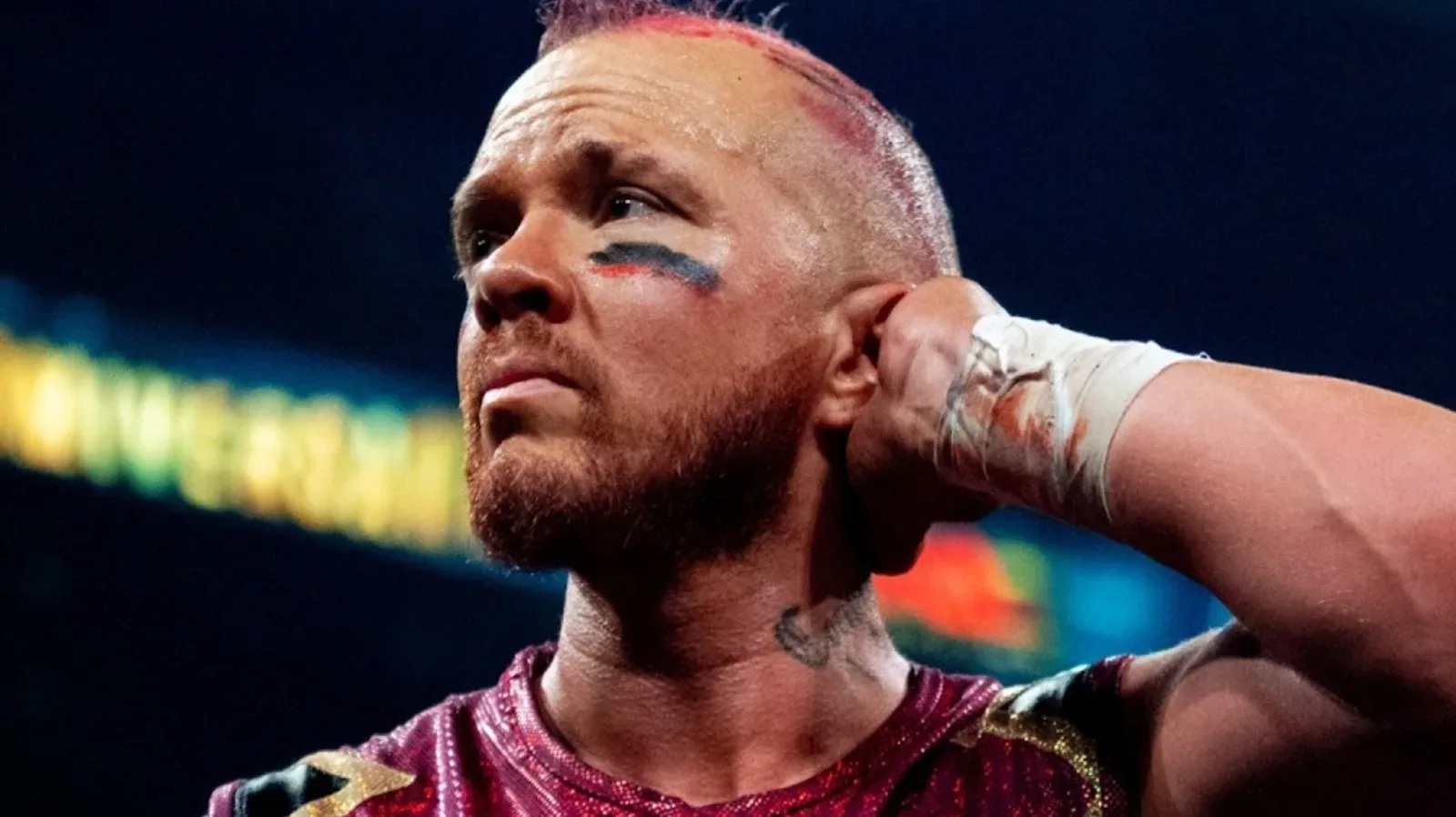
Amazing Red has long occupied a rare place in modern professional wrestling history. His matches helped redefine what independent wrestling audiences expected from high-flying performers, while his creativity helped introduce a generation of fans and wrestlers to movements that once seemed physically impossible. The influence can be seen in major promotions around the world, whether through the continued use of the Code Red, the Spanish Fly, or the broader athletic vocabulary that emerged from the New York independent scene in which Red became a trailblazer.
Yet for all of the recognition attached to his name, Red has not always been comfortable accepting the scale of that impact. During an appearance on Insight, the former TNA standout explained that it took an emotional moment backstage at TNA Slammiversary 2026 for him to truly process what he has meant to so many people in wrestling.
Red described seeing Mike Santana at the event and noticing the emotion on Santana's face. The feeling continued when he reached the locker room, where wrestlers greeted him with applause, embraces, and personal stories about the ways he had assisted their careers and development.
“I saw [Mike] Santana there, my boy Santana man, and I seen tears in his eyes, and then I went to the locker room and everyone's there clapping and hugging me and sharing stories of how I helped them in the business,” Red said on Insight. “I'm just there like ‘I have no idea,’ and it kind of just hit me where it's like ‘Wow, you did this man, like you really did do this,’ and I'm just very humbled.”
The future TNA Hall of Famer said the experience left him appreciative and led him to give glory to God. He characterized his own journey as that of a kid pursuing a dream with singular focus, determined not to let rejection or obstacles redirect him.
An Original Vision Beyond The Comparisons
Red's career has naturally drawn comparisons to Rey Mysterio, especially considering the explosiveness, speed, and aerial precision that defined his work. But Red explained that those comparisons were a major reason he pushed himself to establish a style that could not simply be reduced to an imitation of another wrestler.
Rather than following one template, he sought to bring together several distinct inspirations. The cruiserweight wrestling showcased in WCW was part of the foundation, as was lucha libre. Japanese wrestling and martial arts movies also informed the way he viewed motion, momentum, and the possibilities inside a wrestling ring. The objective was to construct something personal enough that his greatest competition would be himself.
That mindset is central to Red's legacy. Many wrestlers have performed spectacular moves, but Red's influence goes beyond a list of signature techniques. He helped popularize an approach in which athletic innovation was not merely a highlight-reel tool. It was a way of expressing character, urgency, and imagination. His offense had a kinetic quality that made it appear as though every exchange could transform into something audiences had never witnessed before.
Over time, that approach spread. Wrestlers who grew up studying independent wrestling in the 2000s saw performers such as Red make creative risk-taking feel attainable. His work also extended away from the ring through House of Glory, where he has helped train wrestlers who have gone on to appear throughout the industry. The result is an influence that can be measured through both technique and mentorship.
How A Group Of Friends Created Wrestling History
When discussing the moves connected to his name, including the Code Red and the Infrared, Amazing Red made clear that the innovation did not happen in isolation. He credited the people around him in New York, particularly his cousins Joel and Jose Maximo of The SAT, also known as The Spanish Announce Team. He also recognized Quiet Storm, Chris Divine, and Brian XL as part of the creative group that experimented with ideas which later became familiar to wrestling viewers everywhere.
Their process was not built in a polished performance center or a major television production environment. At times, it began with action figures.
Red recalled that Joel Maximo would work through potential sequences with G.I. Joe toys. That imaginative experimentation led to the conception of the Spanish Fly, a move now common enough that it appears at every level of wrestling, from independent events to the biggest televised stages.
“Joel had this thing where he would do things with G.I. Joe's and that's how the Spanish Fly was born,” Red said on Insight. “Put them together, threw them, they backflip.”
The actual process of taking the idea from toy figures to a ring was understandably intimidating. Red recalled being told that he would front flip while The SAT would back flip after grabbing him in a double Rock Bottom-style hold. His first reaction was fear, and he initially did not want to attempt it. Once a crash bag was brought in and the others encouraged him to trust the concept, they tried it. After the move worked, the group was immediately asked to repeat it.
That story illustrates a defining element of the era. The moves associated with Red and his peers were born from collaboration, trust, repetition, and a willingness to test ideas that sounded impossible when first described. Their ambition helped establish a new standard for independent wrestling innovation.
Accidents, Experiments, And The Code Red
Not every important move began as a perfectly mapped-out invention. Red revealed that the Canadian Destroyer came about accidentally through him, while Quiet Storm was the first person to intentionally attempt the maneuver. The history behind the Infrared also involved an unexpected result. Red had been trying to perform a Spinal Tap, but he rotated too far and discovered a different movement in the process.
The Code Red, perhaps the move most closely tied to Red's name, originated from what he initially called a Baby Powerbomb. It is a technique that demands precise coordination: the opponent is pulled into a dramatic rolling transition before being driven down in a powerbomb-style landing. The move has remained visually striking because it appears to defy the normal logic of a wrestling exchange, turning a potential counter into a sudden impact finish.
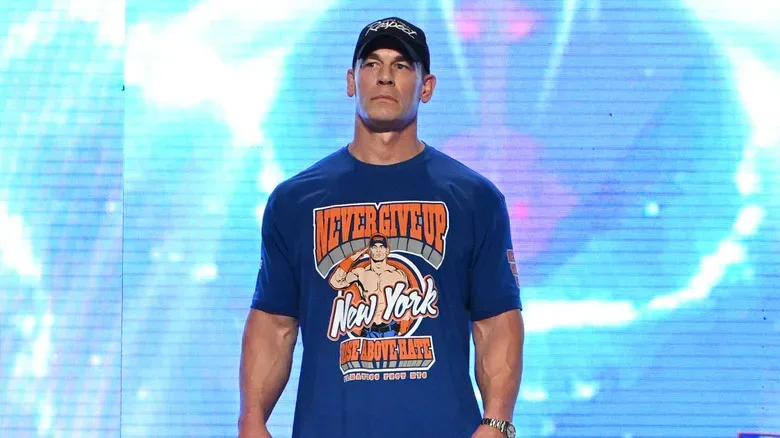
Its adoption by wrestlers from different generations is a reflection of its versatility. Red noted that both Darby Allin and Sting have used the Code Red. The move's reach was especially apparent when John Cena performed it in WWE, a moment that made Red's family take notice in a new way.
“What wowed me was the John Cena thing the most because my phone was blowing up. ‘John Cena just did Code Red,’ like that's kind of cool,” Red said on Insight. “But it's kind of cool to see things that you come up with, that sound and look impossible, be a thing.”
That reaction captures why acknowledgment at Slammiversary 2026 carried such weight. Red's contributions have become so embedded in wrestling's fabric that fans may see variations of his ideas without always knowing where they originated. The moves have evolved, changed hands, and traveled across promotions and countries. In many ways, that is the mark of a truly influential creator: the work becomes part of the language of the sport.
A Legacy Bigger Than Any Single Move
The Amazing Red story is not solely about who created which maneuver first. Wrestling is full of innovation that develops through shared training, experimentation, and performers adapting one another's ideas. Red himself emphasized the people who helped turn early concepts into reality, rather than presenting the process as a one-man achievement.
Still, his standing remains undeniable. His style gave countless wrestlers permission to think differently about what could be done between the ropes. His willingness to blend cruiserweight action, lucha libre, Japanese influences, and martial arts-inspired movement created an identity that resonated well beyond the settings where he first made his name.
The emotion shown to him at TNA Slammiversary 2026 was not simply a tribute to a decorated performer. It was recognition for a wrestler, trainer, and innovator whose ideas helped shape the present-day industry. For Red, accepting that praise may remain difficult. But the response from his peers made one point clear: his dream did not just become reality for him. It opened possibilities for many who followed.
Keep reading on SmackDownOnYou
In pictures

Darryl Polo
Darryl Polo is a passionate wrestling fan covering WWE, AEW, TNA and beyond. He loves great rivalries, breakout stars and the moments that keep fans talking long after the bell. How we work.