
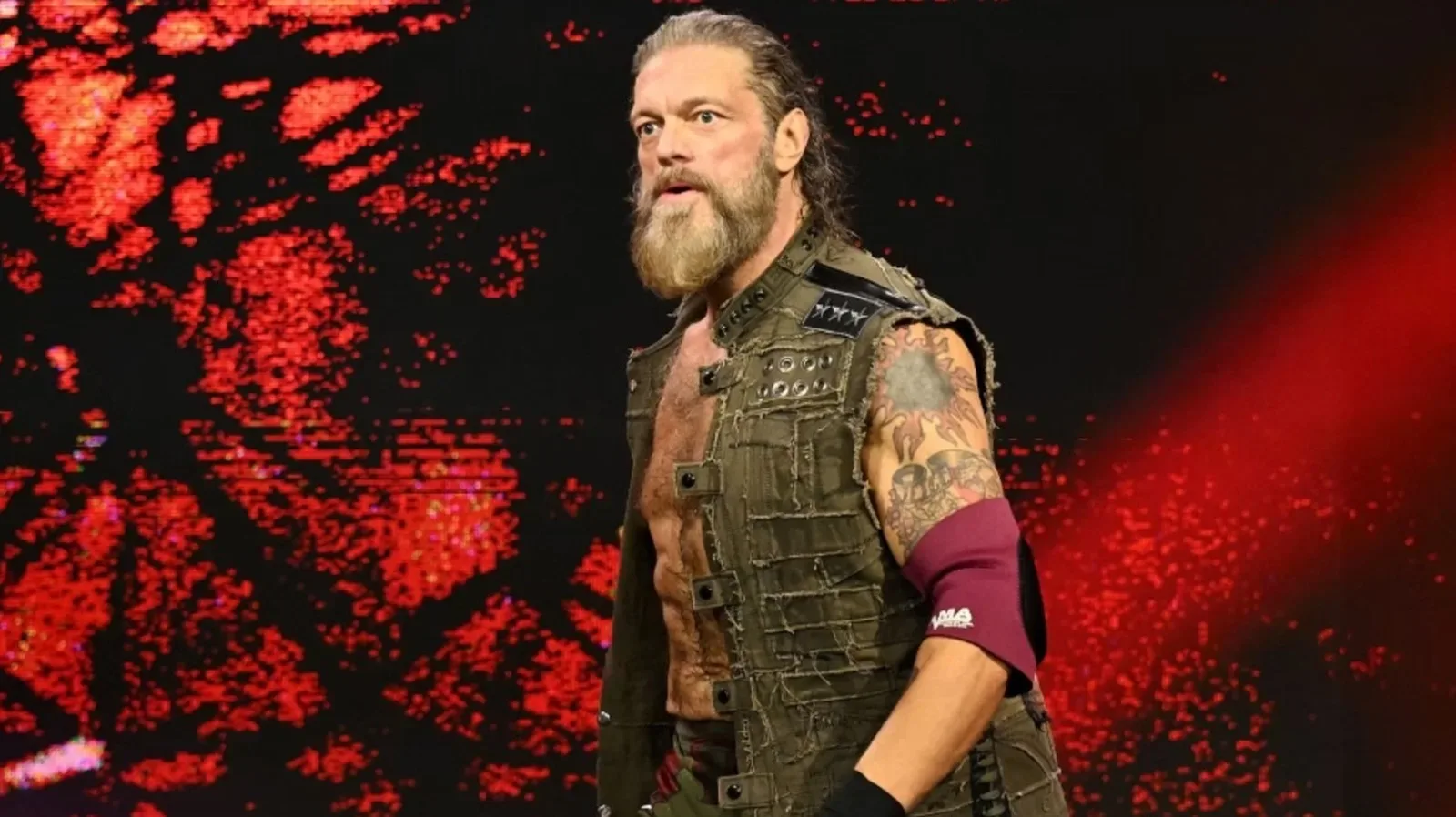
Adam Copeland has wrestled in some of the largest and most famous buildings professional wrestling has to offer. He has competed at WrestleMania, appeared before massive stadium crowds, and worked landmark events across North America and around the world. Yet for Copeland, the venue that mattered most was not Wembley Stadium, the site of one of AEW’s biggest modern spectacles, nor another global wrestling destination. It was Maple Leaf Gardens.
Speaking after wrestling at the historic Toronto venue for Maple Leaf Pro Wrestling, Copeland described finally stepping into Maple Leaf Gardens as the most important building-related achievement of his career. The significance was rooted in far more than the size of the audience or the prestige attached to an event. It was a deeply personal goal connected to the wrestling he watched while growing up in Canada and the memories that helped shape his eventual path into the industry.
“For me, this was easily the most important venue for me to wrestle in, over any other, over Wembley Stadium, over any of them,” Copeland said. “Maple Leaf Gardens has always been my one place that I wanted to get to. And here we are today.”
That answer illustrates the difference between professional milestones and personal ones. Wembley Stadium represents a monumental setting, particularly within AEW’s recent history. It is a venue synonymous with major sporting events and huge crowds, and wrestling there is the kind of opportunity few performers ever receive. But Maple Leaf Gardens was the building Copeland associated with his own childhood. For him, appearing there was about completing a story that began long before he became known internationally as Edge and later returned to wrestling under his own name.
For more background on this topic, read Jake Roberts Says Tony Khan Could ‘Loosen Up The Reins’ and Use AEW Talent Better.
A Toronto Dream Years in the Making
Maple Leaf Gardens occupies a special place in Canadian sports and wrestling culture. The Toronto building was long identified with the Maple Leafs and also hosted countless significant wrestling cards during the territorial era. It became a landmark for fans who grew up attending events or watching the stars who passed through its doors. For a wrestler from the Toronto area such as Copeland, that history carried an especially powerful pull.
Copeland said he never expected the opportunity to become real. The possibility seemed remote even after his celebrated return to active competition, largely because of the changing nature of the wrestling business and where he was employed at different points in his career.
“No, I never thought I’d wrestle in Maple Leaf Gardens,” Copeland said. “Between the fact that I had retired for nine years, and then even once I got my career back, just with the landscape of what wrestling is and where I was working, Maple Leaf Gardens was a pipe dream. I thought if I were going to ever wrestle there, I’d have to run my own show.”
The reference to retirement is particularly significant in understanding why the moment resonated so strongly. Copeland was forced away from in-ring competition for nearly a decade following his 2011 retirement. His return opened a second chapter that few could have predicted, allowing him to pursue matches, rivalries, and locations that had appeared permanently out of reach.
Even with that comeback, however, Maple Leaf Gardens remained a complicated target. Wrestling promotions do not simply run every historic building at will, and the venue’s role has changed substantially over the years. The dream required the right promoter, the right business relationships, and a landscape in which Copeland could participate. Those pieces ultimately came together through Maple Leaf Pro Wrestling and his AEW affiliation.
Scott D’Amore Helped Make the Possibility Real
Copeland credited Scott D’Amore with helping turn the long-held wish into an achievable plan. D’Amore, the former TNA president and the owner of Maple Leaf Pro Wrestling, has been central to building the promotion’s identity around major Canadian wrestling events and connections to the country’s rich history in the business.
“And then Scott D’Amore and I, we started talking and realized, ‘Wait, this is now a possibility now that I’m with AEW. We could actually do this,’” Copeland said.
That remark underscores the value of cooperation and relationships in the current wrestling climate. Copeland’s work in AEW did not prevent him from appearing for Maple Leaf Pro Wrestling. Instead, it helped create an avenue for a special appearance that could honor both the venue and the performer’s connection to it. The result gave Copeland a chance to stand in the building he had once viewed only as a fan, now as an established main-event figure and one of the most decorated Canadian wrestlers of his generation.
It also reflects an increasingly notable aspect of Copeland’s current run: he has used this period to chase experiences with personal meaning, not merely add another title reign or another major match to an already extensive résumé. He has little left to prove in conventional career terms. A WWE Hall of Famer, multiple-time world champion, tag team icon, and a performer who has worked at the highest levels for decades, Copeland’s later-career goals naturally look different than they did earlier in his career.
For an athlete in that position, a venue can matter as much as an opponent. Maple Leaf Gardens was not simply another stop on a schedule. It was an opportunity to connect the fan he once was with the wrestler he became.
Why Wembley Could Not Match the Moment
Copeland’s comparison to Wembley should not be mistaken for a dismissal of wrestling on AEW’s grandest stages. The point is instead about emotional history. Wembley is globally recognizable and represents a gigantic accomplishment in the context of contemporary wrestling. Maple Leaf Gardens represents home, childhood memories, and a specific dream that followed Copeland throughout his life.
Many wrestlers identify particular arenas as sacred because of what they watched there before entering the business. Madison Square Garden has that status for countless performers from the northeastern United States. The Tokyo Dome is a defining destination for numerous wrestlers around the world. For Copeland, Maple Leaf Gardens held that same kind of irreplaceable significance.
His comments also offer a reminder that the most meaningful accomplishments are not always the ones that produce the biggest attendance figures or receive the most international attention. Professional wrestling careers are built on ambition, but those ambitions are often highly individual. A performer may remember a hometown building, a childhood territory, or a specific arena with more affection than the most commercially prominent event of their career.
Copeland’s achievement at Maple Leaf Gardens falls squarely into that category. It was the fulfillment of a dream that survived retirement, changes in the industry, and years in which the possibility looked unlikely.
The Final Year Is Now in View
The Maple Leaf Gardens appearance arrives as Copeland begins to look toward the conclusion of his in-ring career. He has announced that 2027 will be his final year as a wrestler, placing added importance on each remaining opportunity. His schedule and choices in the months ahead will be viewed through the lens of a farewell run, with fans watching to see which final goals he pursues before stepping away.
By his own assessment, Copeland has already checked off nearly every venue he once hoped to wrestle in. The Tokyo Dome appears to be the notable potential exception. That setting remains one of wrestling’s most revered stages and would be a fitting destination for a performer whose career has crossed multiple generations and promotions.
Whether a Tokyo Dome appearance materializes or not, Copeland has already reached the venue that mattered most to him. Wrestling at Maple Leaf Gardens allowed him to resolve a personal ambition that once felt impossible, and it did so while he is still able to perform rather than merely look back from retirement.
For Copeland, that is why the Toronto landmark stands above Wembley Stadium and every other celebrated arena on his list. The building represented the beginning of the dream. Getting to wrestle there gave that dream its full-circle ending.
In pictures

Darryl Polo
Darryl Polo is a passionate wrestling fan covering WWE, AEW, TNA and beyond. He loves great rivalries, breakout stars and the moments that keep fans talking long after the bell. How we work.