
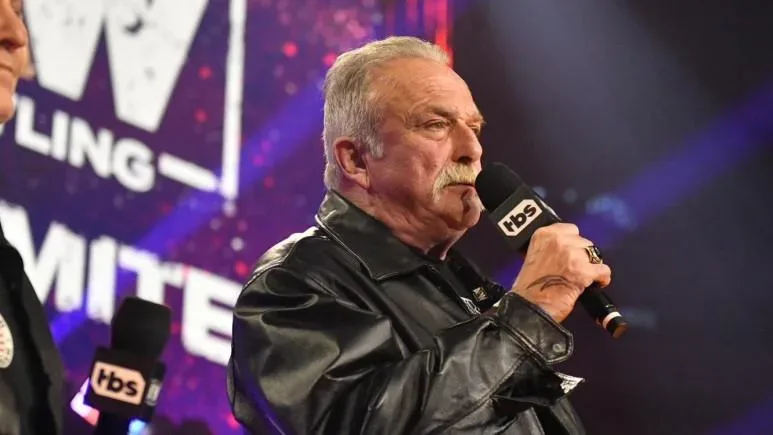
Jake “The Snake” Roberts has offered a measured assessment of his time working under Tony Khan in All Elite Wrestling, saying the company has a strong roster and a good overall product but suggesting that its talent could be utilized more effectively.
Roberts confirmed his departure from AEW in July 2026, closing a run that began in 2020. He arrived during the buildup to Lance Archer’s introduction to the promotion and became a prominent on-screen associate for Archer, lending his unmistakable voice, presentation skills, and decades of wrestling experience to the act.
Speaking on the Nick Club Wrestling Happy Hour with Nick Teodoro, Roberts was asked to compare his experiences working for WWE and AEW. In discussing the contrast between the two companies, the WWE Hall of Famer identified creative direction as the most notable difference and shared constructive criticism for Khan’s approach.
“There’s a lot of differences. Creative number one, no doubt. Tony Khan needs to loosen up the reins a little bit and take some advice. He’s got a good product. He’s got a lot of talent there. I think his talent can be used better. Just my own thoughts. I loved working for Tony Khan. They’ll wish you nothing but the best. He’s a sweet guy.”
For more background on this topic, read Bryce Remsburg Details the Steep Learning Curve of Refereeing for AEW Television.
Roberts Balances Criticism With Praise for Khan
Roberts’ comments were not framed as a broad dismissal of AEW or of Khan personally. Instead, he made a distinction between his opinion on the company’s creative process and his personal experience with its president. He said plainly that he loved working for Khan and described him as “a sweet guy,” while also maintaining that AEW’s depth of talent could be presented in a stronger fashion.
That balance is important in the context of Roberts’ remarks. Rather than pointing to a single storyline, performer, episode, or decision, Roberts spoke in broad terms about structure and creative leadership. His belief is that Khan should be more open to advice and should loosen his control over the creative reins. The comments reflect Roberts’ perspective after spending years in the wrestling industry and working across different eras of the business.
Roberts has firsthand experience with the demands of WWE, both from his original legendary in-ring career and from his later association with the company. His AEW run also gave him a view from inside a newer national promotion with an expansive roster, a different organizational identity, and a distinct weekly television environment. When he says “creative number one” is the major difference between the two settings, he is drawing on that unusually broad frame of reference.
An AEW Run That Began With Lance Archer
AEW brought Roberts in during 2020, when the company used his arrival to build anticipation for Lance Archer. The pairing was an immediate fit on paper. Archer entered AEW with a reputation as an imposing and destructive force, while Roberts had long been regarded as one of professional wrestling’s most distinctive talkers and most influential managers.
The association connected Archer with a wrestling figure whose legacy as “The Snake” remains central to the history of televised wrestling promos and character work. Roberts’ presence supplied Archer with an experienced mouthpiece and a presentation designed to underscore the danger around the newcomer’s arrival.
Over the years that followed, Roberts remained linked to Archer during his time in AEW. His role was different from the full-time in-ring identity that made him famous, but it still allowed him to contribute in an area where he has long been respected: communicating the stakes of a match, establishing a character’s edge, and adding gravity to an act through his delivery.
Roberts confirmed in July that his AEW tenure had come to an end. His new comments provide further insight into how he views the company now that he is no longer working there. Even with his stated concerns about creative control and roster usage, he did not portray the experience as a negative personal relationship with Khan or the promotion.
The Central Point: AEW’s Talent Depth
The heart of Roberts’ critique is his belief that AEW can get more from the wrestlers already under its banner. He emphasized that Khan has “a lot of talent there,” a point that acknowledges the breadth of AEW’s roster before raising the question of how that talent is deployed.
For a veteran such as Roberts, talent utilization encompasses more than merely appearing on a program. It can involve whether a performer’s strengths are clearly identified, whether their character has direction, whether rivalries build with consistency, and whether creative decisions give audiences a reason to remain invested from week to week. Roberts did not specify which wrestlers he believes should be positioned differently, nor did he offer a list of changes he would make. His comments stayed at the level of overall philosophy.
That restraint leaves his central message straightforward: he sees value in AEW’s personnel and believes additional input could help the company maximize that value. His call for Khan to “take some advice” is rooted in the idea that experienced voices can offer useful perspectives in a promotion filled with established names, developing talent, and a wide range of wrestling styles.
It is also notable that Roberts described AEW as having “a good product.” The phrase places his criticism in the context of potential rather than failure. He is not disputing that AEW has built something worthwhile; he is arguing that it could become more effective in the way it handles its available resources.
Roberts Returns to WWE
Elsewhere in the same interview, Roberts stated that he has re-signed with WWE. The announcement follows his July confirmation that he had departed AEW, marking a new chapter in his longstanding connection to WWE.
Roberts’ history with WWE is inseparable from his standing in wrestling. His body of work helped define an era, and his influence can still be heard in the way modern wrestlers approach promos, psychological storytelling, and character-driven presentation. A WWE Hall of Famer, he remains one of the most recognizable personalities to emerge from the business.
His renewed WWE deal also gives added context to the comparison he made between WWE and AEW. Roberts was not speaking as a distant observer of either company. He has worked in AEW in a managerial capacity, has now confirmed a return to WWE, and has spent a lifetime navigating the shifting creative realities of major wrestling promotions.
A Veteran Perspective Without a Bitter Tone
Professional wrestling is full of strong opinions about creative process, particularly from performers and managers who have seen different systems firsthand. Roberts’ remarks fit within that tradition, but his tone was notably even-handed. He offered criticism of Khan’s management of creative while preserving praise for Khan as a person and for AEW as a product.
“Just my own thoughts,” Roberts said after voicing his belief that AEW talent could be used better. That qualifier does not lessen the significance of the opinion, but it does make clear that he presented it as his own professional judgment rather than as a claim to speak for AEW’s locker room or staff.
For AEW, the remarks add another experienced voice to the ongoing conversation around creative direction and roster management. For Roberts, they underline that his departure did not erase his appreciation for the people with whom he worked. He may believe Khan should be more receptive to advice, but he also made it clear that he enjoyed the relationship and wishes the company well.
As Roberts moves forward following his AEW exit and his reported WWE re-signing, his comments offer a concise summary of his outlook: AEW has a good foundation, substantial talent, and room to improve how that talent is used. The critique comes from a wrestling mind with a long history of understanding how performers connect with audiences—and from someone who still speaks warmly about the AEW president he believes should consider more input.

Darryl Polo
Darryl Polo is a passionate wrestling fan covering WWE, AEW, TNA and beyond. He loves great rivalries, breakout stars and the moments that keep fans talking long after the bell. How we work.