
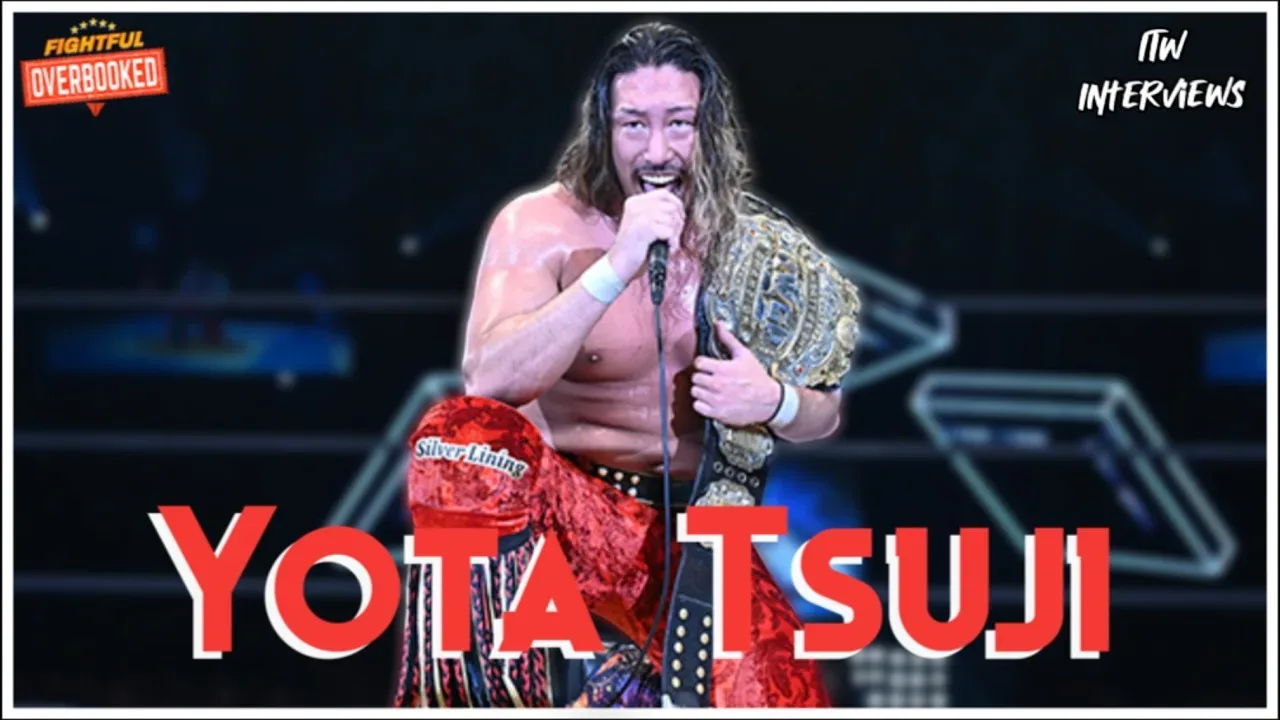
Yota Tsuji has offered a candid look at one of his off-duty routines while traveling internationally: making time for a casino visit.
The IWGP Heavyweight Champion discussed his enjoyment of gambling during a recent interview, explaining that he regularly visits casinos when he is abroad for wrestling events. Tsuji also recalled a particularly brief and expensive outing during his previous trip to the United States, when he was in Chicago for the G1 opener.
“So one of his routine when he goes to shows internationally is that he goes to casino and, you know, enjoyed it a little bit. So last time he came to US for the Chicago G1 opener, he went to casino and he lost about $1,000 within like 30 minutes. So he needed to bounce off kind of early. So I’m trying to get early bets this time.”
The story provides a lighter glimpse at Tsuji outside the ring, but it also reflects the realities of international travel for a wrestler carrying one of New Japan Pro-Wrestling’s most prominent championships. When major NJPW names make appearances in the United States, their schedules can include not only matches and promotional obligations, but also the limited personal time that comes with being away from home.
For more background on this topic, read Yota Tsuji Says Kenny Omega Title Match Could Redefine AEW-NJPW Relationship.
For Tsuji, a casino stop has become part of that experience. His Chicago visit, however, apparently did not develop into a long night. Losing roughly $1,000 within half an hour was enough for the champion to call it early, and he indicated that he hopes his next attempt will get off to a better start.
Poker and blackjack are Tsuji’s games of choice
When asked which games he prefers to play, Tsuji named two of casino gambling’s most recognizable options.
“Either poker or Blackjack.”
Poker and blackjack offer very different experiences, though both fit a competitor who is accustomed to making quick judgments under pressure. Poker is built around reads, patience, calculated risk and adapting to the decisions of other players. Blackjack, by contrast, moves at a faster pace and asks players to make repeated choices with incomplete information. Tsuji did not elaborate on whether he favors one game over the other depending on the trip, but he was clear that those are the tables he seeks out.
The comments are not connected to any in-ring storyline or championship issue. Instead, they reveal a personal interest that Tsuji pursues while traveling. It is an unusual detail for a wrestler whose public image is usually centered on his physical presence, confidence, athleticism and standing near the top of NJPW.
As IWGP Heavyweight Champion, Tsuji occupies a role that puts him at the center of attention whenever he wrestles for New Japan. Championship reigns bring increased scrutiny, particularly when a titleholder works outside Japan or takes part in appearances that expand NJPW’s presence with international audiences. Fans generally see the entrances, matches and post-match comments. Tsuji’s casino story instead captures the kind of unscripted travel memory that rarely becomes part of a wrestler’s standard public profile.
A familiar part of international wrestling travel
International appearances have long been a regular component of Japanese wrestling. NJPW talent travel to the United States for major events, tournament dates, special cards and collaborative opportunities, while wrestlers from elsewhere in the world also routinely head to Japan. Those trips can be demanding, with travel, time-zone adjustments, media work and the pressure to perform in front of an audience that may not see a particular wrestler often.
For established stars, the travel can also create brief windows to explore a city or spend time away from the wrestling environment. Tsuji’s comments suggest that a casino has become his preferred outlet during those windows. Chicago, a major destination for wrestling events and conventions, gave him the opportunity to do that around the G1 opener. The outcome was not the one he wanted, but the champion was able to laugh about the experience rather than present it as anything more than a frustrating loss on a night out.
His reference to trying to get “early bets” next time also points to a simple lesson drawn from the Chicago trip: if the first stretch at the casino goes badly, the visit may be over before it really begins. Tsuji did not specify when his next casino visit in the United States will take place, how much he plans to wager, or whether he sees poker or blackjack as the better way to reverse his fortunes.
What is clear is that the previous loss has not ended his interest in gambling. He continues to describe it as something he enjoys when working internationally, even after a result that would make plenty of visitors reconsider their plans for the evening.
Tsuji remains in demand beyond NJPW
The conversation also touched on Tsuji’s upcoming appearance with Major League Wrestling. Specific details about that appearance were not addressed in the discussion of his casino routine, but the planned MLW involvement is another indication of the champion’s reach beyond NJPW’s regular environment.
For a reigning IWGP Heavyweight Champion, outside appearances naturally carry additional significance. They introduce the titleholder to fans who may follow another promotion more closely, while also reinforcing the visibility of the IWGP championship outside of Japan. Tsuji’s work in the United States is therefore notable both as an individual opportunity and as part of the broader international movement of NJPW talent.
That context makes his remarks about travel especially interesting. The same U.S. trips that can place Tsuji in front of new audiences and create professional opportunities also give him a chance to indulge in a personal hobby. The wrestling side of the journey is high-profile, with the champion expected to represent NJPW at a top level. The casino side is far less formal, and, in Chicago at least, considerably less successful.
There was no indication that the $1,000 loss affected Tsuji’s wrestling commitments, and he did not frame the story as a serious problem. His description was simply a straightforward account of a short casino visit that went wrong quickly. The detail stands out because of the contrast: a champion accustomed to competing in high-pressure matches found himself on the wrong end of a fast run of luck away from the ring.
A small story that adds personality to a major champion
Wrestlers at Tsuji’s level are often discussed through the lens of title defenses, rivalries, tournament positioning and match quality. Those subjects remain central to evaluating the IWGP Heavyweight Champion. Still, comments such as these can add dimension to the public understanding of a performer.
Tsuji did not attempt to turn the casino loss into a dramatic tale. He shared the figure, the short time frame and the decision to leave early. In doing so, he gave fans a memorable travel anecdote that is easy to understand: the casino trip was meant to be a bit of fun, the losses mounted rapidly, and it was time to go.
His preferred games also fit the competitive spirit that follows professional wrestlers outside the ring. Poker and blackjack may be recreational interests rather than athletic contests, but both involve pressure, risk and the possibility that a single run can change the mood of the night. In Chicago, Tsuji’s run lasted about 30 minutes. On a future American visit, he appears ready to take another shot at improving that result.
For now, the IWGP Heavyweight Champion can add one expensive casino memory to the list of experiences from his international wrestling travels. Whether he finds better luck at the poker table or blackjack table next time remains to be seen.

Darryl Polo
Darryl Polo is a passionate wrestling fan covering WWE, AEW, TNA and beyond. He loves great rivalries, breakout stars and the moments that keep fans talking long after the bell. How we work.