
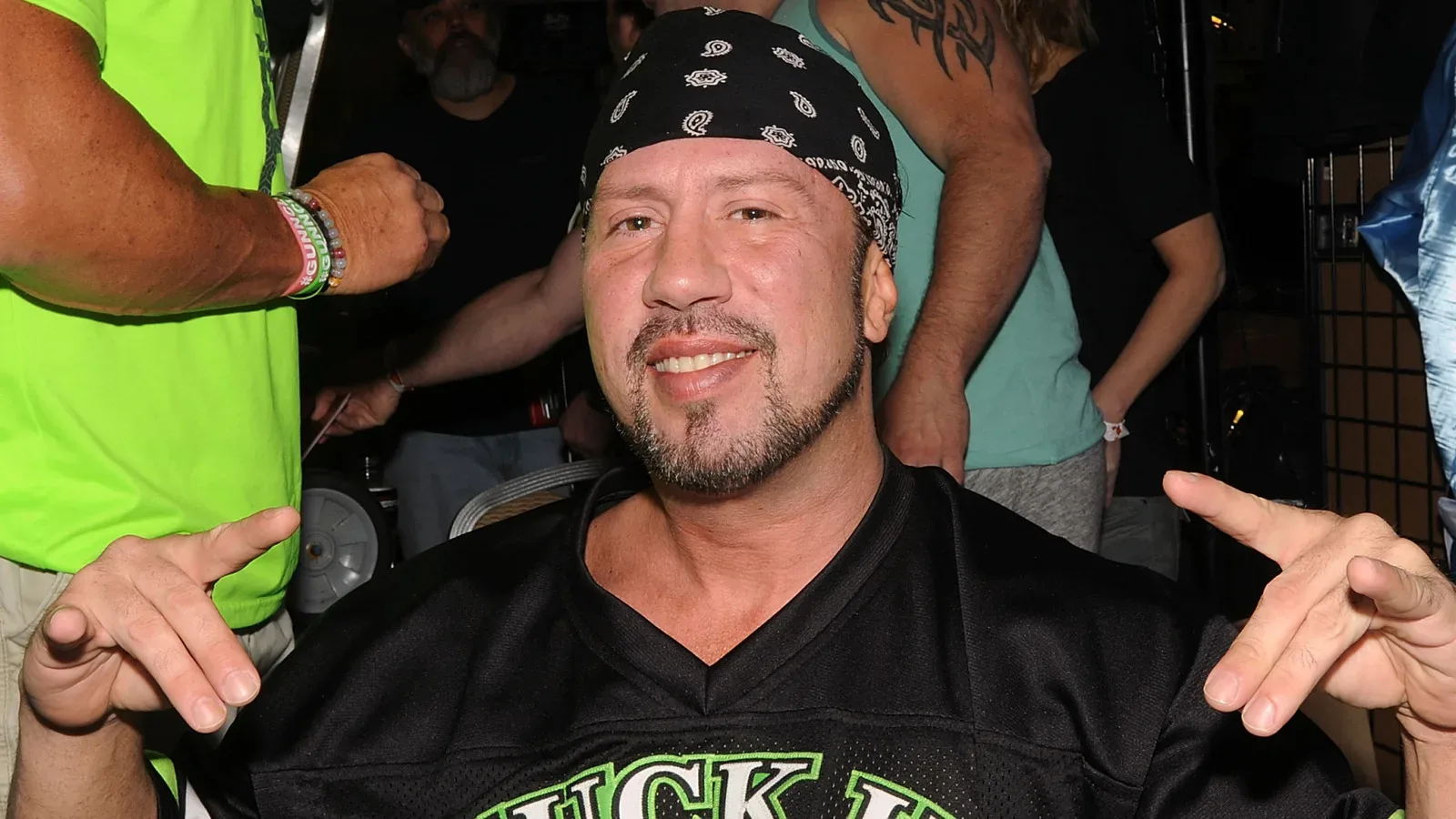
WWE Hall of Famer Sean Waltman has spoken candidly about the substance-abuse struggles that shadowed a significant period of his life, recalling the support he received from Paul “Triple H” Levesque and Vince McMahon when he was in need of treatment.
Waltman, whose career has included memorable runs as the 1-2-3 Kid, Syxx and X-Pac, discussed his recovery journey during an appearance on Six Feet Under with The Undertaker. The former WWE and WCW star said he is willing to address the hardest parts of his past because he believes sharing those experiences can be meaningful to people facing similar battles.
His story is a sobering reminder of an era in professional wrestling in which substance abuse was an all-too-common issue. Waltman was one of the most influential in-ring performers of the 1990s and early 2000s, helping redefine the role of smaller, high-speed wrestlers on a national stage. But the success, acclaim and major moments in his career existed alongside personal struggles that he has not attempted to hide.
A call for help
Waltman recalled reaching a point at which he contacted Triple H, his longtime friend and fellow D-Generation X member, in search of help. Triple H traveled to Los Angeles, but Waltman explained that addiction still had such a hold on him that even the intervention did not immediately put him on a stable path.
For more background on this topic, read Matt Cardona Says Wrestlers Must Create Their Own Path to Get Over.
“I remember there was one point where I called Paul [Triple H] for help, and he came out to LA,” Waltman said on Six Feet Under with The Undertaker.
Waltman said he disappeared for a period after that initial attempt to help him. He was eventually found and flown to Atlanta for treatment at a rehabilitation center. He credited both Triple H and McMahon with covering the cost themselves.
“Him and Vince [McMahon] paid for it out of their own pocket,” Waltman said.
The account illustrates the personal nature of the support Waltman received. Triple H and Waltman were closely connected well before their time together as members of D-Generation X, while McMahon was the longtime WWE chairman during many of Waltman’s biggest years in the company. Their willingness to intervene did not instantly solve Waltman’s problems, but it represented an effort to get him the care he needed at a desperate time.
Recovery was not a straight line
Waltman was equally clear that external support, while vital, could not by itself bring an immediate end to his addiction. He admitted that he was unable to make the rehabilitation stay work at that stage of his life and was removed from the program after using drugs while still receiving treatment.
That experience became part of a wider cycle of attempting recovery and relapsing. Waltman did not present sobriety as a simple matter of deciding to change one day. Instead, he described how addiction can persist even after a person recognizes the danger they are in and accepts that assistance is available.
“Even once you want [help], or you think you want it, or whatever, even then it’s... Man... It’s just sometimes you just got to go out and suffer some more,” Waltman said on Six Feet Under with The Undertaker.
It is a painful assessment, but one that reflects why Waltman has chosen to be frank about his past. There can be a tendency to view a trip to rehabilitation or an intervention from friends and family as a clean ending to a crisis. Waltman’s experience was more complicated. Treatment was offered, people who cared about him took action, and yet his struggle continued before he was eventually able to break away from the pattern.
Waltman also spoke about the idea of “rock bottom,” arguing from personal experience that the phrase can understate how much worse circumstances may become. He described a feeling that there were additional levels beneath what he had already considered his lowest point. The comment underscores the danger of waiting for a single dramatic moment to force change, as addiction can continue to take more from a person even after they believe they have already lost everything.
From groundbreaking star to WWE Hall of Famer
The contrast between Waltman’s professional legacy and his private hardships is striking. As the 1-2-3 Kid, he became an instant fan favorite after his upset victory over Razor Ramon in 1993. The win was one of the defining early moments of WWE’s Monday Night Raw era and helped establish Waltman as far more than an underdog novelty.
His athletic style, quickness and ability to make opponents look dangerous helped shape the expectations for an entire generation of wrestlers. Waltman later joined the New World Order in WCW as Syxx, becoming a key part of one of the industry’s most influential factions. His return to WWE as X-Pac then placed him in another landmark group, D-Generation X.
Within DX, Waltman was connected to Triple H in one of WWE’s most important creative and cultural acts of the late 1990s. Their friendship was built through years of shared experience in an industry that can be intensely demanding, both in the ring and away from it. That history adds important context to Triple H’s decision to respond when Waltman called for help.
Waltman was inducted into the WWE Hall of Fame as part of D-Generation X in 2019, a recognition of the group’s enormous impact on WWE’s Attitude Era. He had previously been inducted as a member of the nWo in 2020, making him part of two Hall of Fame factions. Those honors reflect his enduring importance to the wrestling business, even as he has continued to speak honestly about the difficult periods that accompanied his career.
Why Waltman continues to discuss his past
For Waltman, discussing addiction is not simply about revisiting old mistakes. He has said that the openness can help other people. That perspective is especially significant in professional wrestling, where public images can be closely tied to toughness, charisma and the ability to push through pain.
The culture around the industry has changed substantially over time, with greater discussion of wellness, mental health and substance-abuse treatment than there was during many of Waltman’s formative years. Still, stories like his make clear that recovery is deeply personal and rarely follows one predictable route.
Waltman’s comments also give credit to the people who attempted to stand beside him when he was at risk. Triple H’s trip to Los Angeles and the financial assistance provided by Triple H and McMahon did not immediately end the crisis, but Waltman’s willingness to recount the episode recognizes the importance of people taking action when someone asks for help.
Ultimately, Waltman said he endured repeated periods of rehabilitation and relapse before achieving sobriety. He is clean today, and his ability to speak about the journey with such candor offers a different kind of legacy alongside the championships, factions and historic moments that defined his wrestling career.
His message is not that recovery comes easily or that one intervention guarantees a lasting solution. It is that help can matter, setbacks do not necessarily have to be the end of the story, and people struggling with addiction can continue working toward a healthier life even after previous efforts have failed.
In pictures

Darryl Polo
Darryl Polo is a passionate wrestling fan covering WWE, AEW, TNA and beyond. He loves great rivalries, breakout stars and the moments that keep fans talking long after the bell. How we work.