
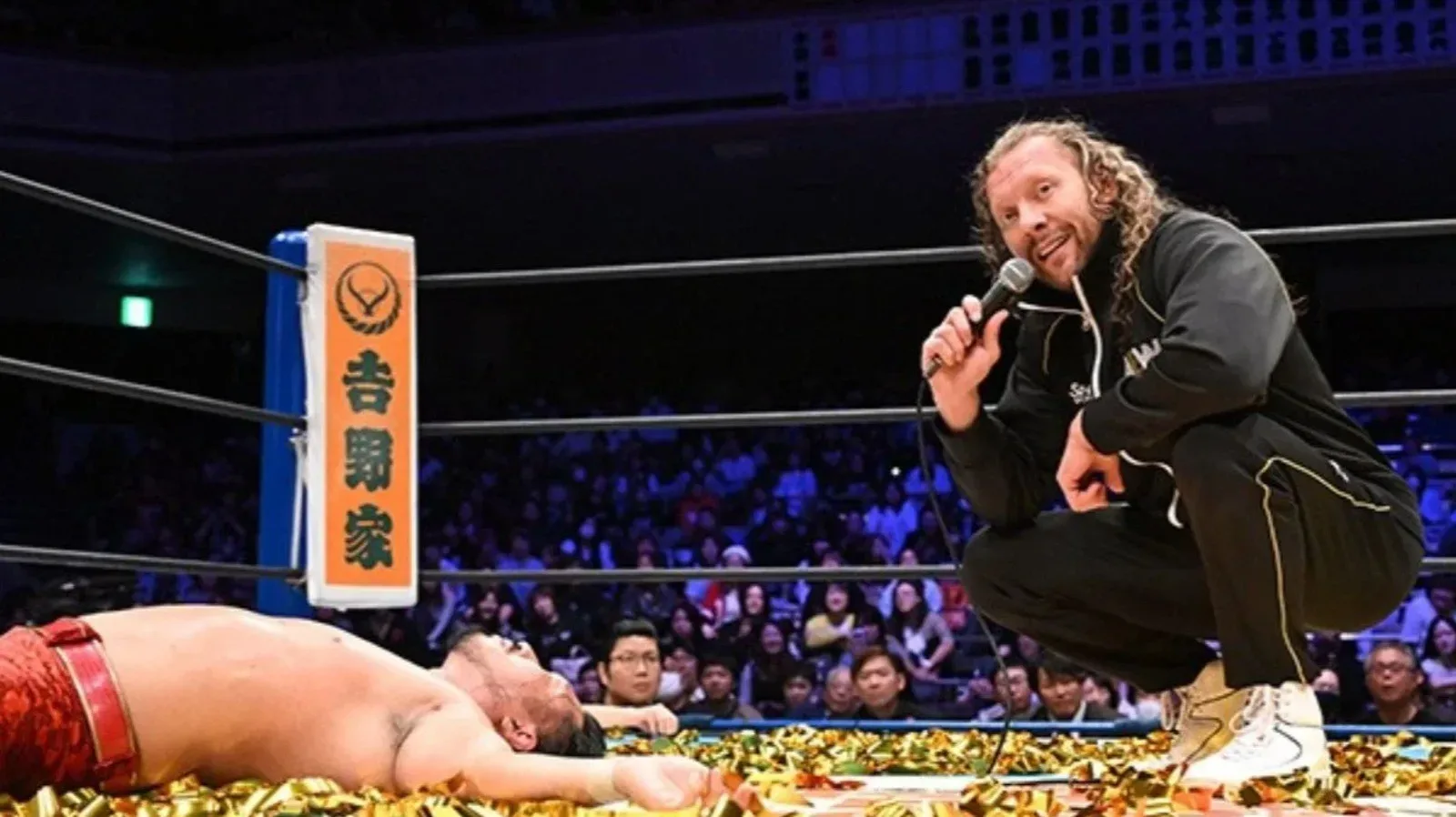
New Japan Pro-Wrestling’s Wrestle Kingdom 21 is taking shape as a major test of the company’s relationship with All Elite Wrestling, with several of AEW’s most recognizable names scheduled to compete at the Tokyo Dome on January 4. The matches themselves provide obvious marquee appeal, but the results may carry just as much significance for how both companies present their stars and continue their working arrangement into 2027.
At the center of the event is the IWGP Heavyweight Championship match between champion Yota Tsuji and Kenny Omega. It is a bout that puts NJPW’s emerging domestic centerpiece opposite one of the most internationally established wrestlers connected to the promotion. Elsewhere, Jon Moxley is set to meet Shingo Takagi, MJF will face Ryohei Oiwa, and AEW World Champion Will Ospreay is scheduled to wrestle Callum Newman.
The event will also include Gabe Kidd defending the IWGP Global Heavyweight Championship against Yuya Uemura. In the junior heavyweight tag title picture, Mistico and an as-yet-unrevealed partner will challenge Taiji Ishimori and Robbie X, along with champions Kosei Fujita and Robbie Eagles, in a three-way match for the IWGP Junior Heavyweight Tag Team Championships.
That collection of matches offers NJPW the chance to use elite outside star power without allowing the Tokyo Dome show to feel as though its own talent has been displaced. The difficult part is reaching an outcome that protects the value of AEW’s visiting names while advancing the identities, championship programs and long-term ambitions of NJPW’s roster.
For more background on this topic, read Wrestlers Saddened by NJPW Academy Closure, Though Some Saw It Coming.
A Potentially Even Split on a Crossover Card
A practical way to view the card is through a competitive balance between the two sides. With AEW wrestlers involved in multiple prominent bouts, an even division of victories would allow both companies to leave the Dome with meaningful successes. A three-wins-apiece distribution has been discussed as a logical framework, although the actual shape of the show will naturally depend on the stories NJPW and AEW intend to tell after January 4.
Some results would appear easier to project than others. Yuya Uemura defeating Gabe Kidd for the IWGP Global Heavyweight Championship would be a major NJPW-focused result and another potential step for Uemura. Kidd has become a defining personality in the Global title scene, but Uemura scoring a championship victory on the company’s largest stage would give NJPW a clear homegrown success to spotlight.
The junior heavyweight tag title match could offer another result that does not require an AEW representative to be beaten. Mistico and his mystery partner are positioned as the outside combination in the three-way bout, making it possible for either Fujita and Eagles or Ishimori and Robbie X to secure the decision without placing too much emphasis on Mistico’s team taking a loss. Three-way title matches often provide precisely that kind of flexibility, particularly on a card designed to serve several groups of talent at once.
On the AEW side, MJF’s meeting with Ryohei Oiwa has a straightforward dynamic. MJF is expected to put his self-described “Real” AEW World Championship on the line, giving the match an additional championship-related hook. Oiwa would gain substantially from a victory, but MJF winning would be consistent with his position and would preserve the immediate importance of the title he is carrying.
Ospreay’s status makes his match with Newman similarly important. If Ospreay remains the recognized AEW World Champion by the time Wrestle Kingdom arrives, having him lose to Newman could create complications for AEW’s own championship presentation. Newman is an ascending name with a major chance to prove himself, but a defending AEW World Champion losing in a non-title match at the Tokyo Dome would have obvious ramifications well beyond NJPW.
Moxley vs. Takagi May Be the Card’s Most Flexible Match
The non-title showdown between Moxley and Takagi may be the most difficult result to read. Both men have immense credibility, both are capable of headlining major events, and both can afford a loss more comfortably than many wrestlers on the show. Takagi has taken defeats to opponents positioned below him on cards in the past, while Moxley has repeatedly shown a willingness to lose when the business and the broader story call for it.
That flexibility could make the contest pivotal to the overall balance of the event. If the card is being structured around an equal outcome between NJPW and AEW, Moxley versus Takagi could become the bout that determines which direction the IWGP Heavyweight Championship main event goes. A Takagi win would strengthen NJPW’s side of the ledger and potentially leave room for Omega to defeat Tsuji. A Moxley victory could create more pressure for Tsuji to retain and give the home promotion its defining triumph in the main event.
Of course, Wrestle Kingdom is not simply a scorecard of AEW against NJPW. Takagi and Moxley are wrestlers whose reputations extend beyond a narrow interpromotional label, and their match can succeed regardless of who wins. Still, when so many visiting stars are involved at once, the overall perception of who was elevated and who was protected matters greatly.
The IWGP Heavyweight Championship Decision
Tsuji versus Omega is the match most likely to define the public narrative surrounding Wrestle Kingdom 21. Tsuji retaining would represent a powerful statement about NJPW’s confidence in him as its leading figure. Beating Omega, a wrestler with deep history in NJPW and global name recognition, would instantly strengthen Tsuji’s standing among domestic audiences and international fans alike.
The significance is heightened by Wrestle Kingdom being scheduled for network television in Japan. A victorious Tsuji in that setting would be more than a successful title defense; it would be a broad presentation of NJPW’s chosen top domestic star. The visual of Tsuji overcoming one of the most famous foreign stars in modern NJPW history could cement his role at the front of the promotion.
There is also a compelling business case for Omega winning the title. Omega’s profile could give NJPW a notable boost during the opening months of 2027, particularly if his championship reign creates new matchups and draws attention to the company’s schedule beyond the Tokyo Dome. He remains an unusually recognizable name for NJPW, with an established connection to the promotion’s audience and a history of major performances that helped expand its reach.
An Omega title win would not necessarily undermine Tsuji if it is used as the first chapter of a larger story. NJPW has successfully used a similar structure before. Hiroshi Tanahashi lost to Keiji Mutoh in their first major confrontation 18 years ago, only to later win the rematch and emerge as the unquestioned top babyface of the company. Tsuji pursuing Omega after a Wrestle Kingdom defeat could give NJPW a long-term arc in which the challenger grows through adversity before reclaiming the championship in a bigger emotional payoff.
That approach would require patience and a clear commitment to Tsuji’s eventual rise. A title change in the Tokyo Dome should never be treated as merely a short-term attraction. If Omega were to win, the follow-up would be crucial in determining whether the move becomes a business boost that also builds NJPW’s future or simply a momentary surprise.
Attendance Ambitions at the Tokyo Dome
NJPW is not expected to be chasing the extraordinary attendance achieved for Hiroshi Tanahashi’s retirement at Wrestle Kingdom 20 in January 2026. That event became the promotion’s highest-attended Tokyo Dome show since 1998, a landmark result fueled by the significance of Tanahashi’s farewell.
Still, surpassing 25,000 fans is an important target for Wrestle Kingdom 21. Wrestle Kingdom 19 drew just over 24,000 in 2025, and the expanded presence of AEW stars gives this year’s event a meaningful chance to clear that threshold. Omega, Moxley, MJF and Ospreay each bring individual appeal, while their involvement collectively makes the event feel larger and more internationally focused.
The key for NJPW is ensuring that added appeal translates into lasting momentum. A strong gate, a broad television audience and attention around crossover matches would be valuable. Yet the most productive outcome would be one that also sends viewers away invested in Tsuji, Uemura, Newman, Oiwa and the rest of the NJPW roster who will remain central to the company’s calendar after Wrestle Kingdom has ended.
Could More AEW Names Join the Show?
Adam Copeland and Mercedes Mone have both publicly expressed interest in wrestling at the Tokyo Dome, making them two obvious names to watch as Wrestle Kingdom 21 approaches. Mone has prior experience in the building, having wrestled Mina Shirakawa at Wrestle Dynasty in 2025. Copeland, meanwhile, has not yet performed at the Tokyo Dome and has identified the venue as an important career goal before his planned retirement in 2027.
Neither was announced for Wrestle Kingdom 21 at the November 3 Power Struggle event. That does not eliminate the possibility of late additions, but it means any appearance would alter an already carefully balanced card. Adding stars of Copeland’s or Mone’s stature would create new attraction value, while also introducing more questions over opponents, match placement and the distribution of wins between visiting talent and NJPW’s roster.
For now, the announced lineup already provides Wrestle Kingdom 21 with a uniquely consequential blend of championship stakes, established global stars and next-generation NJPW talent. The Tokyo Dome has long been where New Japan defines its direction. On January 4, the results involving AEW’s contingent may reveal just as much about that direction as the matches themselves.
In pictures

Darryl Polo
Darryl Polo is a passionate wrestling fan covering WWE, AEW, TNA and beyond. He loves great rivalries, breakout stars and the moments that keep fans talking long after the bell. How we work.