
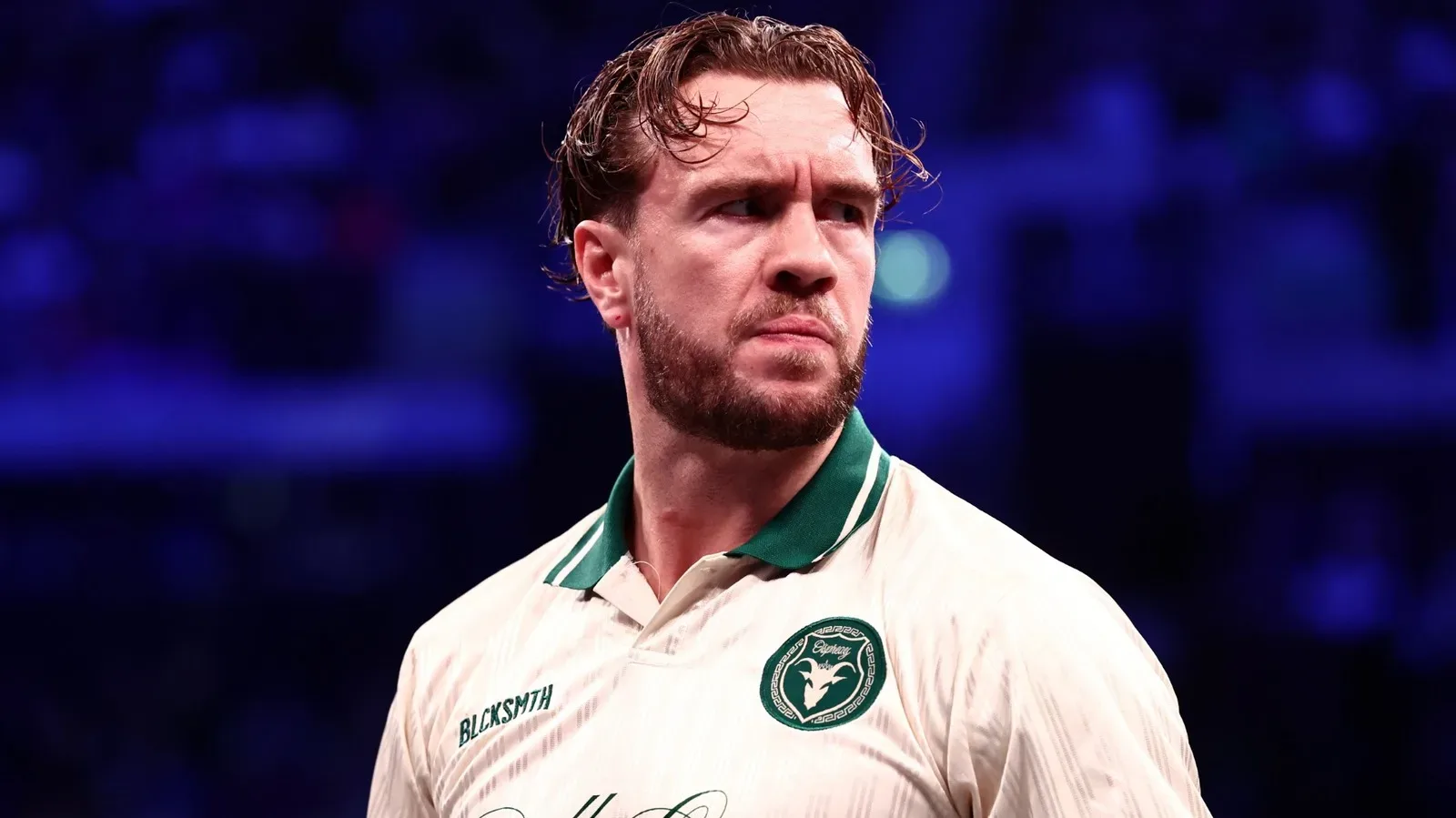
Will Ospreay has built a career around remarkable athleticism, speed and a willingness to take his in-ring performances further than most of his peers. Now AEW World Champion following his victory over Kenny Omega at All In: London, Ospreay is widely regarded as one of professional wrestling's most physically gifted performers. Yet the confidence associated with his present-day image did not come easily.
In a recent discussion about his training journey, Ospreay spoke candidly about dealing with body dysmorphia during his time in New Japan Pro-Wrestling. He traced those feelings back to 2017, when he was 24 years old and had reached a major milestone by winning the IWGP Junior Heavyweight Championship. While the title win represented a major career breakthrough, Ospreay said he was also struggling with insecurity about his appearance and felt intimidated by the gym environment.
His comments offered a more personal look at a period often remembered for his rapid rise as one of NJPW's defining junior heavyweight stars. Ospreay was already earning attention for his spectacular matches and daring style, but he said the perception of his own physique and criticism from online observers had a significant impact on him.
“I first discovered my body dysmorphia, and I won the IWGP Junior Heavyweight Championship, in October of 2017,” Ospreay said. “And I remember one tweet was saying ‘he is in the worst shape,’ and they were right ... I didn't understand working out, why you do sets, and why you focus on one body part, and macro counting.”
For more background on this topic, read The rules became part of the rivalry.
A major milestone accompanied by private insecurity
Ospreay's 2017 Junior Heavyweight Championship victory was an important step in a career that would eventually take him from the NJPW junior division to the top of the heavyweight scene, and later to AEW. But his recollection makes clear that professional success did not remove the internal pressure he felt.
He explained that he had gone to the gym without a true understanding of how to train effectively. At the time, concepts such as structured sets, isolating or targeting particular muscle groups, and tracking nutrition through macros were unfamiliar to him. The lack of knowledge was compounded by embarrassment. Rather than asking other wrestlers for advice, he said he kept his uncertainty to himself because he felt foolish around people he viewed as more physically developed.
“I would go to the gym, but I really didn't know what I was doing, I'll be honest, and I was so embarrassed to ask the boys, they're all jacked, I felt like such an idiot, to try and (ask) ‘could I workout with you?’ so I never went to the gym.”
That admission addresses a common part of gym culture that can be especially difficult for athletes and performers. Wrestling places extraordinary emphasis on presentation. In addition to the physical demands of live matches, wrestlers work under the constant scrutiny of crowds, cameras and social media. For someone whose job already requires a high degree of public exposure, admitting that help is needed can feel far harder than simply attempting to figure things out alone.
Ospreay did not present his story as one in which a championship win suddenly solved everything. Instead, he described a process of learning the basics, developing confidence in asking questions and finding a healthier, more informed path toward the physical change he wanted.
The training plan that gave Ospreay direction
While wrestling in New Zealand, Ospreay came across weekly workouts from MusclePharm. He decided to commit to following those sessions over a six-week period. The decision gave him a concrete starting point after a time in which he had felt overwhelmed by the details of training and hesitant to seek guidance.
Ospreay said he began seeing substantial results quickly, gaining muscle mass within roughly four weeks. More importantly, the early progress helped him understand why a consistent and organized routine mattered. What had once seemed confusing became more manageable once he approached the gym with a plan rather than trying to navigate it without support.
“I just said, alright, I'm gonna do these for the next six weeks,” Ospreay said. “Within four weeks, I packed on so much muscle mass, and I started to understand how it worked.”
After that initial period, Ospreay invested in personal training with Iestyn Ress. He credited Ress with breaking down the nutritional and training concepts that had previously felt inaccessible. Ospreay specifically highlighted macro counting, calorie tracking, and the logic behind dividing workouts into push and pull days.
For a wrestler whose schedule has involved demanding travel and a punishing match style, finding a sustainable understanding of exercise and food was a meaningful development. Ospreay's story is not simply about adding muscle or responding to comments about his body. It is also about gaining education, structure and the confidence to engage with an area that had made him feel vulnerable.
“And then I invested in a personal trainer, his name is Iestyn Ress, and he really broke down macro counting, and how to count my calories, and why I do a push day and a pull day,” Ospreay said. “It was so simple, but I just never had the courage to ask for help.”
Why Ospreay believes asking for help matters
The most lasting point in Ospreay's reflection was not centered on a particular workout, diet plan or visual result. It was the value of being willing to ask for assistance. His earlier reluctance stemmed from comparing himself to others in the gym and assuming that everyone around him had already mastered the same issues with which he was struggling.
He now sees that assumption differently. Ospreay encouraged others who feel intimidated in training spaces to recognize that many of the people around them may be confronting similar doubts, pressures and personal challenges.
“And I always tell people now, the people in the gym, they're fighting the same demons that you're probably fighting.”
That message carries weight coming from an athlete whose physical evolution has been visible across nearly a decade on major wrestling stages. Ospreay's current presentation is far removed from the uncertainty he described from his early NJPW run, but he was open that the transformation was not built solely through willpower. It involved education, consistency and accepting direction from someone with more experience.
It also provides useful context for the evolution of his in-ring career. Ospreay first became internationally recognized as a junior heavyweight whose breathtaking aerial offense set him apart. As his body and training approach changed, he developed into a more complete heavyweight-level performer, retaining his speed while adding power and durability to his arsenal. That development helped make him one of the central figures in modern wrestling before he arrived in AEW.
From NJPW prospect to AEW World Champion
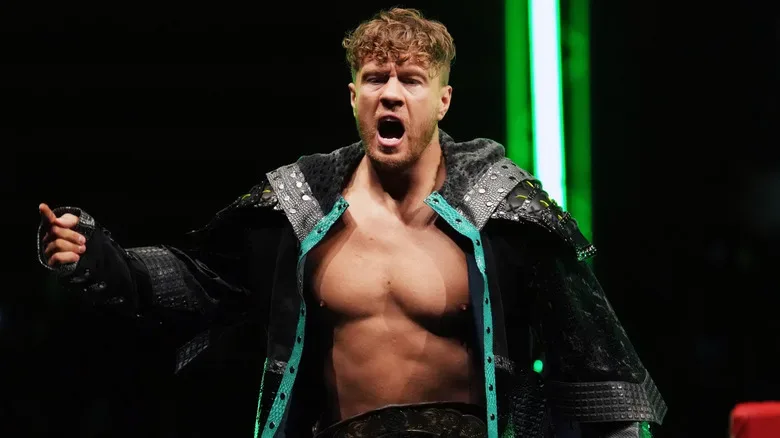
Ospreay's recent championship success adds another chapter to that progression. At All In: London last weekend, he defeated Kenny Omega to become AEW World Champion. The result placed one of the company's most acclaimed in-ring talents at the top of the men's division and capped a major moment in his AEW tenure.
The show also featured a particularly eventful championship landscape. Six other title changes took place at All In, including Mercedes Mone becoming AEW Women's World Champion. Darby Allin also defeated Kevin Knight to win the TNT Championship, doing so with help from his former tag team partner Sting.
Those title developments ensured that All In: London will be remembered as a significant night for AEW, but Ospreay's victory stands out because of the long path behind it. The wrestler who once felt too embarrassed to ask others how to train has become a world champion at the center of one of the industry's biggest promotions.
Ospreay's account does not reduce body dysmorphia to a simple obstacle that can be eliminated by getting stronger or following a better routine. His remarks instead underline how difficult it can be to confront insecurity, particularly in an environment where appearance is often judged openly. His own turning point came when he moved past the fear of looking inexperienced and allowed himself to learn.
For Ospreay, the lessons from that period remain clear: progress began with a structured effort, but it became sustainable when he sought help. As AEW World Champion, he is now speaking about that experience from a position of immense professional accomplishment while acknowledging the private doubts that accompanied his earlier rise.
In pictures
Darryl Polo
Darryl Polo is a passionate wrestling fan covering WWE, AEW, TNA and beyond. He loves great rivalries, breakout stars and the moments that keep fans talking long after the bell. How we work.