
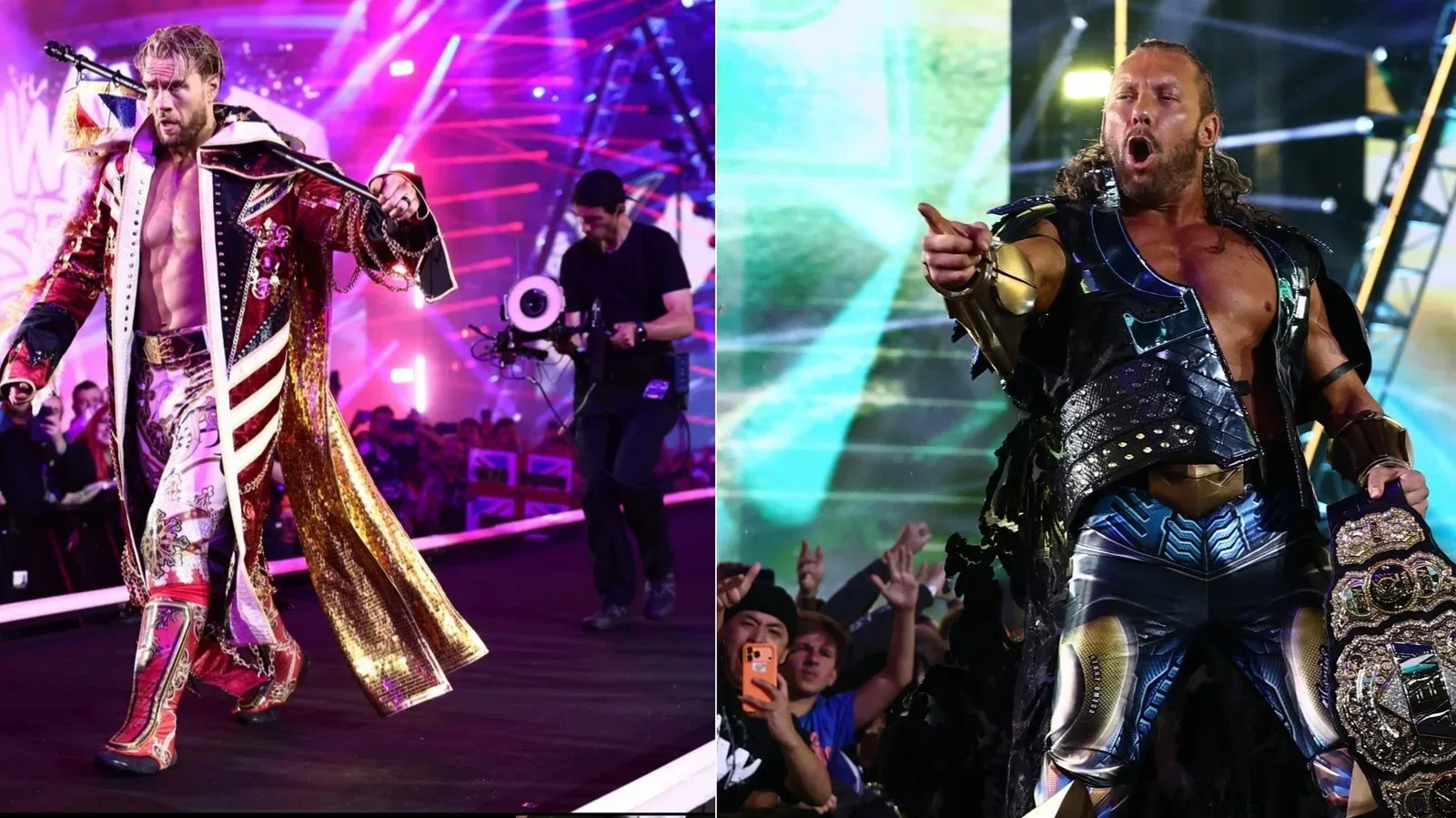
AEW All In delivered a pair of entrances designed to feel much larger than the walk to the ring. Will Ospreay and Kenny Omega were each presented with elaborate, career-spanning sequences that drew on their histories, their closest allies, and the paths that made them two of the most influential wrestlers of their generation.
Both presentations were reportedly driven by substantial input from the wrestlers themselves. Tony Khan wanted Ospreay and Omega to receive entrances that would stand apart as special, memorable moments, and the execution reflected two very different personal journeys. Ospreay’s entrance centered on the people and rivalries that shaped him in the United Kingdom and beyond, while Omega’s looked back across a career intertwined with Japan, his longtime friends, and the larger-than-life aesthetic that has long defined his work.
For an event built around spectacle, the entrances functioned as more than production elements. They were statements of identity. Ospreay was presented as a performer carrying the weight of his past and the support of those closest to him, while Omega’s package embraced the creative world and relationships that have been central to his own rise.
Will Ospreay’s entrance brought together his real-life and in-ring history
Ospreay’s All In entrance became one of the most discussed pieces of presentation from the show. It began with a video montage tracing his career before the scene shifted backstage. Ospreay walked through the backstage area to The Who’s Baba O’Riley, accompanied by Callum Newman, Francesco Akira, and HENARE.
The walk was constructed as a journey through Ospreay’s wrestling life. Along the way, he encountered figures described as ghosts of his past: Zack Sabre Jr., Michael Oku, Ricochet, Aussie Open, and Swerve Strickland. Each name carries a distinct connection to Ospreay’s career, whether through major matches, formative periods, tag-team history, or rivalries that helped define his reputation as one of professional wrestling’s most dynamic athletes.
The sequence also did not limit itself to wrestling history. Jon Moxley handed Ospreay a United Kingdom flag, providing a visual reminder of Ospreay’s roots before he embraced his wife, Alex Windsor, ahead of the final walk to the ring. The inclusion of Windsor gave the moment an unmistakably personal dimension, blending the performer’s public career with a relationship that exists well beyond storyline presentation.
The reported objective behind the entrance was to include people closest to Ospreay in both real life and wrestling storyline. Khan and Ospreay reportedly worked on the concept throughout the week leading into All In. That level of preparation is evident in the number of connections packed into the sequence. Rather than simply assembling recognizable faces, the presentation aimed to show the many stops, allies, opponents, and emotional anchors tied to Ospreay’s climb.
It was a particularly fitting approach for Ospreay because his career has always been marked by movement between scenes and promotions. His journey includes prominent work in the British wrestling landscape, high-profile international rivalries, championship pursuits, and close relationships formed across different locker rooms. The entrance used that varied history as part of the story rather than treating it as background information.
There was also an important balance in the staging. The appearances gave viewers a sense of nostalgia and recognition, but the focus remained on Ospreay. Every encounter led back to the same idea: the wrestler walking toward the ring was shaped by all of those connections, yet still had to make the final journey himself.
Creative recognition for the Ospreay montage
Ospreay publicly credited Mike Mansury for the video montage that accompanied his entrance. Mansury, however, gave credit to Phill Ada for the work. That exchange highlights how a major wrestling entrance often depends on collaboration between talent, production leadership, editors, and the many people responsible for making a concept translate on screen.
The montage and backstage walk were complementary pieces. The video established the broad emotional framework, while the live sequence made those ideas tangible through the people positioned along Ospreay’s path. It is one thing to tell an audience that a wrestler’s career has been long, difficult, and meaningful; it is another to let the audience see reminders of those chapters appear in real time.
AEW has frequently used video production to supplement its biggest match presentations, but the Ospreay entrance stood out because it framed the wrestler’s career as a continuing story. The visual language was not just about hype. It was about memory, legacy, and the personal cost of reaching a moment as significant as All In.
Kenny Omega’s presentation leaned into his own world
Omega also received an entrance built around career reflection, although its tone and influences were distinctly his own. His special video package included clips from throughout his career and was narrated by Japanese voiceover artist Kenta Miyake. Omega then entered to music from My Hero Academia, a choice that aligned with the anime and video-game-infused sensibility that has been a recognizable part of his presentation for years.
He was joined on the way to the ring by the Young Bucks, Brandon Cutler, and Michael Nakazawa. The group represented some of Omega’s longest-standing professional connections. Their presence reinforced the sense that this was not simply an individual entrance, but a celebration of a shared creative and wrestling history.
Omega was reportedly very hands-on in developing the presentation and brought numerous ideas directly to AEW’s production crew. The finished product was said to be highly personal to him, which makes sense considering how many individual elements were involved. The narration, the career footage, the musical selection, and the people at his side all pointed toward a version of Omega that was crafted around his specific tastes and experiences.
For Omega, presentation has long been part of the performance. His biggest entrances and video packages have often incorporated references that speak directly to the audience familiar with his interests, his time in Japan, and his approach to wrestling as a form of heightened storytelling. Using a Japanese voiceover artist and My Hero Academia music did not feel detached from his wrestling persona; it emphasized elements that have been visible in his work for much of his career.
The involvement of the Young Bucks, Cutler, and Nakazawa carried similar meaning. Omega’s career cannot be separated from the creative partnerships he built with them. Their appearance made the entrance feel rooted in friendship and collaboration, echoing the way their collective work has influenced modern wrestling presentation.
All In treated entrances as part of the main-event experience
The reported hands-on involvement from both Ospreay and Omega speaks to a broader truth about major wrestling events: an entrance can be as important to the audience’s emotional investment as the opening bell. On a show as large as All In, the goal is not only to put wrestlers in the ring. It is to make their arrival feel consequential.
Ospreay’s concept was grounded in the people who witnessed and shaped his journey. Omega’s concept was grounded in the artistic influences and trusted collaborators that define his own body of work. They arrived at similar destinations through different creative routes, with each entrance making a case for the wrestler at its center.
Neither sequence needed to tell viewers every detail of either man’s history. Instead, both used carefully chosen symbols. The United Kingdom flag, Windsor’s embrace, and the appearances by Ospreay’s past opponents and allies condensed years of experience into one walk. Omega’s narrated career footage, anime music, and longtime companions did much the same through a different cultural and visual language.
Those choices helped turn the entrances into moments with lasting value beyond the immediate match. They gave fans a way to look back on Ospreay and Omega’s respective careers while also recognizing that both performers remain active creators of their own stories. At AEW All In, the production did not merely introduce two stars. It gave each of them an opportunity to show the audience where they came from, who stood beside them, and what their journeys mean to them.
Keep reading on SmackDownOnYou
In pictures
Darryl Polo
Darryl Polo is a passionate wrestling fan covering WWE, AEW, TNA and beyond. He loves great rivalries, breakout stars and the moments that keep fans talking long after the bell. How we work.