
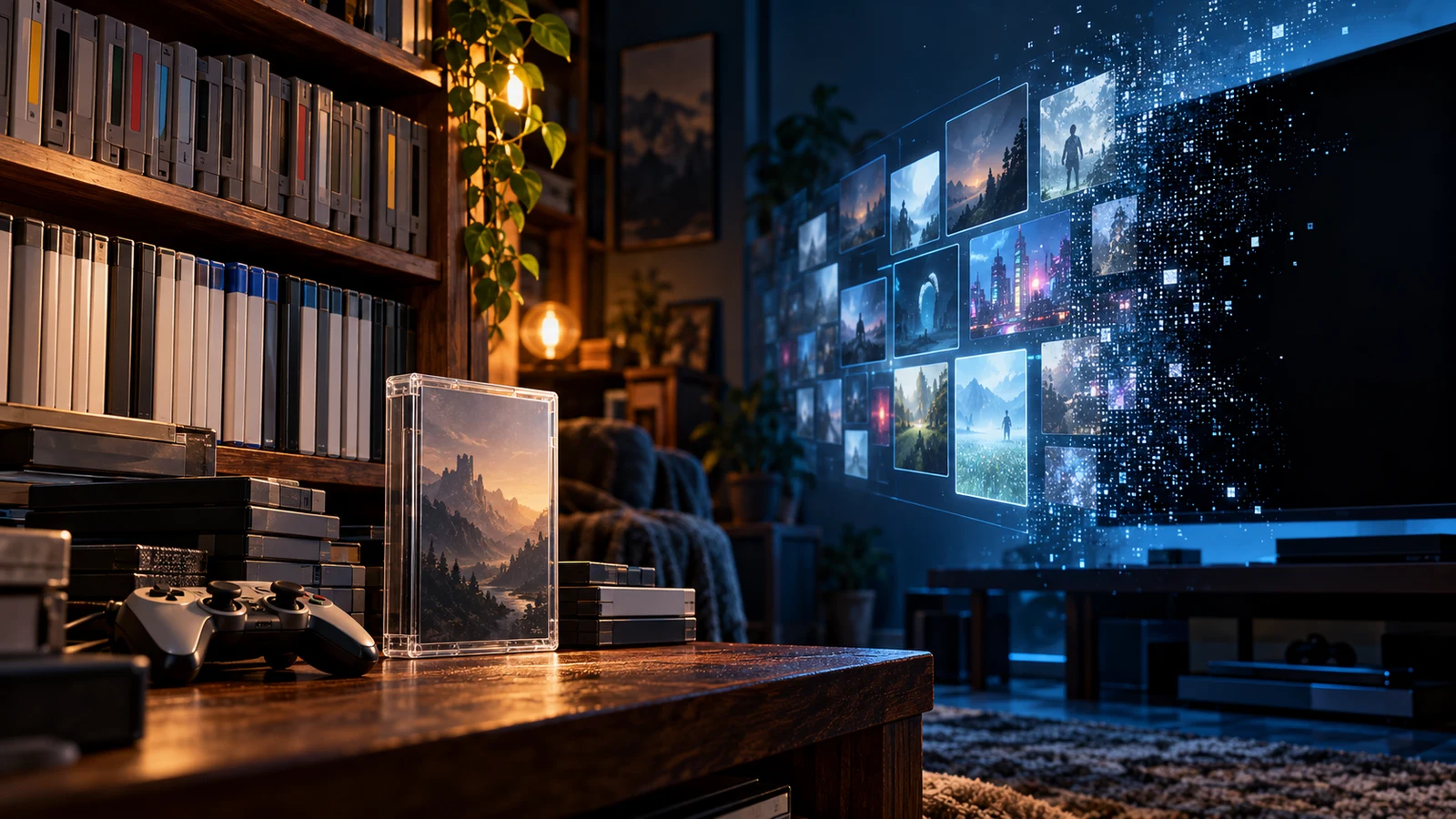
Wrestling fans understand the difference between a live moment and the record left behind. A match may survive through footage, photographs, ticket stubs, programs, and memories, while rights and distribution determine what can be watched later. Wrestling video games present a related tension: a title may be fondly remembered, but remembering it is not the same as being able to boot its particular release again.
Digital distribution is valuable here. It lets fans buy and try games without tracking down aging discs or hardware, and it can deliver updates that improve a release. Yet a platform library can be tied to accounts and store support. A physical wrestling game gives a fan a box, artwork, and perhaps a locally playable build that can be kept or passed along. That still does not guarantee every feature survives. Downloadable characters, patches, music, account checks, and online modes may depend on services outside the case. A disc is one part of the experience, not a promise that every mode will remain intact.
The collector's side matters as well. Different printings, manuals, promotional inserts, and special-edition items record how a game was presented to fans at its release. A sealed copy preserves a particular object; an opened complete copy may reveal more about how players actually encountered it. Neither should be confused with owning the underlying creative work or controlling the future of its online services.
Joking Joystick's wider argument for preserving physical games is ultimately about options, not rejecting downloads. It asks publishers to say what is truly on the disc, what needs a server, and what happens when support ends. That is a familiar question for fans who care about wrestling history: the spectacle deserves to be enjoyed now, but its record should not depend entirely on one storefront staying open forever.

Darryl Polo
Darryl Polo is a passionate wrestling fan covering WWE, AEW, TNA and beyond. He loves great rivalries, breakout stars and the moments that keep fans talking long after the bell. How we work.