
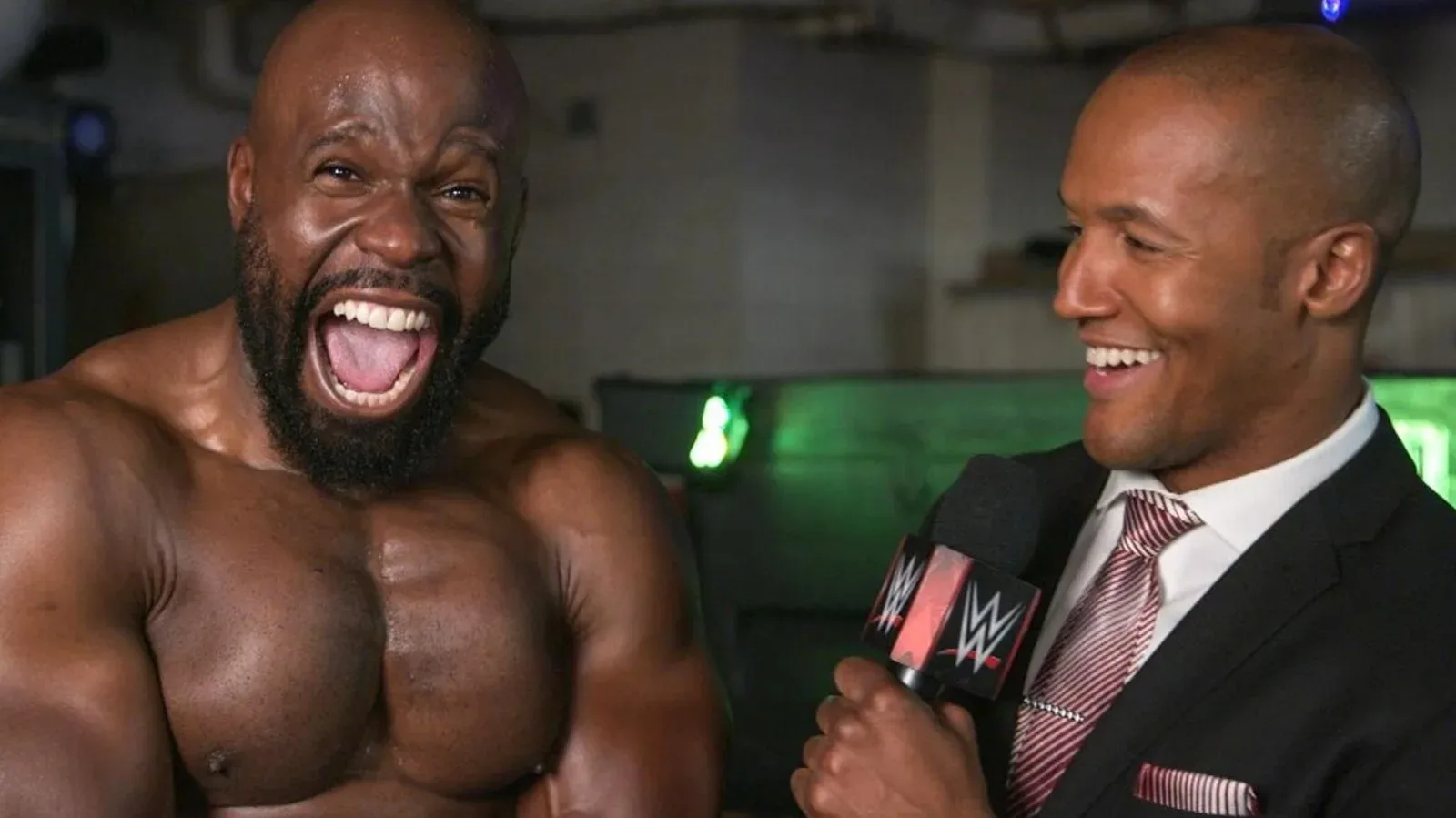
Uhaa Nation, known to WWE audiences as Apollo Crews, has opened up about the circumstances surrounding his WWE release and the emotional reality that followed it.
Speaking on Insight, Nation recalled receiving the call while he was attending his son’s basketball practice. While a release is never an insignificant moment in a wrestler’s career, he said he had begun to sense what was coming days earlier. A decision that he would not be needed for SmackDown after WrestleMania week convinced him that the next call would carry much bigger news.
Nation explained that the timing was especially noticeable because he had been brought to Las Vegas for WrestleMania-related appearances. That was a change from the previous two WrestleMania periods, when he said he had remained at home and had not been brought in for media work or other appearances. Being included in the WrestleMania-week activity was positive, but it did not lead to a continued role on television once the event was over.
“I was at my son’s basketball practice, and that week I kind of had an idea because it was WrestleMania week and I hadn’t been doing anything on TV,” Nation said. “And I got called in to do some appearances at WrestleMania, which was pretty cool because I think the two years before that I just stayed at home for both WrestleManias, where I didn’t even go to do any media, no appearances, anything like that.”
For more background on this topic, read JBL Calls Vince McMahon the Best Producer He Ever Worked With.
For a talent whose schedule can change rapidly, WrestleMania week can be an unusual period to assess one’s standing. The company’s biggest annual event comes with a heavy demand for promotional appearances, media obligations, community outreach, and other work beyond television matches. Nation was grateful to be part of those activities in Las Vegas. Still, once he returned home, the message he received from WWE travel gave him an immediate feeling that his status had changed.
He said he got home on the Wednesday following WrestleMania and was told that he would not be required for that week’s SmackDown. In his mind, that was the sign he had been waiting for. Rather than treating it as a routine travel adjustment, he expected that a release call would follow that Friday.
“So, I was out in Vegas for Mania, get home, I think it was Wednesday after Mania, I got a call from travel, and they said that I’m not needed for SmackDown this week, so I’ll be staying home,” Nation said. “And at that moment, I instantly knew. I was like, ‘Okay, Friday, they’re going to call me and this is going to be it.’”
Anticipation Changed The Initial Reaction
The former Apollo Crews said the release itself did not land with the immediate emotional force he may have expected. Because he had already spent time anticipating the possibility, he was not blindsided by the message in the way some people might be. The expectation did not remove the significance of the moment, but it influenced how he reacted when the call finally came.
Nation’s comments draw a distinction between knowing something may happen and fully dealing with what it means after it does. He said he did not spend much time dwelling immediately after the call. Instead, he found ways to direct his focus elsewhere, including physical training and the broader process of understanding himself apart from the WWE environment.
That process can be particularly complex for wrestlers whose identities, routines, travel, and professional goals are deeply tied to a single promotion for years. A release does not simply end a weekly work schedule. It can create a sudden break from the structure of television production, locker-room life, travel planning, and the constant pursuit of the next opportunity. Nation indicated that he pushed himself physically as part of his effort to move forward, while also looking at who he was outside the role he had occupied in WWE.
His reaction was not presented as one of indifference. Rather, Nation described a delayed and more practical form of emotional processing. He knew he had feelings to work through, but daily family life did not allow him to retreat completely from the world around him.
“I didn’t even really like think too much [after the phone call from WWE]. It didn’t hit me like how I expected,” he said.
Balancing A Career Change With Family Responsibilities
Nation stressed that the circumstances were different because he was not only confronting a professional disappointment as an individual. He was also a father and husband with responsibilities that continued regardless of what had happened in his wrestling career. That made the emotional side of the release more difficult to navigate, even if he was not overwhelmingly emotional at the outset.
His call came at his son’s basketball practice, a setting that underlined the contrast between an uncertain professional moment and the ordinary responsibilities of home life. Nation did not have the option of disconnecting from everything and focusing only on his own reaction. Family life kept moving, and he had to find a way to process the news while continuing to be present for the people closest to him.
“And it was hard [to deal with the emotions] because I had a real life, you know, it wasn’t just me by myself where I could just sit in a room and be like, you know, depressed or whatever, or let me deal with all these emotions on my own,” Nation said.
That perspective is central to how Nation described the period after his release. The uncertainty of a wrestling career is often discussed in terms of television opportunities, contracts, and future bookings. Nation’s comments instead focus on the personal adjustment involved when a major professional chapter closes. In his case, he had already seen warning signs in the change to his post-WrestleMania schedule, but anticipating the news did not mean there was no emotional work left to do.
He said he was not overly emotional after being released, and he believes that having time to foresee the decision made the initial impact easier to handle. The feeling of being prepared, at least to some degree, separated the experience from a complete shock. Yet the process still required him to confront questions about identity, purpose, and how to continue forward outside WWE.
Uhaa Nation Looks Beyond The Apollo Crews Chapter
Nation’s use of the name Uhaa Nation also reflects the larger transition now taking place in his career. WWE fans came to know him as Apollo Crews, while Uhaa Nation is a name closely connected with another part of his professional identity. Moving beyond a WWE run can involve more than deciding where to wrestle next; it can also mean reclaiming or reshaping a presentation that existed before a wrestler arrived on a major company platform.
No details were provided about Nation’s next in-ring destination or future plans. His discussion was centered on the release itself, the signs that preceded it, and the personal response that followed. The absence of a dramatic immediate reaction does not diminish the weight of the change. Instead, Nation described a measured response from someone who felt the call was coming and then had to deal with what it meant in real life.
His account also illustrates why roster moves can be difficult to reduce to a simple professional update. For fans, a release can be an announcement followed by speculation over potential destinations. For the wrestler involved, it can arrive between family commitments and force an adjustment to a way of life that has been built around a demanding profession.
Nation had a sense that WWE’s decision was near once he was removed from the SmackDown travel plans following WrestleMania. When the release call arrived, he was prepared enough that it did not hit him as hard as he expected. But he still had to work through the emotional consequences while remaining a husband, a father, and a person trying to define the next stage of life beyond WWE.
In pictures

Darryl Polo
Darryl Polo is a passionate wrestling fan covering WWE, AEW, TNA and beyond. He loves great rivalries, breakout stars and the moments that keep fans talking long after the bell. How we work.