
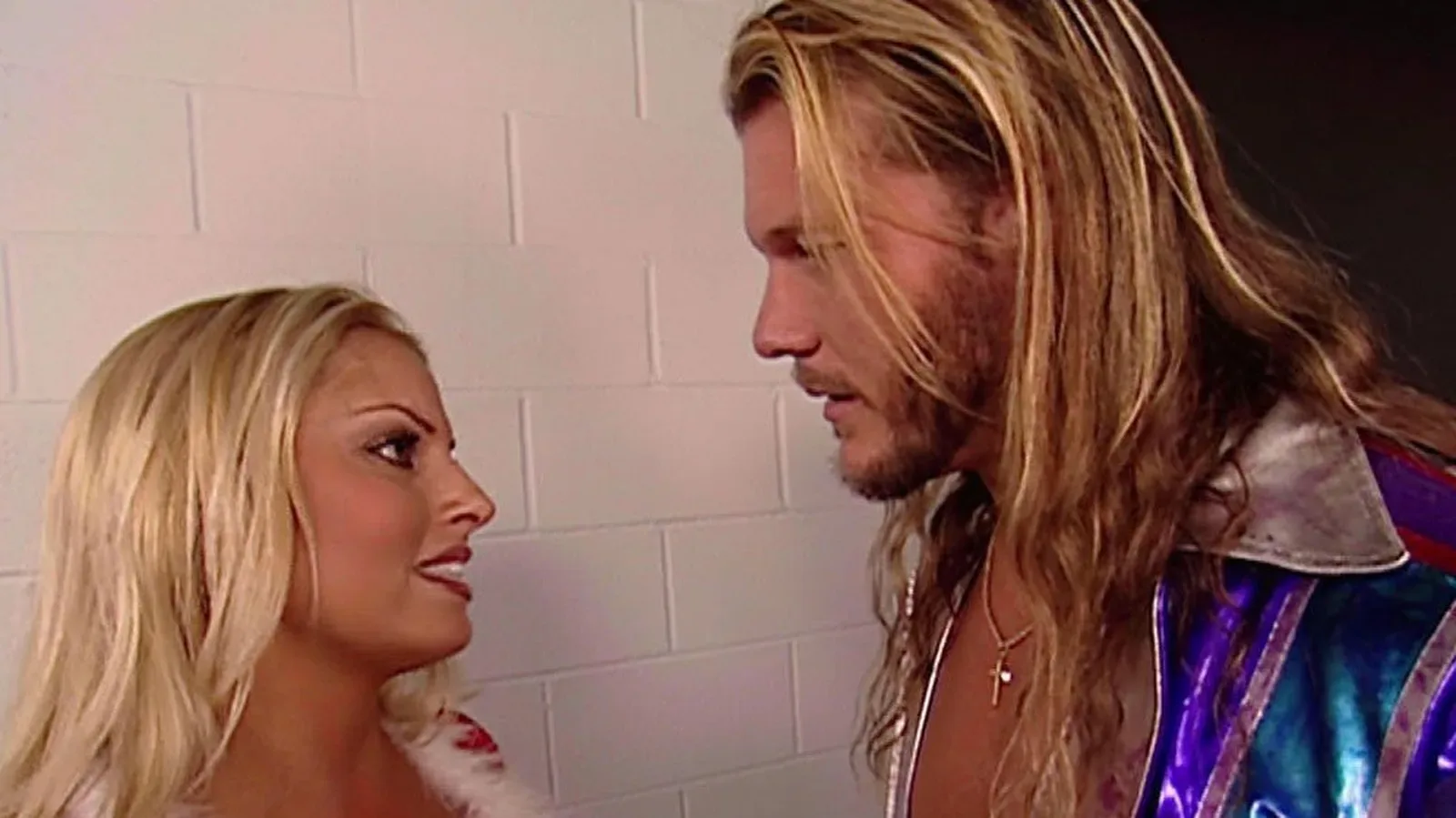
Trish Stratus has looked back on the creative beginnings of WWE’s memorable 2003 “Battle of the Sexes” program, revealing that she and Chris Jericho were the driving force behind the idea.
The WWE Hall of Famer built a career around major women’s division rivalries and championship moments, becoming a seven-time Women’s Champion during WWE’s Ruthless Aggression era. But the storyline involving Stratus, Jericho, Christian and Lita gave her a different kind of opportunity. It mixed comedy, romantic tension, betrayal and intergender competition across an extended arc that continued well beyond its first major match.
For Stratus, the appeal was not simply appearing in another high-profile WWE segment. She and Jericho were friends behind the scenes and wanted to find a story that would credibly place their characters on screen together.
“Let’s talk about the... Battle of the Sexes... That was contrived by us,” Stratus said. “We were just friends backstage, right, so, we were like, ‘How do we work together? How can we do that?’ And so, we had to put something together that would make sense for these characters to then come together.”
For more background on this topic, read Netflix VP Says WWE Standards Talks on Blood and Language Are Infrequent.
That goal produced a storyline that began with Jericho and Christian making on-screen comments about pursuing Stratus and Lita after a bet. The premise quickly gave the women an opening to challenge the two men directly. Rather than letting the comments stand, Stratus and Lita told Jericho and Christian to back up their talk in the ring.
The result was an intergender tag team match at Armageddon 2003, where Stratus and Lita faced Jericho and Christian. The match was framed as a significant attraction for the period, putting two of WWE’s biggest women’s stars opposite two established male stars in a rivalry built on character conflict as much as physical competition.
Stratus and Lita fought hard in the highly anticipated encounter, but Jericho and Christian ultimately prevailed. Christian scored the deciding pinfall over Stratus, ending the Armageddon match in favor of the male team.
That outcome did not close the book on the Battle of the Sexes. In Stratus’ view, the storyline’s staying power was part of what made it meaningful. What began as a way for two real-life friends to collaborate became a longer-running WWE issue involving changing loyalties, romance, heartbreak, deception and escalating violence among all four participants.
“It made sense,” Stratus said. “And the next thing you know, we put this cool storyline [together] that to this day, is talked about.”
A Storyline Built Around Character Logic
Stratus’ comments underline an important part of how the angle was constructed. The concept was not merely to put popular names into an intergender match for its own sake. Stratus and Jericho first had to identify a reason their WWE characters could intersect, then build outward from that foundation.
Christian and Lita made that possible. Jericho and Christian already had the cocky, antagonistic presentation needed to make the initial premise work, while Stratus and Lita were credible enough as stars and rivals to challenge them. The pairing also created multiple directions for WWE to explore after the first confrontation. Each participant could affect the others’ relationships, allegiances and motivations.
That kind of structure mattered because the story did not end with a simple win or loss at Armageddon. The initial tag match established the conflict, but the fallout gave WWE material for an additional year. The four performers moved through a range of developments that included love, disappointment, deceit and confrontations that became increasingly physical.
For Stratus, that extended life is central to what makes wrestling storytelling stand out. A match can create an immediate reaction, but a strong narrative can remain in fans’ minds long after the event itself. The Battle of the Sexes angle was able to do both: it offered a featured match at a WWE pay-per-view, then used the result and the relationships around it to keep the audience engaged.
Why Armageddon 2003 Still Stands Out
The Armageddon bout remains the focal point of the program because it brought the central conflict into the ring. Jericho and Christian had been challenged to prove themselves after their comments, while Stratus and Lita had an opportunity to answer them directly in front of a WWE audience.
Intergender wrestling stories require a particular balance. The personalities involved need to make the conflict believable, and the match has to support the tone of the larger angle rather than feel detached from it. The Stratus-Lita versus Jericho-Christian match had that built-in context. Fans understood the tension between the teams before the bell rang, and the finish created a clear consequence without ending the story’s broader possibilities.
Christian pinning Stratus was particularly important to the narrative because it gave the men a definitive victory while leaving room for the women to continue pursuing the issue. A clean conclusion might have wrapped up the feud quickly. Instead, the loss became another chapter in a program that had more emotional and interpersonal turns still to come.
The match also placed Stratus and Lita in a prominent setting at a time when both were among the defining figures in WWE’s women’s division. Their presence ensured the story had stakes beyond a novelty attraction. They were not incidental characters in a program centered on Jericho and Christian; they were essential to its premise, its match and its aftermath.
Stratus and Jericho’s Backstage Friendship Became On-Screen Material
Stratus’ recollection adds a personal layer to the angle’s history. Her friendship with Jericho did not automatically mean WWE had a ready-made storyline for them. They had to figure out how an alliance, rivalry or shared program could fit their established personas. That creative question—how to make a collaboration make sense—became the starting point.
It is a reminder that some enduring wrestling angles begin with performers identifying untapped chemistry and then finding a character-driven route to use it. Stratus and Jericho saw the possibility of working together, but the eventual program did not rely on them simply appearing side by side. It expanded the cast, set up a conflict involving Christian and Lita, and gave the story a path to develop over time.
The resulting rivalry also showed the value of flexibility in WWE storytelling. At first, the hook was the challenge between two women and two men. But the concept had enough layers to evolve. Once the four characters were connected, the story could move into romantic complications, damaged trust and retaliation. That kept the issue from being defined solely by one match at one event.
A Lasting Chapter of WWE’s Ruthless Aggression Era
Nearly all major WWE eras are remembered through a combination of title reigns, landmark matches and character stories. The Battle of the Sexes storyline belongs in the latter category. It was an angle built around recognizable personalities, an easy-to-understand initial provocation and a payoff that allowed the participants to continue interacting long after Armageddon.
Stratus’ career contains no shortage of acclaimed feuds and championship accomplishments, so it is notable that she still points to this program as an example of wrestling storytelling she values. Her comments make clear that the satisfaction comes from the entire process: recognizing the chance to work with Jericho, creating a scenario that fit the characters, and seeing the finished product remain part of fan conversation.
Jericho, Christian, Stratus and Lita each brought distinct strengths to the program. Together, they created an angle that could shift from humorous bravado to personal conflict and in-ring confrontation without losing the audience’s understanding of what was at stake. The Armageddon 2003 match gave the rivalry its first major payoff, but the story’s continued evolution is why it remains memorable.
For Stratus, the Battle of the Sexes was proof that a wrestling angle can start with a simple backstage creative discussion and grow into something far more lasting. What began with two friends asking how they could work together became one of the more frequently remembered multi-person stories of its WWE era.
In pictures

Darryl Polo
Darryl Polo is a passionate wrestling fan covering WWE, AEW, TNA and beyond. He loves great rivalries, breakout stars and the moments that keep fans talking long after the bell. How we work.