
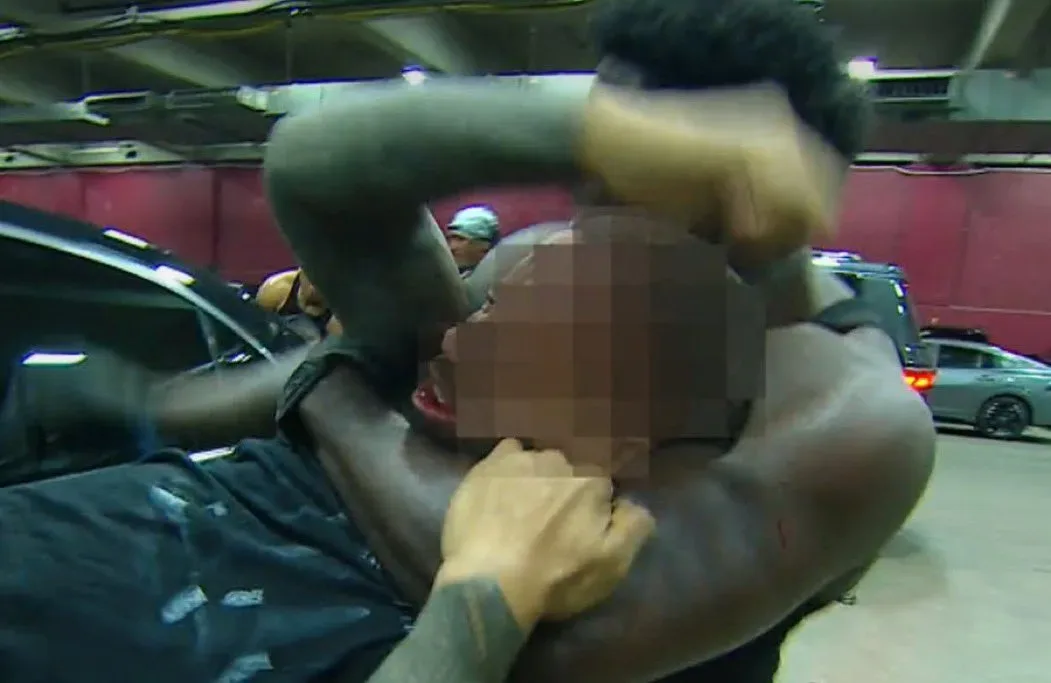
Netflix vice president of global live sports and entertainment Gabe Spitzer says the streaming service does not frequently have conversations with WWE about limits on blood or profanity, even as some viewers have voiced frustration with instances of visual blurring and edited language on WWE Raw.
Spitzer discussed Netflix’s relationship with WWE during an appearance on the Sports Media podcast. Nearly two years into the agreement, he described WWE as a major early live-entertainment partner for Netflix and said the company is pleased with what it has seen from Raw in the United States as well as the broader WWE offering in international markets.
In the United States, Netflix is the weekly home of Raw. Outside the U.S., Netflix carries WWE programming in most markets around the world. That difference has become a central part of how Netflix evaluates the partnership: the established American audience has delivered as anticipated, while the international side is viewed as an area with significant room to expand.
Netflix pleased with WWE results
Spitzer credited WWE leadership, including Paul Levesque, Lee Fitting and Nick Khan, while discussing the company’s first major live sports-entertainment arrangement. He said Netflix expected WWE’s dedicated audience to follow Raw to the platform in the United States, and that the program has met the service’s expectations.
For more background on this topic, read Blake Monroe Celebrates First WWE Action Figure, Teases a New Entrance Concept.
“We’re almost two years in and this was our first big live sports entertainment deal,” Spitzer said. “I’ve been a fan for a long time. Great partners over there with people like Paul Levesque, Lee Fitting, and Nick Khan. They’ve been great partners. We’re thrilled with the results so far.”
Spitzer said the weekly nature of Raw and the intensity of its existing following gave Netflix confidence that the audience would arrive on the service. The show has averaged roughly 2.4 million global views per week, a steady figure that has helped establish its place within Netflix’s live programming plans.
He emphasized that the growth opportunity extends beyond simply retaining WWE’s traditional audience. Netflix and WWE are looking at ways to create stronger awareness in different countries, particularly as WWE takes premium live events, televised shows and major matches to more markets around the globe.
“We knew in the US, with something like Raw, having that every week, there was going to be that passionate and loyal fanbase that was going to show up,” Spitzer said. “They have come in expected ways over to Netflix. It ticked every metric we hoped for on the US side.”
International expansion remains a key focus
The international component of the WWE deal has given Netflix a much broader role than it has in the United States. While American subscribers receive Raw, viewers in most international territories have access to WWE’s full slate of programming through Netflix. Spitzer said that reach has made international growth the most encouraging surprise of the relationship so far.
WWE has continued to stage events in markets across Europe and Australia, while also planning a major Raw in Mexico. Italy was specifically cited as an example of a country coming online as part of the Netflix-WWE arrangement before WWE held a significant premium live event there.
For Netflix, those moves are not simply about placing a WWE event in a new location. They also provide an opportunity to introduce the product to viewers who may not already be committed weekly fans. Spitzer said the conversations between the two sides have included identifying countries where WWE can increase interest and determining how the companies can collectively support that rise in viewership.
“The place where we’ve been surprised, in a good way, that will continue to grow is outside of the US,” Spitzer said. “That’s really where we see the potential and continue to grow this partnership.”
He added that WWE’s international touring schedule has become a useful part of the strategy, pointing to the company’s recent activity in Europe and its planned return to Australia. The ability to align live events, weekly television and Netflix promotion gives both companies additional ways to reach audiences in regions where WWE is seeking to establish a larger footprint.
The central objective is not only to serve the fans who already watch WWE, but to bring new viewers into the product. That goal is especially relevant internationally, where Netflix can promote WWE within a platform that already has an enormous subscriber base and a wide range of entertainment programming.
Blood and profanity are not a frequent point of discussion
One issue that has drawn attention from portions of the WWE audience is Netflix’s handling of content that approaches or crosses traditional broadcast boundaries. Some fans have objected when blood has been blurred or when language has been altered, arguing that such edits can interrupt the presentation of a segment or reduce the impact of an angle.
Spitzer was asked directly whether Netflix has discussions with WWE about excessive blood or cursing. His response indicated that those conversations are not common, while acknowledging that content still operates within ratings standards.
“Not often,” Spitzer said. “Obviously, there are ratings standards that anyone has to adhere to. We’re Netflix so we try to be a little looser on that.”
That answer draws an important distinction between Netflix setting regular creative mandates for WWE and Netflix maintaining standards that apply to the service’s programming. Spitzer did not suggest that blood or strong language has become a routine point of conflict between the partners. Instead, he characterized those matters as relatively infrequent compared with the larger promotional and logistical discussions taking place around the weekly program.
Netflix’s approach has nevertheless been visible to fans at certain moments. On the August 31 edition of WWE Raw, the service blurred the bloody faces of The Usos following a backstage attack. The moment renewed criticism from viewers who have noticed blood blurring, altered profanity, or edits involving material perceived as pushing content boundaries.
The company’s position, as outlined by Spitzer, is that Netflix aims to be more flexible than many traditional television outlets while still recognizing that ratings standards exist. That does not guarantee every violent image or every piece of language will air without alteration. It does, however, suggest that Netflix does not see constant intervention on those issues as the defining feature of its WWE relationship.
Promotion and advance notice are bigger conversations
Spitzer identified a different area as a more meaningful part of Netflix’s ongoing communication with WWE: advance notice about major locations and marquee matches. For a weekly show such as Raw, knowing about a major championship match or a particularly important episode several weeks before it takes place allows Netflix to market it beyond WWE’s own programming.
He referenced an upcoming Raw that will lead to a major Roman Reigns championship match following a tournament, as well as a year-opening Bron Breakker vs. CM Punk match. In those situations, Netflix wants enough time to build awareness around an episode and use its promotional reach to attract both regular WWE viewers and potentially new subscribers.
“The ability for us to promote three to four weeks out for a big Raw, starting off the year with Bron Breakker vs. CM Punk, that’s the type of conversation we’ve had,” Spitzer said. “If there’s a big matchup, can you let us know three, four, five weeks in advance so we can start promoting that outside of the PLEs. They’ve been very receptive of that.”
That emphasis reflects the practical demands of a streaming partnership built around live weekly programming. Premium live events naturally arrive with long promotional runways, but a major episode of Raw can also become an event if Netflix has adequate time to spotlight it across the platform. WWE’s willingness to provide that information earlier gives Netflix more opportunities to turn a match announcement into a broader marketing push.
For WWE, the arrangement offers a powerful distribution partner that is invested not only in carrying the programming but also in amplifying individual episodes and international expansions. For Netflix, WWE provides recurring live content, a loyal audience and a global brand with the ability to create event-level moments throughout the year.
Spitzer’s comments portray a partnership centered on audience growth, event promotion and international expansion rather than frequent disputes over blood or language. Fans may continue to debate specific edits when they occur, particularly in moments such as The Usos’ backstage attack, but Netflix’s executive leadership sees the larger story as the continued development of WWE’s worldwide audience on the platform.

Darryl Polo
Darryl Polo is a passionate wrestling fan covering WWE, AEW, TNA and beyond. He loves great rivalries, breakout stars and the moments that keep fans talking long after the bell. How we work.