
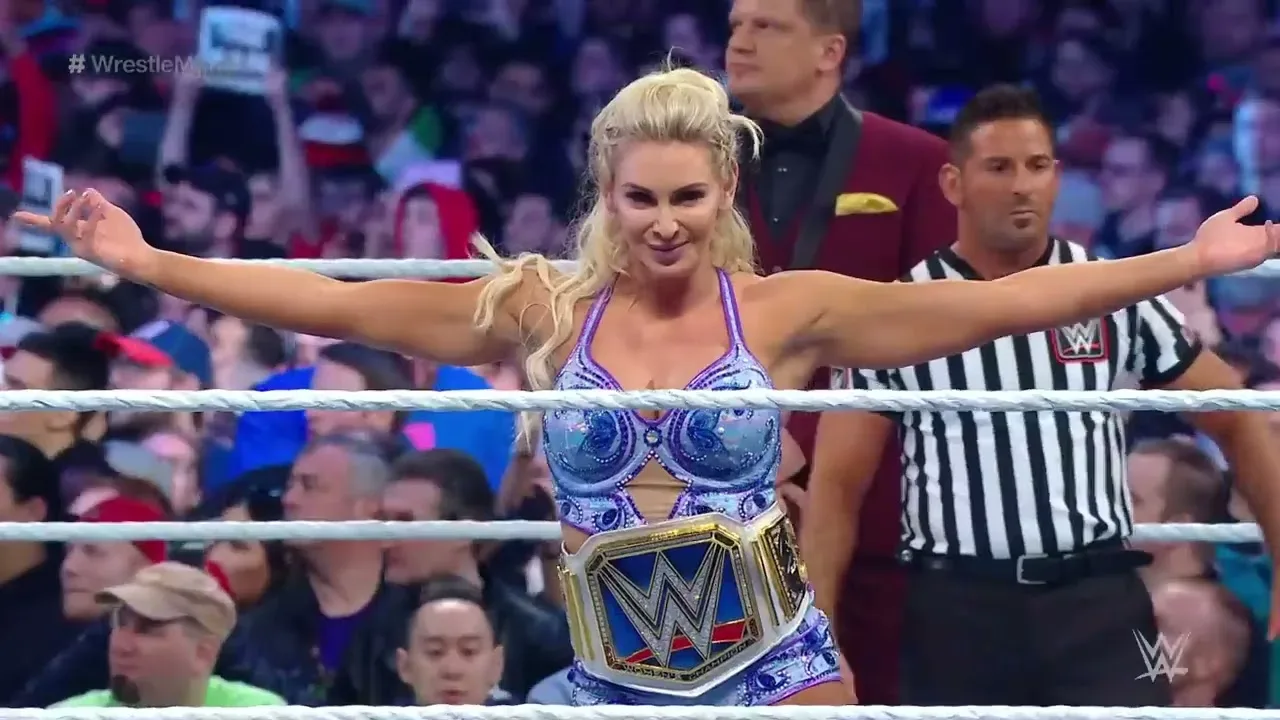
Charlotte Flair has offered a blunt assessment of one of the most consequential matches in WWE history, saying the WrestleMania 35 main event involving herself, Becky Lynch and Ronda Rousey was not a good match and could have been laid out differently.
The April 2019 bout at WrestleMania 35 marked the first time women closed WWE’s biggest annual event. Flair, Lynch and Rousey competed in a Winner Takes All triple threat match for the Raw and SmackDown Women’s Championships, giving the match enormous historical weight before the bell ever rang. Lynch ultimately defeated Rousey to leave with both titles, but the contest has remained a subject of discussion because of its placement at the end of a lengthy show and its controversial finish.
Speaking on Insight with Chris Van Vliet, Flair did not try to present the match as something better than it was. While she recognized the power of the occasion and the presentation surrounding it, she also pointed directly to the timing of the match and the overall length of WrestleMania 35.
“It’s not good, and it was very late. Entrance is iconic. That was a long WrestleMania. I just think we could have structured it differently,” Flair said.
For more background on this topic, read Charlotte Flair Sets Her Sights on 15th WWE World Title in 2027.
A historic moment with difficult circumstances
The distinction between the historical significance of the WrestleMania 35 main event and Flair’s evaluation of the match itself is important. The match broke a major barrier for WWE’s women’s division, as Lynch, Flair and Rousey became the first women to be placed in the final match position at WrestleMania. Their entrances and the scale of the moment reflected how far women’s wrestling had moved within WWE over the preceding years.
But a landmark booking decision does not automatically guarantee ideal conditions for the performers or the audience. WrestleMania 35 went deep into the night, with the triple threat taking place after midnight in New Jersey. By that point, fans had already watched an extensive event, and fatigue became an obvious factor around the closing stages of the card.
Flair’s comments underline that issue. She specifically called the entrance “iconic,” separating the visual impact and importance of the presentation from her opinion of the bout’s quality. At the same time, she made clear that the late hour and the wider construction of the show affected her view of what happened once the match began.
Her assessment also does not diminish the place WrestleMania 35 occupies in WWE history. Rather, it highlights the challenge of balancing a defining cultural and company moment with practical concerns such as pacing, crowd energy and match layout. For a match carrying the pressure of being the first women’s WrestleMania main event, every one of those elements was amplified.
Flair questions the early match dynamic
When asked what she would change, Flair focused on the way the three competitors were positioned during the match. Rousey entered the contest as a dominant force, while Flair and Lynch had a deeply established rivalry of their own. Flair suggested that dynamic may have been better served with a different approach early in the bout.
“Honestly, so Ronda was the killer, right? But Becky and I had this, obviously butting heads. Just due to how much bigger I was than Ronda, not taking away from what she can do. I don’t know if I would have had Becky and I working together up front so much. I don’t know.”
That answer offers a specific window into Flair’s thinking without presenting a definitive rewrite of the match. She did not lay out an alternate sequence or claim there was one simple solution. Instead, she questioned whether the early cooperation between herself and Lynch was the strongest choice given the relationships and physical contrast among the three wrestlers.
The central tension entering the match had multiple layers. Rousey was the Raw Women’s Champion and was portrayed as an imposing threat. Lynch was the challenger whose rise had made her one of WWE’s most popular stars. Flair, meanwhile, had been added to the bout after her own long-running conflict with Lynch. That meant the match had to address both the threat posed by Rousey and the personal animosity between Flair and Lynch.
Flair’s point is that leaning too heavily on an early alliance between her and Lynch may not have made the most of that tension. Her remarks are framed as a retrospective consideration rather than a declaration that the entire match should have been rebuilt from the ground up. Still, it is a notable critique from one of the three performers at the center of such a major WWE milestone.
Triple threat matches often require temporary partnerships, since two competitors can attempt to neutralize a third. Yet the effectiveness of that device depends on the characters involved and the story being told. In this case, Flair believes the existing friction between her and Lynch may have warranted a different balance, particularly with Rousey presented as the dangerous opponent they needed to overcome.
The finish remains a talking point
The WrestleMania 35 ending has been discussed almost as much as the match’s historic placement. Lynch pinned Rousey with a crucifix pin, and the referee completed the three-count even though Rousey’s shoulder was up. The visual created immediate questions about the finish and has remained a memorable part of the match’s legacy.
Flair was asked whether she would have changed that ending. She declined to weigh in on how the finish should have been handled, stressing that it was not her part of the match.
“Oh, that’s up to those two. That’s not on me. I wasn’t in the finish.”
That response draws a clear line between Flair’s thoughts on the match structure and the particular closing sequence involving Lynch and Rousey. Flair was a participant in the triple threat, but she was not the wrestler being pinned or the wrestler applying the decisive hold. As a result, she did not offer an alternate ending or attempt to speak for either Lynch or Rousey.
It is also a reminder that a match can be evaluated on several different levels. Flair’s main criticism was directed toward the overall quality, the late placement on the card and the way the match’s early dynamics were handled. Her response on the finish was notably more reserved, with no effort to assign responsibility or turn the moment into a broader criticism of her opponents.
Why the WrestleMania 35 match still matters
Flair’s candor does not change what WrestleMania 35 represented for WWE. Lynch, Flair and Rousey headlining the event was a breakthrough moment, and the fact that the match remains so heavily examined reflects its significance. Fans can recognize the importance of the milestone while also debating whether the match itself had the best possible circumstances around it.
That is the heart of Flair’s position. She praised the iconic nature of the entrance and acknowledged the scale of the moment, but she did not believe the final match delivered at the level it could have. In her view, the length of the show, the time of night and the early interaction between the competitors all contributed to that outcome.
Her comments are especially notable because they do not rely on broad revisionism. Flair did not deny the historical achievement, and she did not claim the match was doomed. She instead identified areas where a different structure could have better served the story of the triple threat.
Elsewhere in the interview, Flair also discussed advice she received from John Cena following WrestleMania 41. However, her reflections on WrestleMania 35 stand out for their unusually direct appraisal of a match that remains one of the defining events in the modern history of WWE’s women’s division.
For Flair, the first women’s WrestleMania main event remains an iconic moment that did not fully translate into an iconic match. That distinction is likely to keep the 2019 triple threat in conversation for years to come: a pioneering headline attraction, an unforgettable visual, and a bout that one of its key participants believes could have been structured far more effectively.

Darryl Polo
Darryl Polo is a passionate wrestling fan covering WWE, AEW, TNA and beyond. He loves great rivalries, breakout stars and the moments that keep fans talking long after the bell. How we work.